Six pairs into a Saturday afternoon try-on session at a Zara fitting room, I finally understood why finding jeans is the thing women complain about most. Not shoes. Not swimwear. Jeans. And honestly? The complaints are justified.
Here’s what that decade-plus of trying on denim taught me: the best jeans for women don’t follow a single formula. They follow your body, your actual daily life, and — this matters more than most style guides admit — what “comfortable” genuinely means to you personally, because that answer changes depending on whether you’re sitting at a desk for eight hours or chasing a toddler around a park.
What we’ve pulled together here are 10 styles that actually deliver. Not the ones with the most Instagram tags. The ones that work across different budgets, different bodies, and the reality of how women actually live.
What silhouette do you actually need?
Fit first. Everything else second.
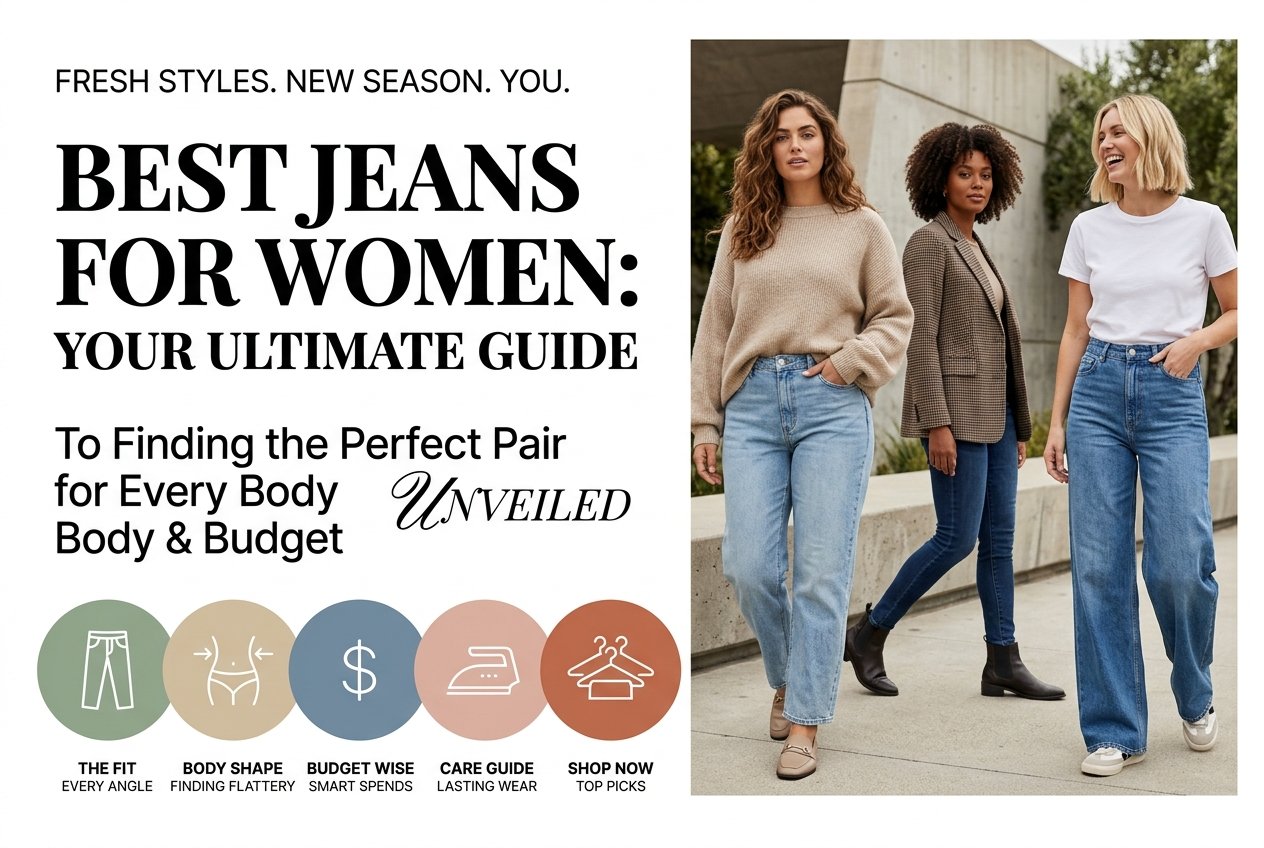
A pair of jeans that looks incredible on your best friend can feel completely wrong on you, and that has nothing to do with your body being somehow incorrect — it’s just geometry. Straight-leg jeans sit at the natural waist, run parallel down the thigh, and land at the ankle without drama; they’re forgiving across most body types because they don’t cling or flare in ways that draw attention to specific areas. Skinny jeans hug from hip to ankle and work brilliantly if you like a streamlined silhouette, though they can feel like a mild wrestling match if you’re not used to the fit. Bootcut styles have a slight flare from the knee down, which does two things at once: it balances out wider hips and creates the optical illusion of a longer leg line, which is why they never fully go out of style no matter what fashion week says. Then there’s the high-waisted, relaxed-hip mom jean — and I’d argue this is the most genuinely comfortable silhouette in the entire denim category, not just a trend that happened to stick around.
The silhouette shapes how jeans move with you, how they photograph, and — less discussed but equally real — how confident you feel at 3pm when you’ve been wearing them since 8am.
High-street picks that hold up
You don’t need to spend a month’s rent on denim. Some of the most wearable pairs come from brands that have quietly figured out that accessible doesn’t have to mean disposable. High-street jeans have gotten genuinely good — the fabrics stretch where they need to, the sizing has become more realistic, and a well-chosen pair from ASOS or M&S will outlast plenty of mid-range options if you wash them properly (cold water, inside out, never the tumble dryer — actually, that tip alone might save you three pairs a year).
These are the jeans tested by real people on real Tuesdays.
Every shape deserves a good pair
The right jeans aren’t about squeezing into someone else’s definition of flattering.
For curvier figures, high-waisted styles with a touch of stretch feel more supportive through the midsection and create a cleaner proportion at the hip. Pear-shaped bodies tend to do well with a slightly roomier cut through the hip that tapers below the knee — it balances rather than fights the silhouette. Apple shapes often feel most comfortable in a mid-rise that doesn’t create pressure at the waist, paired with a straight or bootcut leg below. And if you’re petite, cropped or ankle-length jeans will serve you better than full-length every single time, because fabric pooling at your feet visually shortens the leg rather than lengthening it. (I spent two years buying full-length jeans as a 5’3″ person before someone pointed this out to me. Two years.)
You are not trying to fit into the jeans. The jeans are supposed to fit you. That reframing sounds small, but it changes how you shop entirely.
Investment denim is a different experience
There’s a specific moment — usually the first time you try on a pair of AG or Frame jeans — where you understand why people spend real money on denim. It’s not snobbery. It’s that heavier cotton, reinforced seams, and a dye job that won’t fade to grey after twelve washes add up to something that genuinely feels different on the body. Premium jeans also tend to get better with wear rather than worse, softening and shaping to your specific body over time in a way that a £30 pair simply won’t. These are the pairs you wear for years, not just until next season. Whether that trade-off makes sense for your budget is completely personal — but it’s worth knowing the difference exists.
Making them work for your whole life
A truly good pair of jeans earns its space in your wardrobe by doing more than one thing. Dark-wash styles dress up fast — add a blazer and you’re sorted for a casual dinner without changing. Medium washes read as more relaxed and work well for daytime. Black jeans are the chameleon of the category: they feel slightly dressier than blue denim, work in any season, and pair with almost everything without trying. White and light-wash jeans have a summer reputation, but honestly, styled with the right layers they carry through autumn just fine.
Silhouette affects styling logic too. Straight-leg jeans go with everything — sneakers, ankle boots, heels, all of it. Skinny jeans look most intentional with fitted tops and pointed shoes or slip-ons rather than chunky trainers. Relaxed and mom-jean cuts look brilliant with something tucked in at the front or paired with an oversized knit. Bootcut sits somewhere between casual and polished, structured enough for smarter shoes but relaxed enough for everyday.
The honest answer to “what’s the most versatile pair to own” is a straight-leg dark wash. If you’re only buying one pair right now, start there and build outward.
At Unwritten, our editors choose every product and story idea independently — we only recommend things we’d genuinely tell a friend about.
Frequently Asked Questions
What jeans are most flattering for curvy figures?
High-waisted jeans with a little stretch tend to work best for curvier figures. They sit securely at the midsection and create a balanced proportion if you have a fuller hip-to-waist ratio. Straight-leg or bootcut styles below the hip add structure without feeling restrictive.
Are expensive jeans actually worth it?
Often, yes — but not always. Premium denim uses heavier cotton, reinforced seams, and more sophisticated dye techniques. The real test is wear-over-time: a good pair of investment jeans gets softer and more comfortable with age, whereas cheaper pairs can lose their shape after a season of washing.
What jeans work best for petite women?
Cropped or ankle-length jeans are genuinely better for petite frames than full-length styles. Full-length jeans pool at the ankle, which visually shortens the leg. A clean ankle hem — even without heels — creates the appearance of more leg length.
How do I stop jeans from gaping at the waist?
Gaping at the waist usually means the rise is wrong for your hip-to-waist ratio, not that you’ve sized incorrectly. Look for jeans with a higher rise and some elastane content, or brands that specifically offer a ‘curvy fit’ cut. A tailor can also take in the waistband for about £10-£15 and it makes a huge difference.
What’s the most versatile jean style to own?
A straight-leg jean in a dark wash is the single most versatile style in denim. It works with sneakers, boots, and heels, goes from casual to smart-casual depending on what’s on top, and suits most body types. If you’re only buying one pair, start there.