
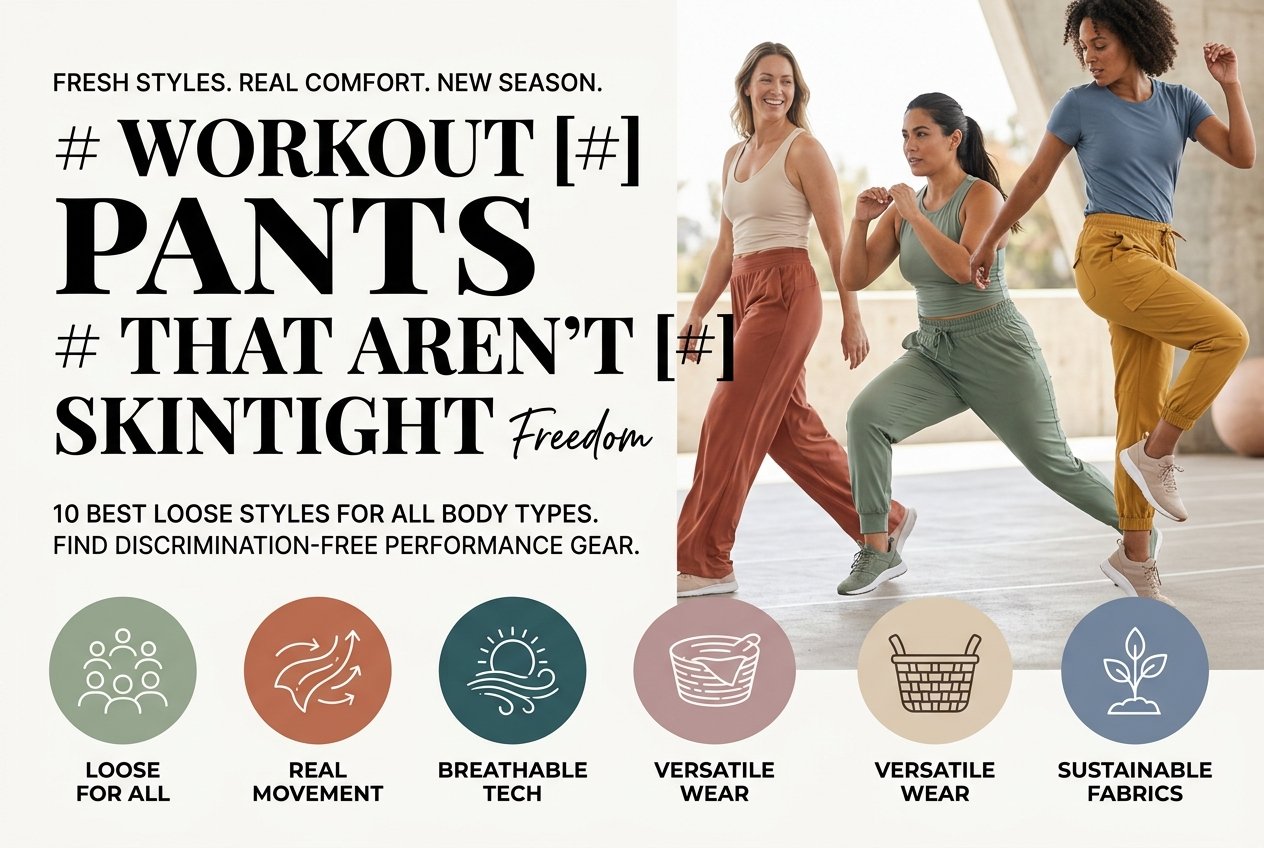
One Tuesday morning I threw on a pair of loose joggers instead of my usual leggings, did a full hour of training, and realized somewhere around the third set that I hadn’t thought about my stomach once. That was it. Three years of compression-everything, gone.
Here’s what that moment actually taught me: the clothes were the problem, not my body. Workout pants that aren’t skintight aren’t a consolation prize for people who “can’t” wear leggings. They’re genuinely better for a lot of workouts, a lot of bodies, and honestly, a lot of moods. Once you feel the difference, compression starts to feel like a choice you were making for someone else.
Why Is Everyone Suddenly Wearing Loose Pants to the Gym?
For a long time, the fitness industry ran on one rule: tighter equals better. Tight meant supportive. Supportive meant serious. And if your pants weren’t cutting off circulation at the hip, were you even trying? A 2023 survey pushed back on all of that, finding that 62% of women now prefer athletic wear with more fabric and less compression — which isn’t a laziness statistic, it’s a comfort one. Women started asking why they were spending $90 on pants that made it harder to sit down.
Loose-fitting workout pants move with your body. They reduce chafing, allow airflow, and remove that low-level distraction of constantly adjusting fabric that’s crept somewhere it shouldn’t be. There’s also something harder to measure but very real happening when you wear clothes that don’t demand your body conform to them — you show up to a workout thinking about the workout. Not your waistband. Not the angle you’re at in the mirror. The workout.
Matching the Cut to What You’re Actually Doing
Not every loose pant works for every workout. A wide-leg style that’s perfect for a slow yoga flow will drive you insane on a treadmill.
For yoga and pilates, straight-leg or slightly tapered cuts are the move. You want enough room to get through deep stretches and lunges without fabric bunching at the ankle, but not so much volume that you’re sitting on your own pants during a seated forward fold. Mid-rise waistbands tend to be the most comfortable here — they don’t dig in during twists, and they don’t slide down in downward dog. For running and cardio, a tapered jogger with a drawstring waist stays put and doesn’t flap. Actual pockets are non-negotiable for any cardio situation — I’ve safety-pinned my phone to my waistband exactly once and I will never do it again. For strength training, wide-leg or straight-leg pants with a structured fabric are ideal. The key word is structured: you want a fabric with enough body that it doesn’t go completely limp when you squat. And for casual gym days, an oversized or boyfriend-fit style is the ‘not trying, somehow looks intentional’ option that works harder than it should.
A Note on Plus-Size Fit (Because It’s Different)
Plus-size bodies need different cuts. Not just bigger versions of straight-size patterns — actually different proportions, different rise, different construction.
The best loose workout pants for plus-size bodies tend to have higher-rise waistbands that sit at the natural waist rather than the hip bones, structured fabrics that don’t cling between the thighs, and enough length that you’re not constantly yanking them down mid-lunge. Real pockets matter here too — pockets deep enough to hold a phone without creating a weird pouch on the outside of your thigh. Look for brands that actually grade their patterns across sizes rather than just scaling everything up uniformly. You can usually tell the difference immediately when you try them on.
Fabric Details That Actually Matter
Loose doesn’t mean low-effort. Actually, fabric quality becomes more important when you’re not relying on compression to hold everything together.
Moisture-wicking is the baseline — nylon, polyester, and spandex blends pull sweat away from your skin. Cotton feels cozy until about minute fifteen of a workout, at which point it’s soaked and heavy. Save it for the couch. Weight matters more than most people realize: lighter fabrics around 200–250 gsm feel less clingy and drape better, while heavier fabrics can feel restrictive even in a loose cut, which defeats the whole point. Four-way stretch means the fabric moves forward and back and side to side — pants that only stretch in two directions will fight you every time you step into a lunge. Gusseted crotches are the unsexy detail that changes everything; a properly shaped inseam eliminates that pulling sensation when you take a big step. And pilling resistance is worth paying attention to if you want these to last longer than a season — higher-quality blends hold their surface texture through repeated washing in a way that budget fabrics simply don’t.
Our Top Picks
These are the loose workout pants that actually hold up — in movement, in quality, and in how they feel on day twenty, not just day one.
Making the Switch Without Hating It
If you’ve been in compression leggings for years, loose pants will feel strange at first. That’s just your body adjusting to not being held in place.
Give it three or four full workouts before deciding. You’ll probably notice longer strides, more natural movement through your hips, and — this is the part that surprised me — less mental noise. Less checking yourself in the mirror, less pulling at fabric, less thinking about your body and more thinking about what your body is doing. That shift is the whole point.
Going back to compression after that feels like a choice you have to justify. Because you’ve already seen what the other option is.
At Unwritten, our editors choose every product and story idea independently — we only recommend things we’d genuinely tell a friend about.
Frequently Asked Questions
Are loose workout pants good for running?
Yes, if you choose the right cut. Jogger styles with tapered ankles prevent fabric from flapping during runs. Look for a drawstring waist and at least a small key pocket — loose doesn’t have to mean sloppy when the fit is dialed in.
What fabrics work best in loose athletic pants?
Nylon-spandex and polyester-spandex blends are your best options. They wick moisture, resist pilling, and move in every direction. Avoid pure cotton for workouts — it soaks up sweat and gets heavy fast, which is the opposite of what you want.
How do I find loose workout pants that don’t look sloppy?
Fit at the waistband is everything. A structured waistband with a clean, fitted rise keeps the whole look intentional even when the leg is wide or relaxed. Tapered joggers and straight-leg cuts with a bit of structure tend to look the most polished.
Do loose workout pants work for plus-size bodies?
They can be genuinely better for plus-size bodies than compression styles — but only if the brand actually grades its patterns for different proportions instead of just sizing up. Look for higher-rise waistbands, structured (not limp) fabric, and real pockets.
Will I lose performance switching from compression leggings to loose pants?
Probably not. Compression has real benefits for recovery and certain high-impact sports, but for most gym workouts, yoga, walking, and strength training, loose pants perform just as well. Many people actually move better with more range of motion and less distraction.