
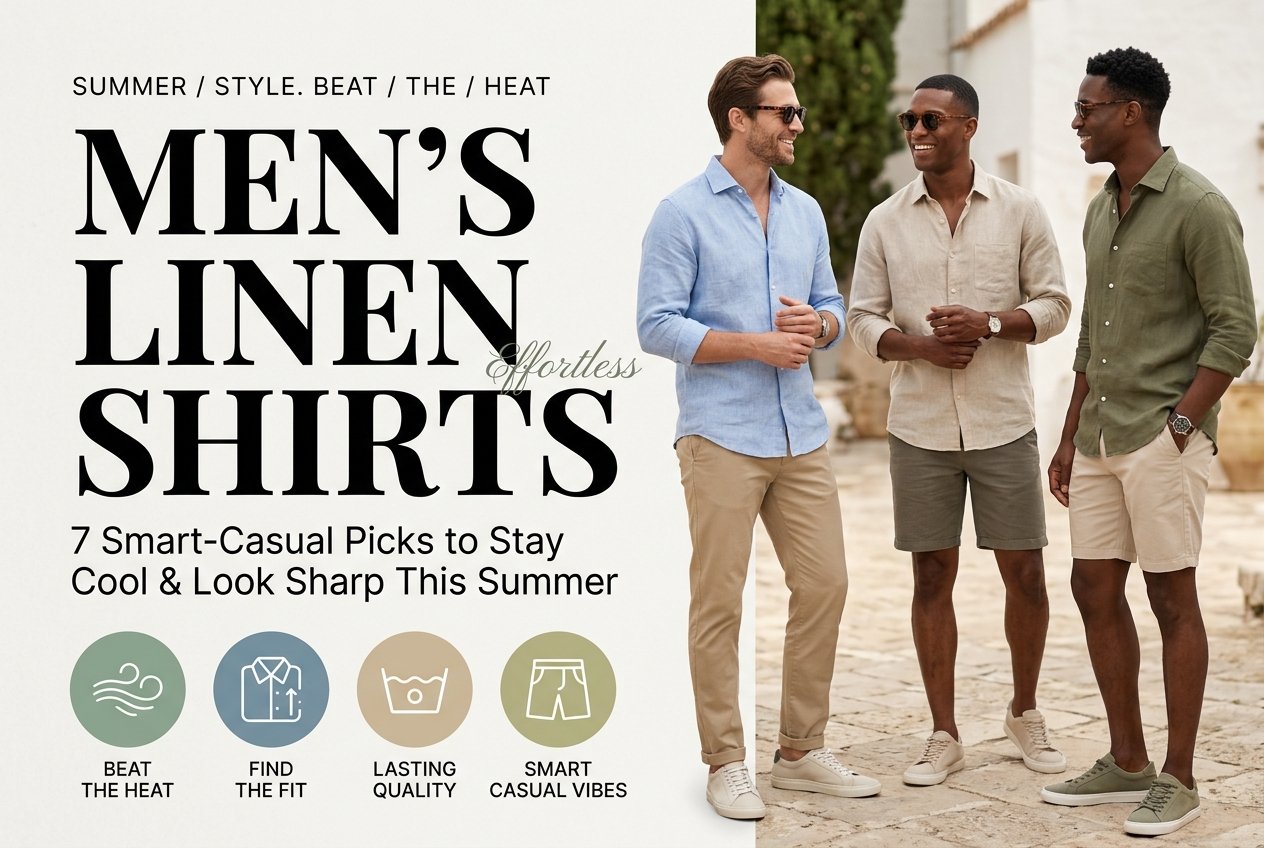
Here’s the honest version: I grabbed a linen shirt off a sale rack three summers ago mostly because everything else looked terrible in the heat, and I’ve reached for it more than almost anything else I own. That’s the thing nobody really warns you about. These shirts are quietly addictive.
Linen breathes in a way cotton can’t quite match. The fiber is hollow, which lets air move through the fabric and pulls moisture away from your skin — so you’re not just cooler, you’re actually dry, which is the difference between looking put-together at 3 p.m. and looking like you’ve already surrendered. Unlike synthetics that cling and trap heat, linen feels actively good against your skin in warm weather. And unlike a lot of fabrics that wear out or go stiff, linen softens with every single wash, which means a shirt you buy this summer will fit and feel better by next summer than it does right now.
Why does linen wrinkle, and should you care?
The wrinkles are physics, not a flaw. They read as relaxed and deliberate rather than sloppy — there’s a reason the “effortless” look is so hard to fake with other fabrics and so easy to land with linen. That said, if you genuinely can’t stand the texture of a lived-in shirt, pure linen might frustrate you. A linen-cotton or linen-viscose blend gives you most of the breathability with more structure and a bit more forgiveness in the wrinkle department. Honestly, for a first linen shirt, a blend is the smarter entry point.
One real downside worth naming: pure linen isn’t the most durable fabric if you’re hard on your clothes. It pills and thins faster than a tightly woven cotton. Worth knowing before you spend serious money on a piece you’re going to wear every weekend.
The Best Men’s Linen Shirts for Every Budget
Not all linen shirts are the same, and price does tell part of the story — though not the whole story. A $50 shirt and a $150 shirt will both keep you cool. The gap shows up in how the shirt fits out of the bag, whether the buttons are worth anything, how the seams hold after a dozen washes, and whether you’ll still want to wear it in two years or quietly retire it to the back of the closet by September. Budget picks cover the basics. Mid-range options bring better construction, softer fabric, and details like reinforced seams or shell buttons that feel considered rather than functional. Premium pieces are about fabric quality and fit precision — the kind of shirt that improves every time you wear it rather than just holding steady.
There are real sweet spots in the $60–$100 range where you’re getting genuine quality without paying for a brand name.
Beach to bar. Here’s how.
Saturday morning: unbuttoned over a white tee, shorts, sneakers. Same shirt, Saturday night: buttoned up, chinos, maybe loafers. That’s the whole pitch for linen in a smart-casual wardrobe — it covers more ground than almost anything else you could buy.
Untucked is the default. Linen’s relaxed drape looks better loose than pulled tight, and a hem that hits just below the hip is the sweet spot for wearing it over shorts or slim-fit trousers without looking sloppy. Roll the sleeves to just below the elbow and you add movement without any extra effort. Tuck it into flat-front chinos when the occasion calls for something sharper. Linen comes in enough colors — cream, sage, rust, navy, terracotta — that you can build actual outfits rather than just defaulting to white every time. (Actually, that’s not quite right — white is still the single most versatile linen shirt you can own, but the point stands.)
The one thing that kills the look? Fussing with it.
Linen is the opposite of precious. The wrinkles are part of the appeal. The slightly imperfect drape is the point. Wear it, move in it, let it do its thing — the more you try to control it, the worse it looks.
Caring for Linen Without Overthinking It
Cold water wash, mild detergent, hang dry. That’s really the whole protocol. Skip fabric softener — it breaks down linen fibers over time and makes the fabric feel worse, not better, which is the opposite of what you want. If you use a dryer, go low heat and pull the shirt out while it’s still slightly damp so it can finish air-drying without setting hard wrinkles into the fabric. Wash linen separately from heavier things like jeans and towels — not because it’s fragile, but because it doesn’t need to tumble around with stuff that weighs three times as much. And if you buy a shirt you’re genuinely excited about, hand-wash it the first time so you can see how it behaves before committing it to a machine cycle.
Ironing is optional. Most people don’t bother, and honestly the shirts look fine without it. If you do iron, do it while the fabric is still slightly damp on a medium setting. The wrinkles come back anyway.
Beyond the Shirt
Once you’ve got a linen shirt in rotation and you understand how the fabric moves and washes, linen shorts or trousers are worth considering. A full linen outfit sounds like it might be too coordinated, but it’s actually incredibly practical — everything breathes at the same rate, wrinkles in the same way, and reads as intentional rather than accidentally matchy. A lightweight linen overshirt works well as a layering piece for evenings when the temperature drops enough to want something over a tee but not enough to justify a jacket.
Start with the shirt, though. Get one, wear it, wash it a few times, see if linen is your thing before you commit to a full summer wardrobe built around it.
The bottom line on linen shirts
A good men’s linen shirt earns its place without demanding anything from you. It doesn’t need special treatment. It doesn’t need to be fussed over. It just works — through beach days and casual office Fridays, morning coffee runs and dinner out, the kind of low-stakes dressing that makes up most of actual life.
Some people want pure linen and fully embrace the texture and wrinkles. Others want a blend that gives them more structure. Some reach for neutrals; others want color. None of those choices are wrong. Pick one or two shirts that fit your body and your lifestyle, see how they feel in rotation, and build from there. By August you’ll have stopped thinking about what to wear on warm days entirely, which is exactly the point.
At Unwritten, our editors choose every product and story idea independently — we only recommend things we’d genuinely tell a friend about.
Frequently Asked Questions
Do men’s linen shirts wrinkle badly?
Yes, pure linen wrinkles — that’s just the nature of the fiber. The good news is those wrinkles tend to look relaxed and intentional rather than sloppy. If you want less wrinkling, go for a linen-cotton or linen-viscose blend, which holds its shape a bit better while keeping most of the breathability.
How should a linen shirt fit on a man?
Linen looks best with a slightly relaxed fit — not boxy, but not tailored either. You want enough room through the chest and shoulders to move freely, with a hem length that works untucked. Shirts that are too slim will pull and look stiff; too oversized and you lose the clean lines that make linen look intentional.
Can you wear a linen shirt to work?
In a smart-casual or business-casual environment, absolutely. Tuck a linen shirt into flat-front trousers, keep it pressed (or embrace the slight wrinkle), and you’ve got a summer work outfit that won’t make you miserable by noon. Skip it for formal or corporate settings where a crisp button-down is expected.
What’s the best way to wash a men’s linen shirt?
Cold water, mild detergent, and hang dry. Skip the fabric softener — it degrades linen fibers over time and actually makes the fabric feel worse, not better. If you do use a dryer, pull the shirt out while it’s still slightly damp and let it finish air-drying. Linen genuinely gets softer with each wash, so don’t be precious about it.
Are linen blends better than pure linen for shirts?
Depends what you want. Pure linen breathes the best and has the most character, but it wrinkles aggressively and can feel stiff until it’s broken in. Linen blended with cotton or viscose gives you most of the same breathability with more drape, less wrinkling, and a softer hand right out of the bag. For a first linen shirt, a blend is usually the easier starting point.