
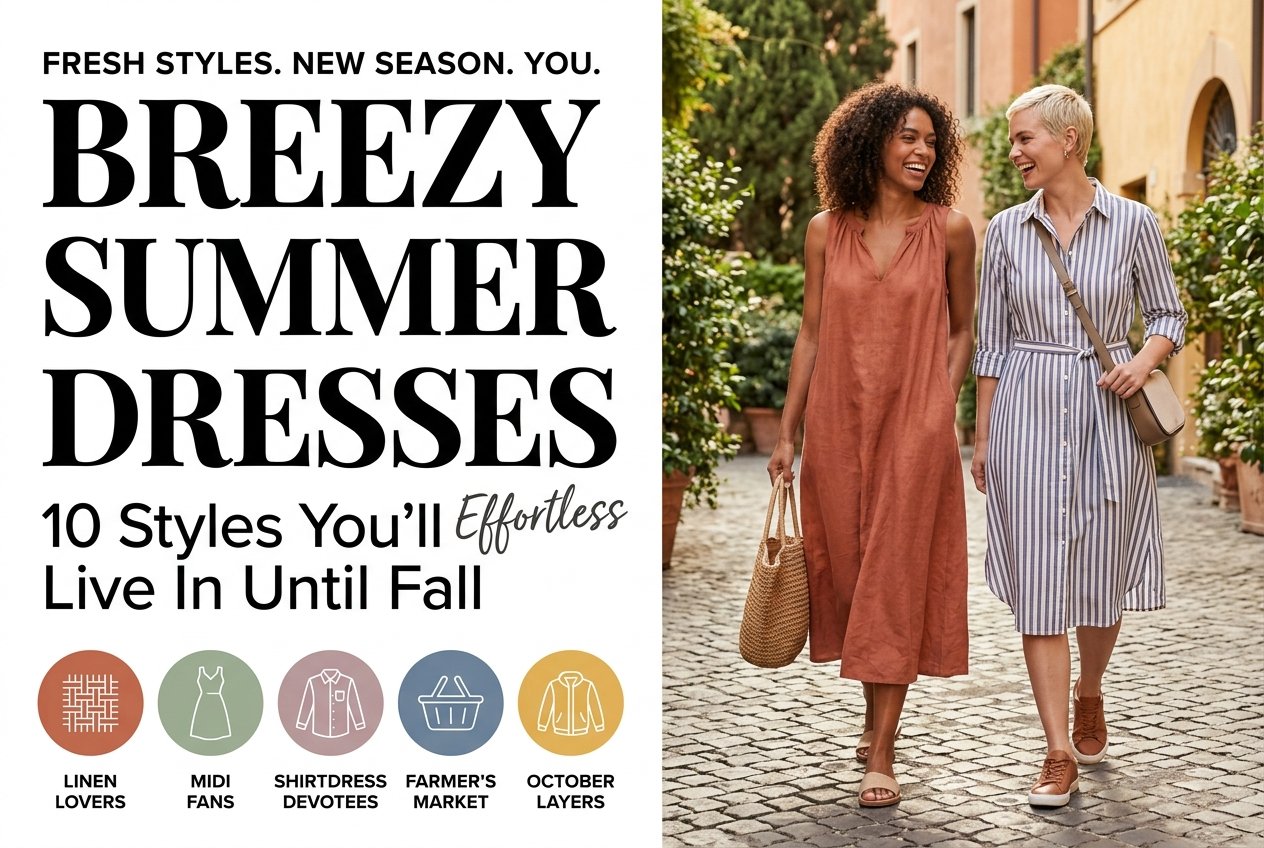
By late July, most people have quietly narrowed their wardrobe down to about three dresses. Not on purpose. It just happens. The ones that survive the cut are light enough for the heat but sturdy enough that September doesn’t scare them — and that’s exactly the quality worth hunting for when you’re buying breezy summer dresses.
Here’s what I’ve noticed after years of buying the wrong thing first: the dresses that actually earn closet space aren’t the ones that look best on a hanger. They’re the ones you grab at 7 a.m. without thinking, wear to the farmer’s market, and somehow still feel right at a casual dinner that same evening. That’s the real test. Not how they photograph — how they live.
We’ve rounded up 10 pieces that pass it.
Why These Dresses Keep Getting Worn
Summer is genuinely demanding on clothes. You need fabric that breathes, a silhouette that doesn’t fight you when you move, and something that doesn’t require a styling session before coffee. Breezy summer dresses handle all of that without a fuss — and then they keep going.
A good breezy dress works for the farmer’s market, a casual dinner, running errands, and that video call where only your top half is visible anyway. Throw a blazer over it and it’s polished. Add sandals and a crossbody bag and you’re out the door. This is why people wear the same dress three times in one week and feel nothing but practical about it. There’s also something harder to explain about the right fabric and cut — you stop thinking about how you look and just move through your day. That, honestly, is the real luxury. Not the dress itself, but the mental space it gives back.
Linen. Yes, Even With the Wrinkles.
Linen gets a bad reputation for wrinkling, and fine, it does. But those wrinkles communicate something useful: I’m not trying too hard. That’s basically the entire vibe of summer.
The best linen dresses aren’t complicated — straight cuts or gentle A-lines, neutrals or soft pastels, lengths that land somewhere between knee and ankle. Some have pockets (life-changing). Some have a drawstring waist (also life-changing). Most of them get better after a few wears because the fabric softens and starts to move with your body instead of against it. What makes linen worth buying specifically for this time of year is the transition math: in August you wear it alone, by October you’ve tucked a fitted turtleneck underneath and added a blazer over top, and it reads as a completely different outfit. Same dress. Different energy entirely. Actually, that’s not quite right — it’s not different energy so much as the same ease, applied to a different season.
The Midi Length Isn’t Going Anywhere
Midi dresses hit at the calf or just below the knee, which gives them a range that shorter hemlines simply don’t have. The length alone makes them feel considered, without sacrificing any of the comfort that makes breezy summer dresses worth buying in the first place.
White sneakers and a crossbody in July. Loafers and a cardigan in September. The dress doesn’t change — your styling does.
The best summer midis have some give in the fabric: cotton blends, linen, or lightweight rayon that skims rather than clings. Many have side slits for movement. Some are printed, some are solid. I tried four different midi lengths before I understood that the ones hitting just below my knee worked better for layering than the ones at my ankle — a small thing that turned out to matter a lot when I was trying to make them work with boots in November. The common thread across every good one I’ve found is that you can wear them all day without once thinking about whether you’re comfortable.
Shirtdresses: The Cheat Code
A shirtdress is a button-front shirt long enough to wear as a dress. This should not be as useful as it is.
You get the structure of a shirt and the ease of a dress, which means you’re covered for casual lunch, a work meeting, and everything in between without changing clothes. Wear it untucked for errands, half-tucked for brunch, or belted over a chunky sweater in October when the temperature finally drops. For summer specifically, look for linen, cotton, or cotton blends — nothing too heavy or structured. Sleeves you can roll up when you’re hot, a collar that actually sits well, a relaxed fit through the body. Some have a tie at the waist. Some have pockets. All of them make you look more put-together than the effort you actually put in.
How to Style Them Without Overthinking It
The flexibility of breezy summer dresses is the whole point. Here’s how to get the most out of them across four different scenarios.
Beach or casual errands: Wear it alone with sandals and a crossbody. Leave a few buttons undone on a shirtdress or roll the sleeves. The goal is relaxed, not styled.
Brunch or casual plans: Add a linen blazer or denim jacket. Swap sandals for sneakers or loafers. Simple jewelry and a slightly more structured bag make the same dress feel more deliberate without any extra effort.
Office or dressier occasions: Layer a fitted long-sleeve shirt under a sleeveless midi, or belt a shirtdress fully buttoned. Loafers, ballet flats, a structured handbag. Done.
Fall transition: Tights, a cardigan or blazer, and closed-toe shoes. A belt can shift the entire silhouette. By October you’re still wearing the same dress you lived in all August, and no one needs to know.
Building the actual wardrobe
Start with your real life, not an aspirational version of it.
If you work in an office, a shirtdress is non-negotiable. If your weekends involve outdoor markets or beach days, a linen dress earns its spot immediately. If you want one piece that travels between occasions without much help, a midi is the answer. Three dresses — one of each — in colors that work with what you already own covers most situations most of the time. Neutrals are safe, but soft prints and pastels are just as practical and tend to look more intentional than a solid ever quite manages.
Buy well and these dresses outlast the season by years. A good linen dress keeps softening with every wash. A quality midi or shirtdress carries through multiple falls without looking tired. These aren’t trend pieces you’ll quietly donate in eighteen months. They’re the ones you wear until they’re practically threadbare — and that’s when you know you got it right.
At Unwritten, our editors choose every product and story idea independently — we only recommend things we’d genuinely tell a friend about.
Frequently Asked Questions
What makes a summer dress actually work for fall too?
Fabric and length do most of the work. Linen, cotton, and lightweight cotton blends layer well under cardigans or over turtlenecks. Midi lengths read as intentional in cooler weather in a way that shorter hemlines don’t. A shirtdress you can belt over a sweater in October is basically a two-season investment.
Is linen really worth it even though it wrinkles so much?
Yes, and here’s the honest reason: the wrinkles stop mattering after about ten minutes of wearing it. Linen gets softer with every wash, breathes better than almost any other natural fabric, and the relaxed texture actually looks more expensive than something stiff and pressed. Most people who own one good linen dress end up buying a second.
What’s the most versatile breezy dress style to buy first?
A midi dress in a neutral or soft print. The length works across body types and occasions, the styling range is enormous — sneakers and a crossbody in July, loafers and a blazer in September — and a good one will outlast trendier pieces by years.
How do you style a breezy summer dress for the office?
Layer a fitted long-sleeve shirt underneath a sleeveless midi, or wear a shirtdress fully buttoned with a leather belt. Swap sandals for ballet flats or loafers. Add one structured bag. You’re not trying hard — you’re just being practical about it.
How many breezy summer dresses do you actually need?
Three covers most lives: one linen dress for casual days, one midi for occasions that need a bit more intention, and one shirtdress for everything in between. Buy them in colors that work with what you already own and you’ll reach for them constantly from June through November.


