Cost per wear changed how I shop for shoes.
A $180 pair worn twice a week for two years comes to under a dollar a wear, before resoling or care. A cheaper pair you avoid because it hurts is just money sitting in the closet. Spending more does not guarantee comfort, though, since construction and fit vary a lot, so try before you commit when you can.
Men’s business casual shoes have to cover plenty: the commute, a full day at a desk, maybe dinner afterward. A pair that looks sharp but pinches by noon is no win. What you want is a clean shape, a comfortable sole, and enough range to work with both chinos and wool trousers.
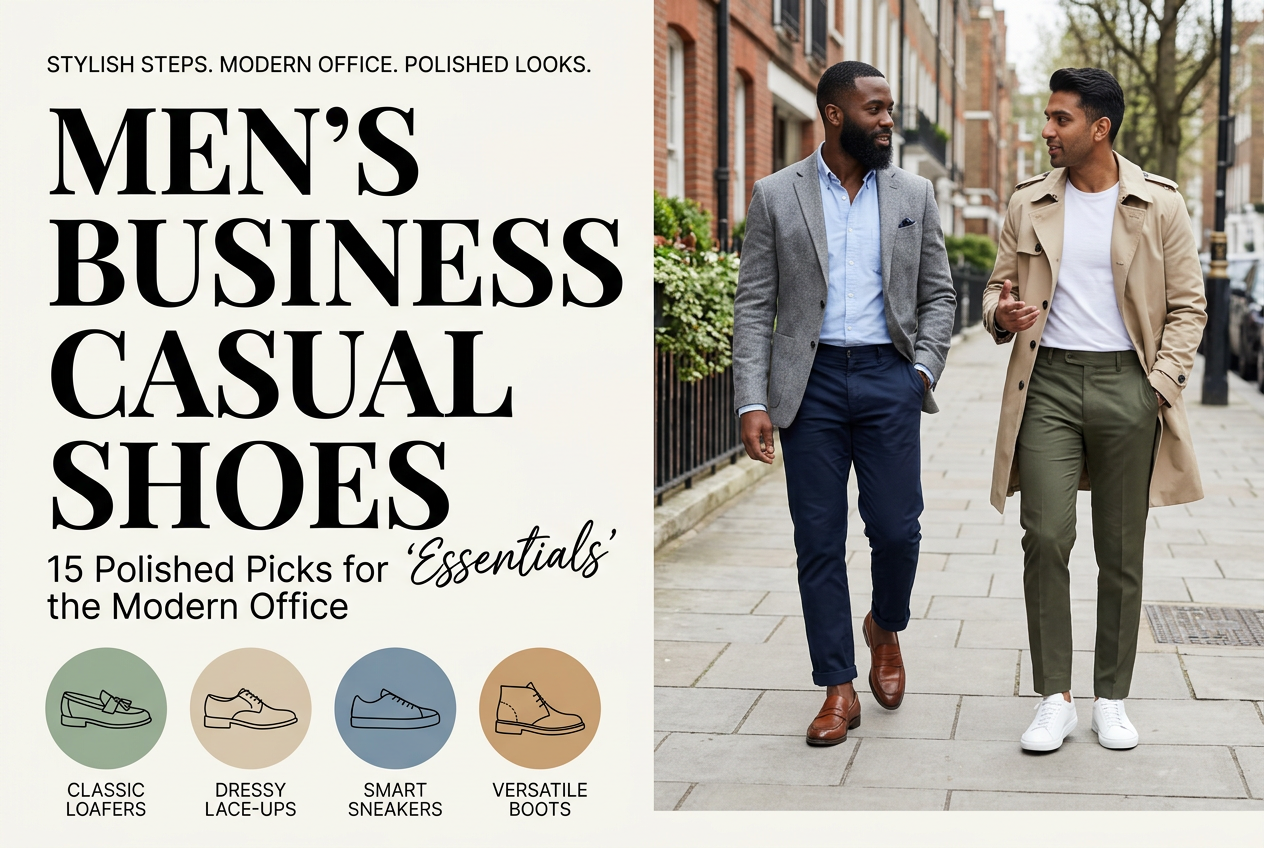
Below are 15 styles, from easy loafers to dressier lace-ups and office-friendly sneakers. Prices are approximate US retail ranges, and materials, construction and discounts can move them around. Start with the pair you will wear three days a week, not the one that looks clever in a product photo.
Do loafers really work in an office?
Yes, when the dress code leaves some room to breathe. They slip on easily, and the right pair looks at home with cuffed chinos or a more formal trouser. One catch: a loose heel gets annoying fast, so check fit before falling for the sleek profile.
1. Classic penny loafer, about $90–$250. A smooth leather penny loafer is a reliable first pair. It is polished enough for a client meeting and relaxed enough for Friday. Wear it with navy chinos and a tucked-in Oxford shirt. The strap can feel stiff at first, so give the leather time to soften.
2. Suede penny loafer, about $80–$220. Suede turns the shine down and adds texture without making an outfit sloppy. It suits grey trousers or dark denim on a casual day. Rain is its weak spot (I ruined a tan pair on one bad walk to the station), so keep a brush and protector handy.
3. Tassel loafer, about $120–$350. Tassels add personality, but the shape still reads smart. Pick restrained brown or black leather if you want it to work with many outfits. Some pairs have a narrow toe, which is a problem if your feet spread through the day.
4. Loafer with a cushioned sole, about $100–$280. A discreet foam or rubber sole is much kinder on long walks between transit and the office. Look for a profile that stays slim from the side, so the shoe doesn’t drift into weekend-only territory. The trade-off is that some cushioned designs feel less formal than a traditional leather sole.
Lace-ups without the wedding vibe
Lace-ups give a more buttoned-up finish, but they don’t all need to feel like formal wear. Derbies usually offer a touch more room and a relaxed feel, while Oxfords lean dressier. If you wear tailored trousers most days, build around this category.
5. Plain-toe Derby, about $100–$300. The workhorse of the family. Open lacing looks neat without feeling stiff, and it pairs with chinos, flannel trousers, or a suit when needed. A bulky sole can make it read too casual, so check the proportions.
6. Cap-toe Derby, about $130–$350. The stitched cap adds structure, which suits offices where sneakers would feel out of place. Dark brown matches navy and charcoal easily. Black looks sharper but less relaxed. Break-in can take a few wears.
7. Wingtip Derby, about $140–$400. Brogue detailing gives the shoe character without changing its basic usefulness. It makes a plain trouser-and-shirt outfit feel considered, especially in medium brown. All those perforations collect dust, so it needs more care than a plain-toe pair.
8. Plain-toe Oxford, about $150–$450. Closed lacing gives a cleaner, dressier line. It is a good pick if your office leans formal, or if one shoe has to handle a presentation and a wedding. Oxfords can feel tight across the instep, so try them on later in the day.
9. Suede Derby, about $120–$320. Suede softens the look and pairs naturally with chinos, corduroy, or brushed cotton trousers. Medium brown or taupe makes a handy rotation shoe. It is less forgiving in bad weather, and a pale pair shows scuffs sooner.
Sneakers, if your boss allows it
Some workplaces are fine with sneakers and others draw a firm line. When yours allows them, keep things simple: smooth leather or subtle suede, a low profile, minimal contrast. These are not gym shoes in disguise. They are the clean pair you grab with chinos and a knit polo.
10. Minimal white leather sneaker, about $70–$250. A plain white sneaker gives dark chinos a crisp finish and makes a casual suit less ceremonial. Look for a supportive footbed and a sole that isn’t oversized. White leather needs regular wiping, especially after a wet commute.
11. Black leather low-top sneaker, about $80–$280. Black is less obvious than white and slips in with charcoal trousers or dark denim. It dresses up more easily, though the sneaker shape keeps it casual. Some black finishes show creases clearly, so a leather conditioner helps.
12. Suede court sneaker, about $75–$220. Suede gives a familiar low-top a softer, textured finish. Try navy, grey, or muted olive with chinos and a lightweight sweater. These can be less supportive than a running shoe, so keep them for normal city walking, not a day spent covering miles.
Boots that earn their spot
Boots make sense when the weather turns or your office style has some edge. Keep the toe neat and the sole slim, because that lets them sit under trousers instead of swallowing the outfit. I like a Chelsea for its clean line. A lace-up feels more secure on a long day.
13. Leather Chelsea boot, about $130–$400. Elastic side panels make it an easy pull-on that still looks composed with wool trousers. Dark brown gives the most range, while black suits a cooler, more formal wardrobe. Ankle fit matters, since a loose shaft rubs as you walk.
14. Suede Chelsea boot, about $120–$350. A relaxed finish that works with dark denim or chinos. The shape stays tidy, so it feels more office-ready than a rugged lace-up. It needs weather protection, and the nap picks up marks if you’re careless on the train platform.
15. Chukka boot, about $100–$300. Two or three eyelets and an ankle-high cut make the chukka a bridge between dress shoe and casual boot. It pairs well with straight-leg chinos and a textured blazer. Some versions have very thin soles, so check the tread if you walk outside often.
Fit first, label later
Your toes need room to move, your heel shouldn’t lift with every step, and nothing should press across the widest part of your foot. Try pairs on in the afternoon if you can, since feet feel fuller by then. Bring your work socks.
Think about your real commute. A leather sole looks sharp but can be slick on wet pavement, while rubber grips better and takes less care. Past 20 minutes of walking each way, that difference matters. Some people keep one dressier pair at the office and commute in something sturdier.
For a first rotation, I’d buy one loafer or Derby, then add a clean sneaker if your workplace permits. After that, let your wardrobe decide: boots for cold months, an Oxford if meetings run formal. Good shoes should make getting dressed easier, not hand you one more thing to manage before your first coffee.
At Unwritten, our editors choose every product and story idea independently — we only recommend things we’d genuinely tell a friend about.
SEO tags: men’s business casual shoes, comfortable dress shoes men, smart casual footwear, men’s office shoes, versatile men’s shoes
Frequently Asked Questions
What are the most versatile men’s business casual shoes?
A plain-toe Derby or a smooth leather penny loafer. Both work with chinos and wool trousers, and both look fine from Monday meetings through casual Friday.
Can I wear sneakers to a business casual office?
Often yes, if the pair is clean and low-profile. Smooth white or black leather with minimal contrast reads far smarter than anything that looks like gym gear. Check your dress code first.
Should I choose a leather sole or a rubber sole?
Rubber grips wet pavement better and needs less care. Leather looks sharper but can be slick. If you walk more than 20 minutes each way, rubber is the safer pick.
When is the best time to try on dress shoes?
In the afternoon, when your feet have settled and feel fuller. Wear the socks you normally bring to work.