A tight backing on a pretty pair taught me this: my ears start itching before lunch.
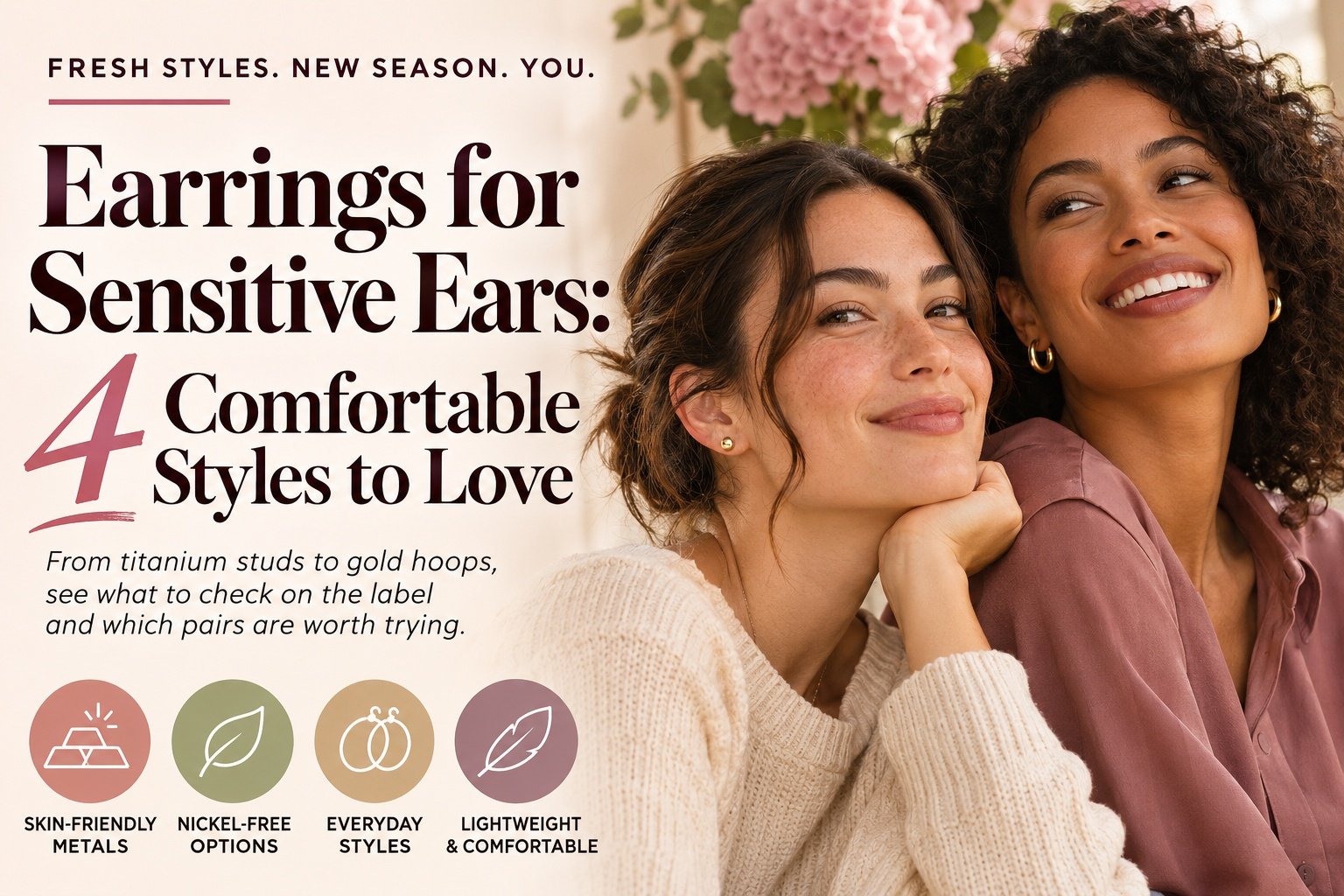
That small gamble is what makes earrings for sensitive ears worth a closer look. If your ears react to certain metals, the material and the fit decide how the day goes. The nine styles I had in mind lean on titanium, niobium, or solid gold, though no earring can promise a reaction-free experience for everyone.
Is “hypoallergenic” even a promise?
Not really. Nickel is a common trigger, but people can react to other materials, too. Check the exact metal details. Take out any pair that causes redness, swelling, pain, or persistent itching, and if symptoms keep coming back, a dermatologist can help you figure out what’s behind them.
Start with what touches the piercing
Implant-grade titanium and niobium are popular with people who want to avoid nickel, and solid 14k or 18k gold may also suit some wearers. Plated jewelry deserves extra attention, since the coating can wear down and expose a different metal underneath (I learned that on a pair that looked perfect for about a month). So I’d check the maker’s materials page before falling for a pretty finish. Fit matters just as much, because heavy earrings pull on your lobe and a tight post or backing can press uncomfortably against skin. The picks below cover simple studs and low-key hoops, so you can match the style to your plans and your own sensitivities. Prices are approximate US retail prices and can change, so check the current listing before you buy.
Studs for days when you just want comfort
Studs are a practical starting point if you’re still working out what your ears tolerate. They don’t swing or catch on scarves the way longer styles do. A light pair can fade from your attention through a full day. But the post and backing matter as much as the front. If a backing feels tight, loosen or change it rather than pushing through.
Blomdahl Medical Plastic Flower 6 mm: This small flower stud is a cheerful choice when you want a touch of color without a long drop. Blomdahl offers medical plastic styles for people seeking alternatives to conventional metal earrings, but check the listing for the full construction and post details. The floral shape is sweet, though it may read a little youthful with some outfits. Price: about $30.
Blomdahl Medical Titanium Bezel Crystal 5 mm: A bezel-set crystal gives this titanium stud a more polished feel than a plain metal ball, so it works for dinners or office days. It’s compact. Don’t expect dramatic sparkle from across the room. Review the current listing to confirm the stone, post, and backing materials. Price: about $40.
Maria Diamond Eternity Bar Charm Threaded Stud Earring: This fine 14k gold stud has a more delicate, dressy look, and solid gold can be a useful option for some people with metal sensitivities. It’s pricey, and threaded jewelry needs careful handling when you put it in or take it out. Since gold alloys differ, check the stated composition and ask your piercer whether the post suits your piercing. Price: about $500.
Gold hoops, minus the drama
Hoops add movement without needing a big, heavy statement. If you’re shopping for gold hoop earrings for sensitive ears, look for clear material descriptions rather than trusting a gold-colored finish. Small hoops and huggies are often easier to wear for long stretches, but the clasp should close comfortably and never pinch your lobe. Some trial and error is normal.
Catbird Sweet Nothing Hoops: This delicate hoop has a light, subtle look for someone who wants a barely-there everyday accent. Its fine scale is lovely with a second lobe piercing, but the small size may be fiddly to fasten if you have limited dexterity. Confirm the current metal details before buying, especially if you’ve reacted to gold alloys before. Price: about $148.
Caring for ears and jewelry
Even comfortable earrings need a bit of care. Wash your hands before handling a fresh or irritated piercing, and clean jewelry according to the maker’s instructions. Take earrings out before swimming or sleeping if the maker recommends it. Store pairs separately so posts don’t collect grime or get bent, and a soft pouch keeps tiny pieces from vanishing into the bottom of your bag.
Notice patterns. If one pair causes a reaction and another doesn’t, write down the materials, the finish, and how long you wore each. Stop testing anything that causes pain or swelling.
Not sure a piercing is healed enough for a new style?
Ask a qualified piercer instead of changing jewelry on a hunch.
My opinion: the best earrings for sensitive ears are the ones you forget about by mid-afternoon. Begin with one light, clearly labeled pair, wear it briefly, and watch your skin. Once you know what works, a small collection of comfortable earrings that still feel like you is easy to build.
At Unwritten, our editors choose every product and story idea independently — we only recommend things we’d genuinely tell a friend about.
Frequently Asked Questions
Does hypoallergenic mean an earring won’t cause a reaction?
No. The word isn’t a guarantee. Nickel is a common trigger, but people can react to other materials too, so check the exact metal details and remove any pair that causes redness, swelling, pain, or lasting itching.
Which metals are popular for sensitive ears?
Implant-grade titanium and niobium are popular for people avoiding nickel, and solid 14k or 18k gold suits some wearers. Plated pieces need extra care because the coating can wear off.
Are small hoops easier to wear than big ones?
Often, yes. Small hoops and huggies tend to be more comfortable for long stretches, as long as the clasp closes without pinching your lobe.
When should I see a doctor about earring reactions?
If symptoms keep coming back, a dermatologist can help work out the cause. A qualified piercer can advise on whether a piercing is healed enough for a new style.