
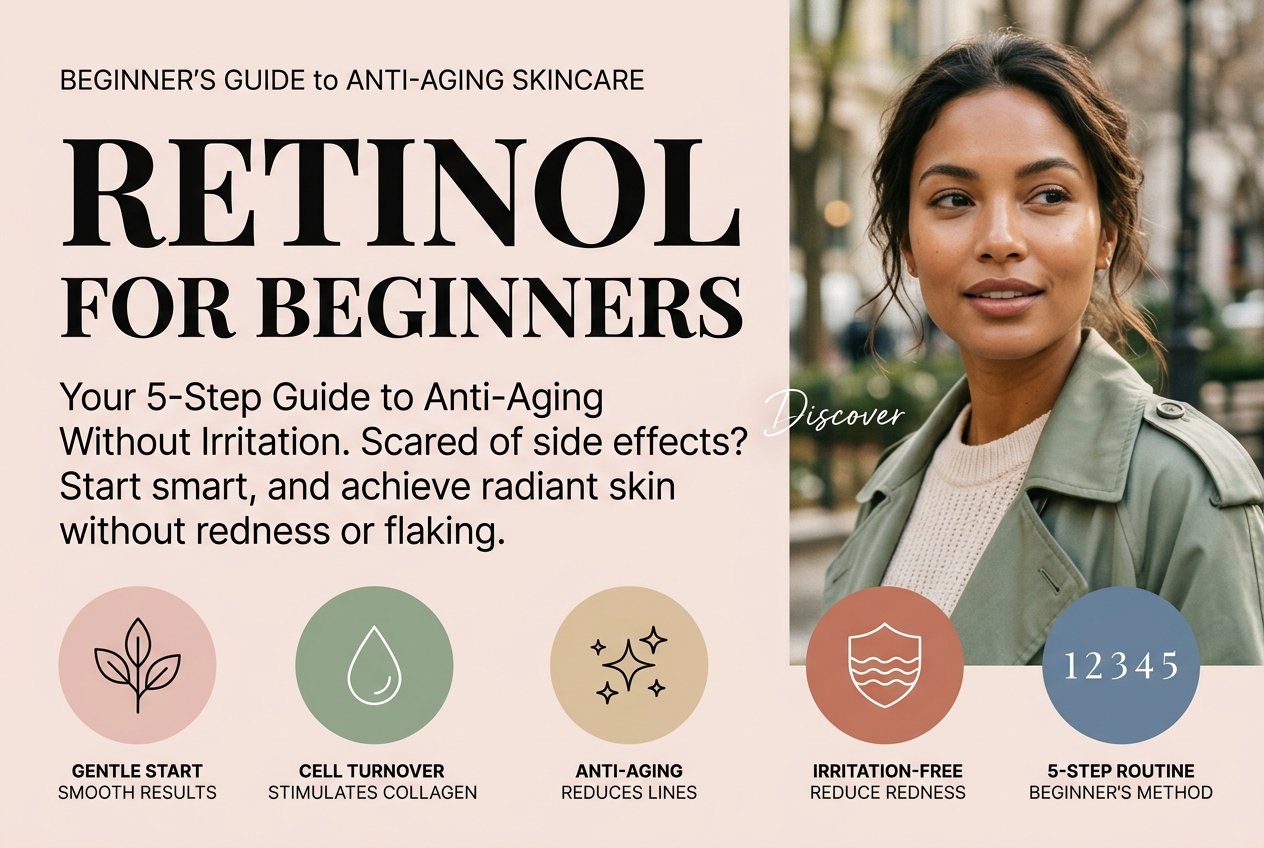
Here is what nobody tells you upfront: the first two months of using retinol are kind of ugly. Some flaking, maybe some redness, possibly a breakout or two you did not ask for. I watched three friends go through this before I worked up the nerve to try it myself, and I spent way too long convinced it would wreck my skin. It did not. But I also did not go in blind — and that made all the difference.
Retinol works. That is the honest short version. It has decades of clinical evidence, dermatologists genuinely recommend it, and the results compound the longer you stick with it. The whole terrifying reputation mostly comes from people who started too strong, too fast.
What retinol actually does to your skin
Retinol is a vitamin A derivative that your skin converts into retinoic acid — the compound doing the real work. It accelerates cell turnover, stimulates collagen production, and gradually fades fine lines, dark spots, and uneven texture. What makes it genuinely useful rather than just well-marketed is that it addresses several concerns at once: acne, dullness, enlarged pores, early signs of aging. Most skincare ingredients do one thing reasonably well. Retinol does four or five things reasonably well, and gets better at all of them the longer you use it. The flip side — and this matters — is that it is potent enough to cause real irritation if you introduce it carelessly. Redness, flaking, tightness, sensitivity to products you have used for years without issue: all of these are possible, especially in the first month. This is not your skin rejecting retinol. It is your skin adjusting to a faster turnover rate than it is used to. The people who quit during this phase usually assume they are the exception, that retinol just does not work for their skin type. Almost always, they just needed to slow down.
Picking your first product
The retinol spectrum runs from retinyl palmitate — very weak, very slow — all the way up to prescription tretinoin, which is a different conversation entirely. For a first-time user, you want something labeled “retinol” or “retinaldehyde” at a concentration between 0.25% and 0.5%. Retinaldehyde is slightly stronger and faster-acting than retinol but still gentler than prescription options, so it is a solid middle ground if you can find it.
Packaging matters more than most people realize. Retinol breaks down when exposed to light and air, so clear glass jars are basically a way to sell you degraded product. Look for opaque, airtight packaging — a pump bottle is ideal. (I once bought a beautiful clear-glass dropper bottle because it looked expensive and photographed well. Regrets.)
Start with two nights per week. Apply it to clean, completely dry skin — waiting twenty minutes after cleansing is not overkill, it genuinely reduces irritation. Use a pea-sized amount for your whole face. That is it.
The sandwich method: does it actually work?
Yes. Apply a light layer of moisturizer first, then your retinol, then another layer of moisturizer on top. The moisturizer buffers absorption rate without canceling out the retinol’s effectiveness — studies and a lot of anecdotal evidence back this up. It sounds like you are watering down an expensive product, but you are not. You are just slowing down how fast your skin takes it in, which reduces the odds of waking up looking sunburned.
Use this method for at least your first six weeks.
After that, as your skin builds tolerance, you can gradually reduce the pre-moisturizer layer and eventually apply retinol to bare skin if you want to. Plenty of people stick with the sandwich method indefinitely and still get excellent results. There is no award for doing retinol the uncomfortable way.
SPF is not optional here
Retinol makes your skin more vulnerable to UV damage. All the collagen-building, line-softening work it is doing at night can be reversed in an afternoon of unprotected sun exposure. Broad-spectrum SPF 30, applied every morning, is part of the retinol routine — not a separate suggestion.
What goes wrong, and what to do about it
Flaking and dryness. The most common side effect, and usually a sign that cell turnover is happening. Add more moisture: sandwich method, a hydrating serum underneath, a few drops of squalane oil on top after everything else has absorbed. If flaking is severe, cut back to once a week.
Redness after application. Some immediate redness is normal and should calm within an hour. Redness that is still visible the next morning means you used too much product or applied it too soon after cleansing. Scale back.
Breakouts. Accelerated cell turnover can push congestion to the surface faster than usual. This purge phase typically lasts two to three weeks. If it stretches longer or gets severe, talk to a dermatologist — retinol may not be the right starting point if your acne is already inflamed.
Everything else in your routine suddenly irritating you. This is your cue to simplify. Strip your routine down to cleanser, moisturizer, SPF, and retinol on alternate nights. Reintroduce other actives — vitamin C, exfoliating acids, anything with a low pH — after your skin has adjusted, usually around the six-week mark.
A rough timeline of what to expect
Weeks one and two will probably involve some flaking and sensitivity. That is normal. Weeks three and four, the adjustment settles and you might move to three nights per week. Somewhere between weeks five and eight, you will notice your first actual results: texture smoothing out, tone getting more even, fine lines looking softer in certain light. By the three-month mark, you are seeing the real payoff — and the longer you stay consistent, the better it gets.
Retinol for beginners is not about finding the highest concentration and using it every night until your skin surrenders. It is about starting conservatively, staying consistent, and giving your skin the time it needs to adapt. My honest take: it is the one skincare step I would keep if I had to cut everything else.
At Unwritten, our editors choose every product and story idea independently — we only recommend things we’d genuinely tell a friend about.
Frequently Asked Questions
How often should a complete beginner use retinol?
Start with two nights per week — no more. Your skin needs time to adjust to increased cell turnover, and pushing too hard too fast is exactly how people end up with a raw, flaking face and swear off retinol forever. After three or four weeks of no significant irritation, bump up to three nights.
Can I use retinol if I have sensitive skin?
Yes, but you need to be more deliberate about it. Start with a low concentration (0.25%) and use the sandwich method — moisturizer before and after your retinol application. People with rosacea or eczema should check with a dermatologist first.
What ingredients should I avoid mixing with retinol?
In your first month, skip vitamin C, AHAs like glycolic acid, BHAs like salicylic acid, and benzoyl peroxide on the same nights you use retinol. Your skin barrier is already working overtime. Once you’ve built tolerance after six weeks or so, you can start layering things back in carefully.
Does retinol actually work, or is it overhyped?
It works. Retinol has more clinical research behind it than almost any other over-the-counter skincare ingredient. The catch is that results take time — most people see real changes around the eight to twelve week mark, not after a week of use.
Do I really need sunscreen when using retinol?
Non-negotiable. Retinol speeds up cell turnover, which leaves fresher, more vulnerable skin exposed. UV damage will undo collagen-building progress faster than retinol can create it. Broad-spectrum SPF 30 minimum, every morning, rain or shine.