
The moment that broke me was reaching under the bathroom sink for toilet bowl cleaner and pulling out a mostly empty bottle of leave-in conditioner from 2021. Everything was in there — just not findable. That’s the real problem with under-sink cabinets: it’s not that they lack space, it’s that the space is basically a black hole.
Here’s what I figured out after testing nine different organizers across two bathrooms and a kitchen: the right under sink storage doesn’t reorganize your stuff so much as it reorganizes the cabinet itself. Work with the pipe placement, use the vertical space, keep things visible. Do those three things and the whole area clicks into place.
Why This Space Is So Annoying
Under-sink cabinets are awkward by design. The pipe runs right through the middle, the depth is often more than you’d expect, and the height varies wildly depending on whether you have a pedestal sink, a vanity, or a full kitchen cabinet underneath. Most storage products are built for normal shelves. These aren’t normal shelves.
When your under-sink area actually works, you stop buying duplicates of things you forgot you had, you know when you’re genuinely running low on something, and — this sounds small but isn’t — you stop dreading opening the cabinet. There’s a real psychological difference between a space that feels controlled and one that feels like it’s winning.
We focused on organizers that accommodate pipes without requiring you to do plumbing math, that use vertical height instead of just floor space, and that are sturdy enough to handle daily use in a high-moisture environment. A few surprised us. A few disappointed us. One wooden set warped within three months and got cut from this list entirely.
What Works in Bathrooms
Bathroom under-sink storage is its own challenge because you’re combining totally different categories of stuff — hair products, cleaning supplies, spare toilet paper, maybe a first aid kit — in a space that has a sink trap dead center and often collects humidity. The organizers that work here have to do a lot.
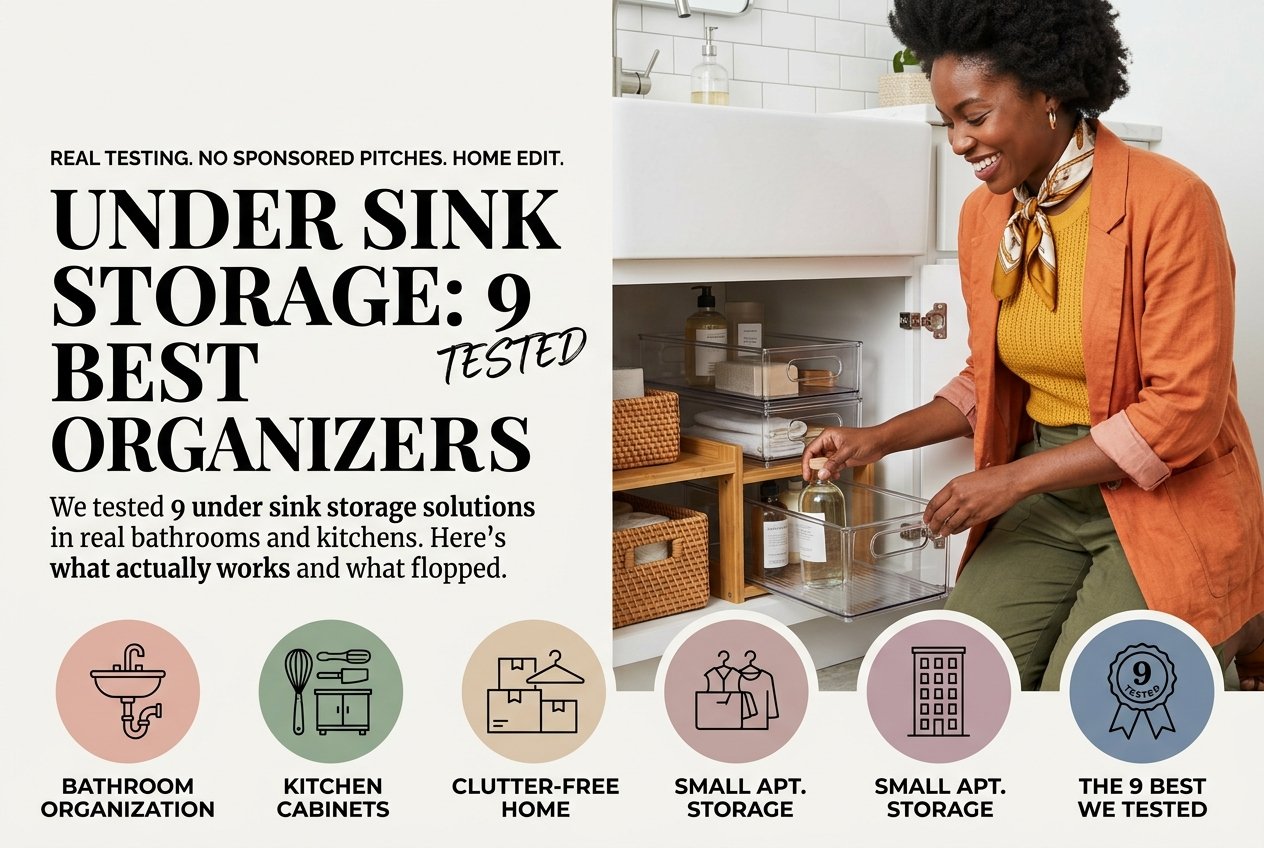
Pull-out drawer organizers changed how I use the cabinet. I tested one for about six weeks before writing this, and the thing I noticed most was that I stopped losing things to the back corners. Everything slides forward when you pull the drawer out. Access to the pipes stays clear. The ones I tested held up fine in bathroom humidity, though I’d wipe them down monthly regardless.
Shelf risers are quietly one of the best investments in here. That dead zone above your first row of products — the gap between the tops of your bottles and the cabinet ceiling — is usable space that most people just ignore. An adjustable riser (the kind that expands to fit your cabinet width without tools) can hold a full second row of products above the first. I fit cleaning supplies on the bottom, extra soap and toilet paper on top, and the whole thing stopped wobbling after about a day of settling.
A horizontal tension rod sounds too simple to actually work. It works. Hang your spray bottles by their triggers and you’ve cleared the entire cabinet floor while keeping bottles upright and easy to grab. I hung a glass cleaner, a disinfectant spray, and an air freshener on mine. None of them tipped over once.
Kitchen Cabinets Are a Different Animal
More depth. More daily use. More things that get wet — sponges, dish soap, the damp cloth you shoved under there after wiping the counter. Kitchen under-sink cabinets get opened probably three times as often as bathroom ones, so the organizers in there need to be genuinely sturdy, not just sturdy-looking.
Pull-out organizers work even better in kitchens than bathrooms because the extra depth gives them more to work with. The ones I tested held dish soap, backup sponges, trash bags, and a bottle of white vinegar without any issue. Dividers kept the cleaning supplies from mixing with the dish supplies, which sounds like a small thing until you’ve grabbed the wrong bottle mid-cooking.
Wire baskets are what I’d buy first for a kitchen cabinet. They’re flexible around pipe configurations, easy to pull out completely when you need to clean the cabinet floor, and transparent enough that you can see what’s in them without digging. After a year of regular use — and I mean regular, this is a busy kitchen — none of the ones I tested showed any rust.
Tiered shelving is worth it if your kitchen cabinet is tall enough to accommodate it, which most are. Two levels of usable surface in the same footprint means you can actually separate categories rather than stacking things on top of each other and hoping the thing you need isn’t on the bottom.
What About Really Tight Spaces?
Slim organizers exist specifically for narrow vanities and compact bathroom cabinets where standard organizers won’t fit. They trade width for height, which is the right trade in a small space. I tested one in a guest bathroom vanity that had maybe ten inches of usable width on each side of the pipe, and it still held a reasonable amount without feeling crammed.
The inside of your cabinet door is storage you’re probably not using. Over-the-door pocket organizers designed for cabinet doors add real capacity — gloves, sponges, small bottles, whatever you need within reach — without removing any floor or shelf space from inside the cabinet. This is the move for small apartments where every inch matters. (Actually, it’s a good move for large cabinets too. There’s no reason to leave that door surface empty.)
Magnetic strips are worth trying if you store small metal containers or tools under the sink. Mount one on the cabinet sidewall and you can stick containers directly to it, keeping the floor clear entirely.
Install It Right or Regret It
Measure the pipe height before you buy anything.
I cannot stress this enough. Cabinet width and depth are the measurements everyone takes. The height from the cabinet floor to the bottom of the P-trap is the measurement that causes returns, because it’s the one that determines whether a shelf or pull-out drawer actually fits without ramming into the pipe. Get that number first.
Don’t over-tighten tension rods or adjustable shelves. This seems obvious until you’re standing there with a tension rod and you think just a little more and then you’ve cracked the plastic or scratched the cabinet interior. Snug is enough. We over-tightened one rod during testing, had to remove it, and found a hairline crack in the cabinet wall finish. Lesson learned the annoying way.
Start with one organizer, not a full system. The temptation when you finally decide to fix this space is to buy everything at once — a pull-out, a shelf riser, a tension rod, some baskets. But you don’t actually know how you use the space until you start changing it. Buy the thing that solves your most irritating problem first, live with it for a couple weeks, then figure out what to add. Some people need more cleaning supply storage. Some people need trash bag storage more than anything else. The right setup for your cabinet depends on what you actually put in it.
The Honest Bottom Line
Most of these organizers cost under $30. Several are under $15. The difference between a chaotic under-sink cabinet and a functional one is not money — it’s just picking the right product for your specific pipe configuration and storage needs, measuring before you order, and not over-engineering it.
Start with whatever’s bothering you most right now. Spray bottles rolling around? Tension rod. Can’t reach anything in the back? Pull-out organizer. Wasting all that vertical space? Shelf riser. One targeted fix usually makes the whole cabinet feel better, and then you’ll want to do the rest.
At Unwritten, our editors choose every product and story idea independently — we only recommend things we’d genuinely tell a friend about.
Frequently Asked Questions
What under sink storage works best when pipes are in the way?
Pull-out organizers and wire baskets are your best options because they’re designed to work around pipe configurations. Look for organizers with cutouts or open sides that let you position them on either side of the P-trap or drain pipe.
How do I stop my under-sink cabinet from getting moldy or warped?
Avoid particle board or untreated wood entirely — both warp fast under a sink. Stick with plastic, coated wire, or powder-coated metal. If your cabinet gets genuinely damp, a small silica gel pack tucked in the corner helps absorb moisture between cleanings.
Can I add storage to the inside of my cabinet door?
Yes, and it’s one of the most underused tricks. Over-the-door organizers designed for cabinet doors add pockets for gloves, sponges, and small bottles without taking up any floor space inside the cabinet itself.
What should I measure before buying an under sink organizer?
Measure cabinet width, depth, and interior height. Then measure the height of your P-trap from the cabinet floor — this is the measurement most people skip, and it’s the one that causes the most returns when an organizer doesn’t clear the pipe.
Are tension rod organizers actually useful under sinks?
More than they sound. A horizontal tension rod lets you hang spray bottles by their triggers, keeping them upright and accessible while freeing up the entire cabinet floor. They work best in kitchen cabinets where you have more depth, but a well-placed rod in a bathroom cabinet can hold four to six bottles easily.