A $40 white t-shirt you wear 150 times costs you 27 cents a wear.
Now take a $200 shirt you wear twice. That one costs $100 a wear. I did this sum on the back of a receipt a few years ago, and I haven’t bought a flashy shirt since.
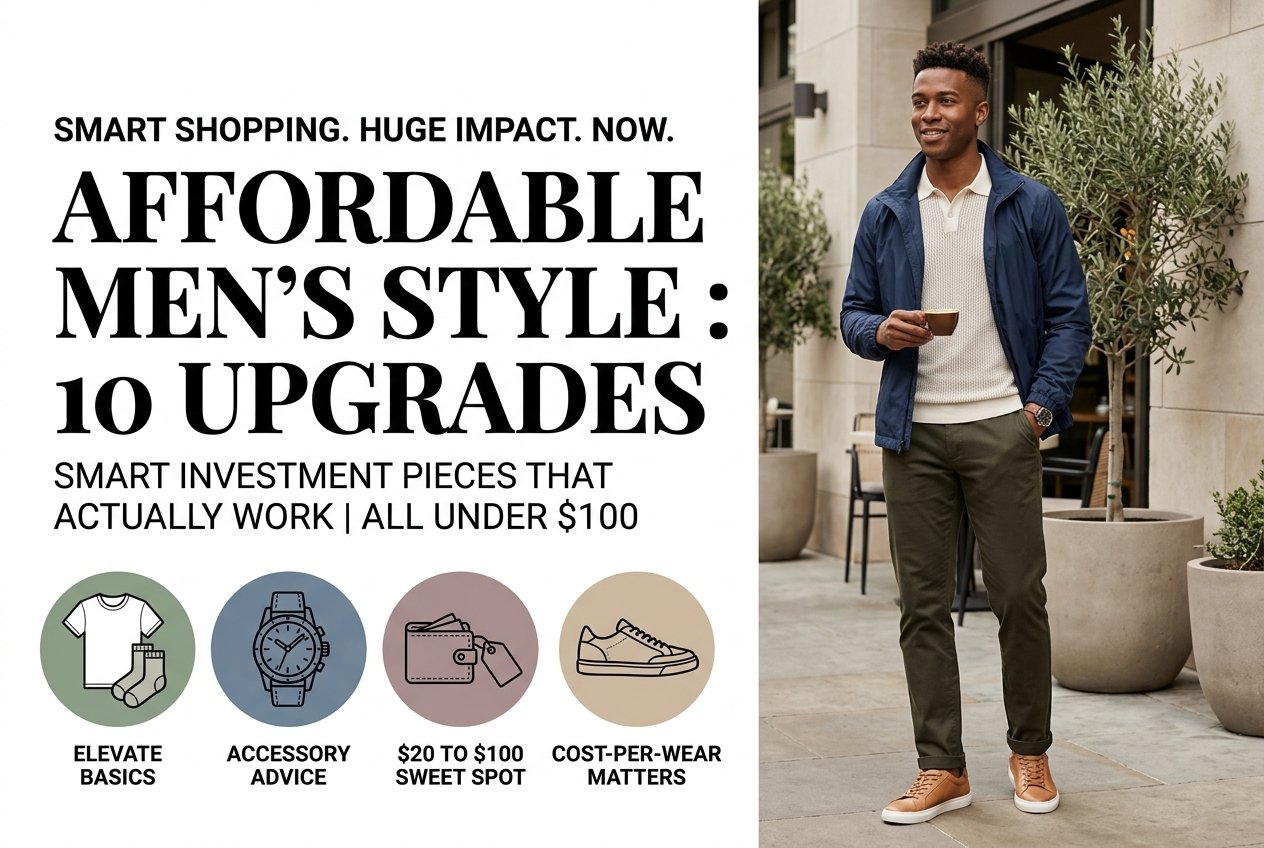
Here’s the point of this whole piece, so you don’t have to wait for it. Affordable men’s style isn’t about knockoffs or settling for less. It’s about knowing where to spend and where to save. Sometimes the best investment is the thing you’ll actually wear three times a week. The sweet spot sits in the $20 to $100 range, where strategic upgrades genuinely change how you look and feel. These pieces work harder than their price tag suggests, because they’re built on basics that last and accessories that do the heavy lifting. That’s what affordable men’s style actually means: not cheap, but smart.
There’s a myth that upgrading your wardrobe requires the kind of budget that makes your bank account weep. It doesn’t.
I’ve spent years watching guys make the same mistake. Some buy cheap stuff that falls apart. Others wait for the perfect expensive piece that never quite justifies itself. Neither group ends up with a wardrobe that works, so this list sticks to the first kind of buy: pieces that earn their place in your rotation.
Start with the stuff nobody sees
Everything you wear starts here, and I mean everything. A well-fitting basic t-shirt isn’t boring. It’s the difference between looking intentional and looking like you grabbed whatever was on top of the pile. Same goes for socks. Nobody sees them, except you know when they’re wrong.
The upgrade isn’t flashy. It’s fabric weight that doesn’t go thin after five washes, a neckline that doesn’t stretch out, a hem that stays flat and socks that stay up without bunching in your shoe. These aren’t expensive fixes, but they’re the ones that compound over time.
Does a belt really matter?
Yes, it does. A belt isn’t just functional. It’s one of the first things someone notices. A good wallet doesn’t need to scream luxury either. It needs structure and durability, and it shouldn’t bulge out of your back pocket like you’re hiding contraband.
The magic of accessories is that they’re visible but not the main event. They’re the supporting actor that makes the lead look better. A leather belt in a neutral color works with almost everything. A slim wallet that fits in your pocket without leaving a weird shape under your jeans? That’s the kind of upgrade that feels like you’ve got your life together.
Shoes are the most honest thing you wear
They show up in photos. They get noticed first. And they’re the one place where spending a little more actually pays off, because they take a beating every single day. ‘A little more’ doesn’t mean $300, though. It means finding the sweet spot between quality construction and reasonable pricing.
A white leather sneaker is the uniform of people who have their style figured out. Not because it’s trendy, but because it works with everything from jeans to shorts. A loafer in suede or leather gives you that ‘I’m put together’ vibe without the formality of a dress shoe, and the key is finding versions that don’t feel cheap, which, honestly, comes down to materials far more than it does to the name stitched inside.
Outerwear without the tent
The layer is where affordable men’s style becomes a superpower. A good overshirt or light jacket transforms an outfit. It’s the difference between ‘I woke up and got dressed’ and ‘I made a choice.’ And because these pieces go over everything, you don’t need a ton of them. Just the right ones.
I used to think outerwear was the place to splurge. Actually, that’s not quite right: it’s the place to be picky, which is a different thing.
An overshirt in a neutral tone works as a shirt by itself or as a layer. A lightweight jacket handles those in-between seasons, when it’s too cold for just a t-shirt but a heavy coat feels like overkill. The quality jump here is easy to see, with better fabric that doesn’t pill and seams that hold. The cut doesn’t make you look like you’re wearing a tent, either.
Grooming is respect, not vanity
Grooming isn’t vanity. It’s respect, for yourself and for the people around you. The upgrades don’t need to be expensive. A good face wash and a decent moisturizer cost very little, and a solid deodorant adds a few dollars. Together that’s maybe $30, and it changes how you feel every single day.
Nobody’s going to comment on your skincare routine. They’ll notice when you look rested and put-together, though.
The same logic applies to hair. A quality shampoo and conditioner aren’t luxury items. They’re maintenance. Add nail clippers that actually work and a decent razor. These are the invisible upgrades that compound into confidence.
Spend better, not more
The reason this works at this price point isn’t magic. It’s smart shopping. You’re not paying for a brand’s marketing budget. You’re paying for materials that last and a fit that works for normal bodies, and the design doesn’t try too hard. Together those build a wardrobe that functions and looks intentional, without constant replacement.
The real upgrade isn’t about spending more. It’s about spending better. A $50 pair of jeans you’ll wear 200 times is a better investment than a $150 pair of pants you’ll wear twice a month. Build a rotation of basics that work together, so you’re not constantly shopping for the next thing.
So where should your first $100 go?
My answer: shoes first, then a decent overshirt, and everything else can wait. Those two do the most work for the money, and you’ll feel the difference by Friday.
At Unwritten, our editors choose every product and story idea independently — we only recommend things we’d genuinely tell a friend about.
Frequently Asked Questions
What does cost per wear mean?
Divide the price by the number of times you wear something. A $40 white tee worn 150 times costs about 27 cents a wear, while a $200 shirt worn twice costs $100 a wear.
Where is it worth spending a little more on men’s style?
Shoes. They take a beating every day, so quality construction pays off. A little more does not mean $300, just materials that don’t feel cheap.
How much does a basic grooming routine cost?
A good face wash, a decent moisturizer and a solid deodorant cost maybe $30 total, and they change how you feel every single day.
How many outerwear pieces do I need?
Only one or two. A neutral overshirt and a lightweight jacket go over almost everything, so you don’t need a ton of them, just the right ones.