
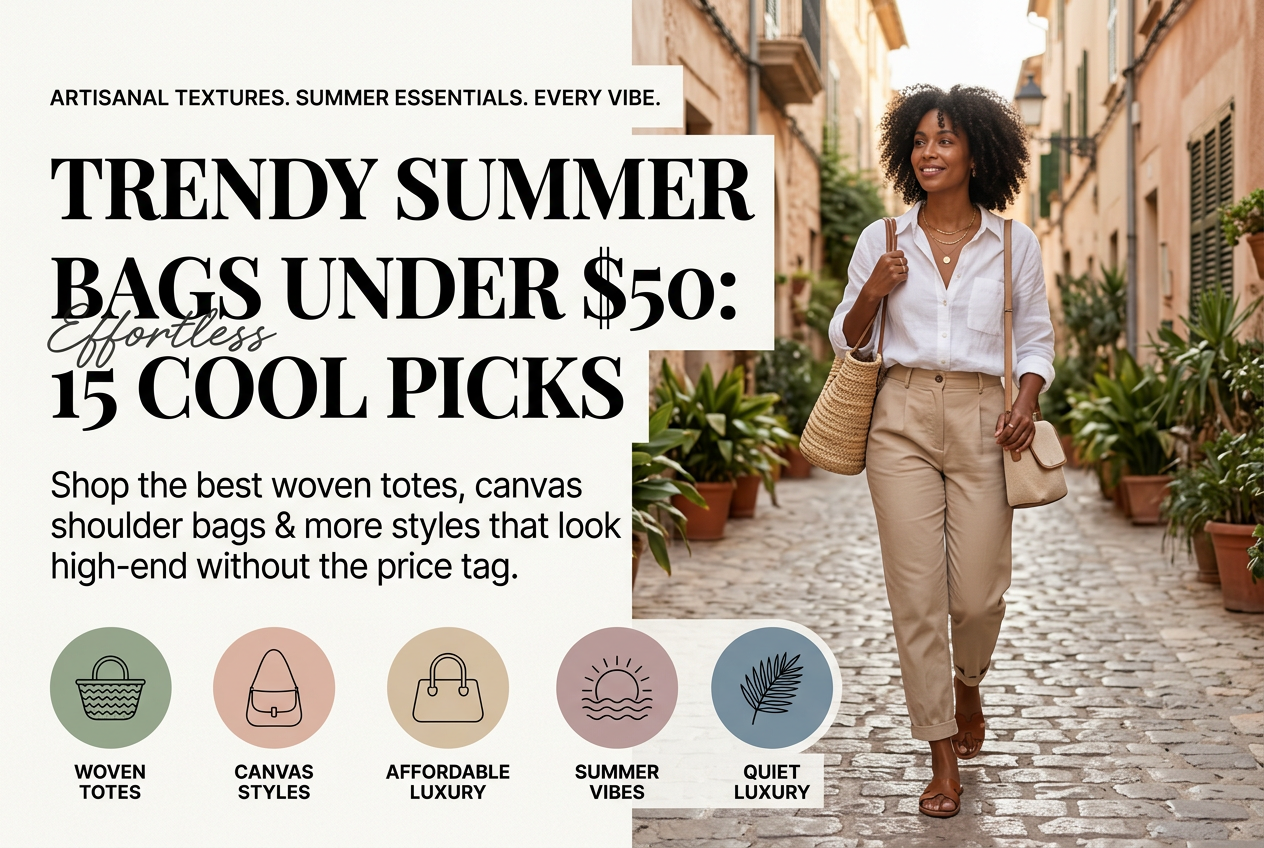
I picked up a woven tote at a small market stall two summers ago — paid maybe $30 for it — and I’ve had more compliments on that bag than anything else in my closet. That’s when I started paying attention to what makes an affordable summer bag actually work.
Here’s the thing most style guides won’t tell you upfront: the bags that look expensive almost never are. The ‘quiet luxury’ aesthetic that took over designer runways has fully trickled into the under-$50 market, and if you know what shapes and materials to look for, you can put together a summer rotation that looks considered and costs almost nothing. That’s the whole premise here — not budget style as a consolation prize, but budget style as the actual smart move.
Why Woven Bags Are Everywhere Right Now
Woven construction reads as artisanal. It just does. There’s a texture and intentionality to it that synthetic materials can’t fake, and because weaving is a relatively low-cost technique compared to leather production, you get a genuinely high-end aesthetic at a price point that makes sense. The other reason woven bags have taken over summer specifically is that they breathe — visually and literally. They feel warm-weather appropriate in a way that a structured leather bag simply doesn’t, and they photograph beautifully, which is not nothing when half the world is documenting their outfits.
Not all woven bags are equal, though. The ones worth buying have a structured base so they don’t collapse when you set them down, and handles that sit comfortably on the shoulder without digging in after an hour. I’ve carried enough floppy, shapeless woven bags to know that the shape matters as much as the material. A good one holds its form. A bad one turns into a fabric puddle the moment you put your sunscreen and keys inside.
What Makes a Summer Bag Actually Versatile?
Versatility is not about being boring.
A cream canvas tote can go to a farmers market, a casual office, a rooftop dinner, or the beach. A rigid structured bag in a loud print cannot. The difference isn’t about how interesting the bag looks — it’s about whether the bag works with the full range of your actual life, not just your vacation fantasy version of it. Neutrals and natural textures win here because they complement rather than compete. Your outfit can be the statement; the bag just has to show up and not clash.
That said, ‘versatile’ doesn’t have to mean beige forever. Sage, terracotta, soft rust — these colors read as summery without being so aggressively seasonal that you’ll feel done with them by late July. (I made the mistake of buying a very bright, very yellow bag one summer thinking I’d wear it constantly. I wore it twice. It was too much of a commitment every morning.)
Does shape matter more than color?
For long-term wearability, yes, probably. A bag shape that doesn’t suit how you naturally carry things will sit in your closet no matter how much you love how it looks on the rack. If you’re always reaching for something structured and upright, a slouchy hobo bag will feel chaotic in practice even if it photographs well. If you gravitate toward relaxed, easy silhouettes, a stiff boxy tote will drive you slightly crazy by week two. The best summer bag is the one that feels natural to grab on your way out the door — not the one that requires a mental adjustment every time.
Under $50: The Actual Sweet Spot
Finding a great bag under $50 used to feel like luck. Now it’s just knowing where to look. Brands that operate without the overhead of physical retail or designer licensing have changed what’s possible at this price point — you’re not compromising on materials or construction anymore, you’re just skipping the markup. Real woven fibers, reinforced seams, thoughtful hardware: these aren’t luxuries reserved for expensive bags. The picks in this guide prove that. Each one was chosen because it would hold up through an actual summer, not because it looked good in a product photo and then fell apart by September.
At Unwritten, our editors choose every product and story idea independently — we only recommend things we’d genuinely tell a friend about.
Frequently Asked Questions
What are the most popular summer bag styles right now?
Woven totes, slouchy shoulder bags, and structured canvas styles are leading the trend cycle this summer. The ‘quiet luxury’ aesthetic has made its way into the affordable market, so you’ll find a lot of natural textures, neutral colorways, and clean shapes dominating shelves and feeds alike.
Can you really find a stylish summer bag for under $50?
Yes, genuinely. Brands are investing more in affordable design than they used to. Under $50 no longer means flimsy construction or obviously cheap materials — it just means a lower markup. The picks in this guide use real woven materials and thoughtful shapes that hold up through a full season.
What color summer bag goes with the most outfits?
Natural, cream, and sand tones are the most versatile. They pair with bright prints, neutrals, pastels, and denim without competing. If you want a little more personality, terracotta and sage read as summery without being so trend-specific that you’ll feel over them by August.
How do I style a woven bag for everyday use, not just the beach?
Woven bags work beyond the beach when you pair them with structured outfits — think linen trousers, a crisp white shirt, or tailored shorts. The texture adds visual interest on its own, so you don’t need much else. Avoid pairing them with overly casual pieces like athletic wear, which can make the bag look out of place.
Are woven bags durable enough for daily use?
Most woven bags in the under-$50 range are built for regular use, not just occasional outings. Look for reinforced handles and a structured base — those two details make the biggest difference in longevity. Avoid overstuffing them, since woven construction can stretch at stress points over time.