
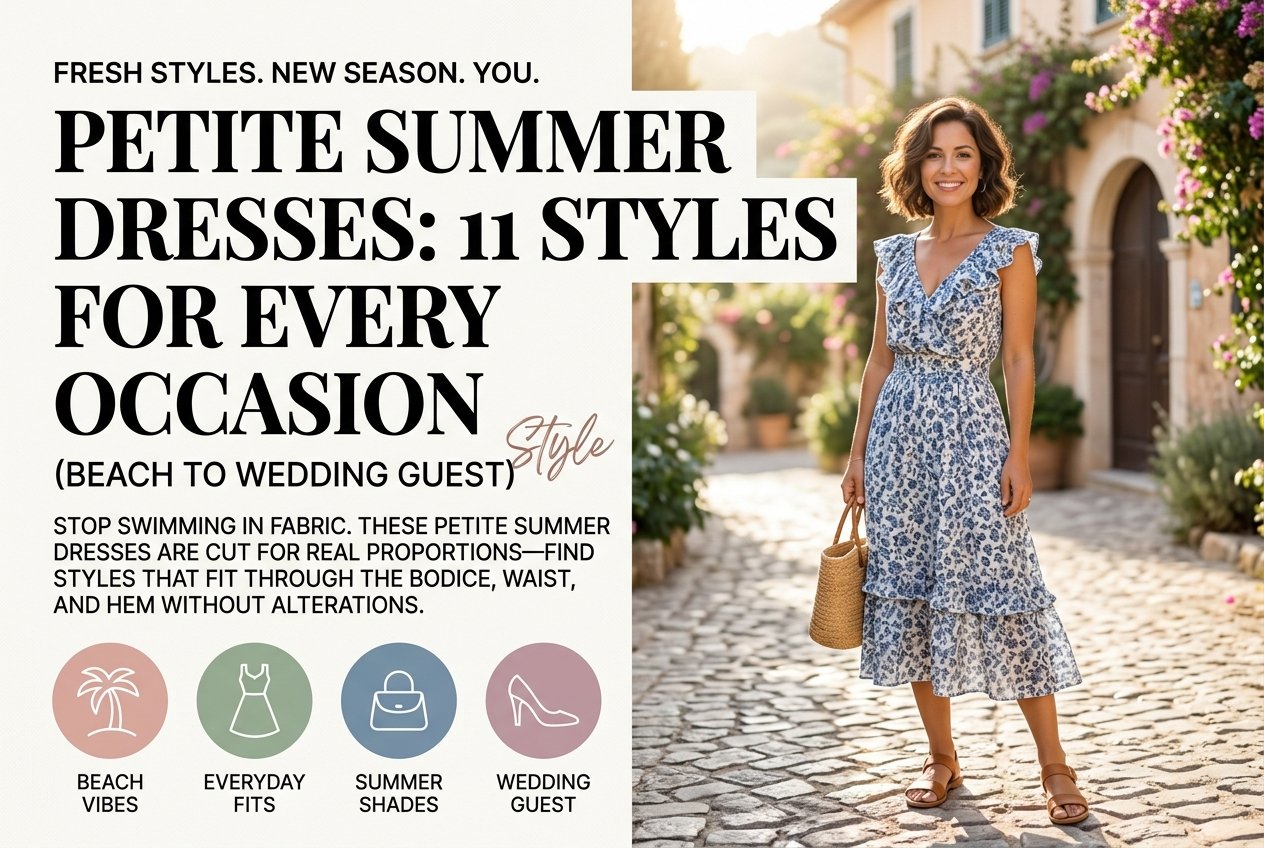
The waistline was sitting somewhere near my ribcage. I’d found a dress I genuinely loved—right print, right color, exactly the vibe I wanted for summer—and on my 5’2″ frame it looked like a costume. That was the moment I stopped buying regular sizing and committed fully to shopping petite. It changed everything.
Here’s what most style guides skip over: petite summer dresses aren’t just about shorter hems. Once you find pieces actually built for your proportions, getting dressed stops feeling like a negotiation with the fabric. The waist lands where it should. The neckline doesn’t swallow your collarbone. You stop mentally cataloguing which alterations you’d need before you could actually wear something. That’s the real payoff, and it’s worth being deliberate about how you shop.
Why does standard sizing keep failing us?
Most high-street dresses are drafted for someone around 5’9″. If you’re under 5’4″, the proportions go wrong in multiple directions at once—sleeves land past your wrists, armholes gape, and a midi dress becomes a maxi. The issue isn’t just length. Shoulders are wider than your frame. Darts are placed for a longer torso. Necklines are scaled for someone with more neck and chest real estate to work with. Shopping standard sizing as a petite woman means you’re constantly working against the pattern, not with it.
Petite-specific lines have genuinely improved. Brands now adjust shoulder width, dart placement, neckline scale, and torso length alongside the hem—which is how it should work. (Some brands still just chop the hem and call it petite, which is its own disappointment. Reading reviews from other petite shoppers before buying will save you from those.) The difference between a dress that’s been properly drafted for a petite frame and one that’s been shortened is immediately obvious when you put them on side by side.
The silhouettes worth your attention
Not all cuts are created equal on a petite frame. A-line styles skim without clinging and keep the eye moving downward in a way that lengthens. Wrap dresses create an instant waistline regardless of your exact proportions—I’ve never met a wrap dress that didn’t look intentional. Fit-and-flare gives you shape through the bodice and lets the skirt move, which photographs beautifully and feels great to actually wear. What these all share is waist definition, and that’s the non-negotiable: your frame needs that visual anchor point or everything reads as one unbroken column of fabric.
Avoid oversized boyfriend cuts.
They swallow petite frames in a way that reads less effortless-chic and more borrowed-from-someone-larger. Same with billowing fabrics that have no structure—volume without definition just adds bulk. If a dress doesn’t have some mechanism for showing where your waist is, whether that’s a tie, a seam, ruching, or an elasticated band, it’s probably going to fight you. On prints: go bigger than you think. Small, busy patterns can make a petite frame read even smaller, while a bold print feels deliberate and confident.
Casual dresses you’ll actually wear on repeat
Your weekday uniform should require zero effort. Casual petite summer dresses that hit at or just above the knee, have some waist definition, and come in cotton or linen blends are the ones you’ll reach for constantly—errands, coffee, the kind of low-stakes warm-weather days that make up most of summer. Simple prints and solid colors that work with sandals and sneakers equally are worth prioritizing over anything that needs specific styling to look right.
Wedding season, handled
Occasion dressing when you’re petite comes with its own checklist. You need something that looks polished and fits through the bodice without gaping, moves well enough for a full day of wearing, and doesn’t require three rounds of alterations before you can leave the house. For weddings specifically, knee or midi length gives you more freedom of movement than a full maxi anyway, and structured fabrics with interesting seaming or pleating do the work of creating shape without you having to think about it. Check the neckline carefully—a high or scoop neckline that’s been drafted for a petite frame won’t gap the way a standard-cut version will.
Shopping smarter, not longer
The petite market has expanded enough that you’re no longer choosing between two options per price point. High-street retailers have dedicated petite sections. Premium brands have built out full petite lines with adjusted proportions across every measurement. When you’re evaluating a brand, look at how they define petite sizing—brands using ‘P’ sizing that adjusts shoulders, torso, and neckline scale alongside the hem are doing it properly. Brands that just shorten a standard pattern are not. Online shopping requires a returns strategy: order two sizes when you’re unsure, read reviews specifically from petite shoppers, and treat the size guide measurements as mandatory reading rather than optional context. Actually, that’s not quite right—treat them as the single most useful thing on the product page, because they are.
At Unwritten, our editors choose every product and story idea independently—we only recommend things we’d genuinely tell a friend about.
Frequently Asked Questions
What length works best for petite summer dresses?
Knee-length and just-above-the-knee hemlines tend to work best for petite frames. They show enough leg to elongate your silhouette without overwhelming your proportions the way a full maxi can.
Are petite dresses just shorter, or are they cut differently?
They’re cut differently throughout. Good petite dresses have narrower shoulders, shorter torso lengths, adjusted dart placement, and scaled-down necklines—not just a chopped hem.
What silhouettes are most flattering for petite women?
A-line, wrap, and fit-and-flare cuts all work well. The common thread is waist definition—any style that creates a visual anchor at your waist will give your frame balance and proportion.
Which brands make genuinely good petite summer dresses?
Brands with dedicated petite lines—not just ‘P’ tagged versions of regular cuts—tend to produce the best results. Look for retailers that adjust shoulder width, torso length, and neckline scale alongside the hemline.
Can I buy regular dresses and just get them hemmed?
You can, but hemming alone won’t fix a waistline that sits at your ribcage or armholes that gape. For a truly good fit, petite-specific cuts address proportions that a tailor can’t always correct affordably.