
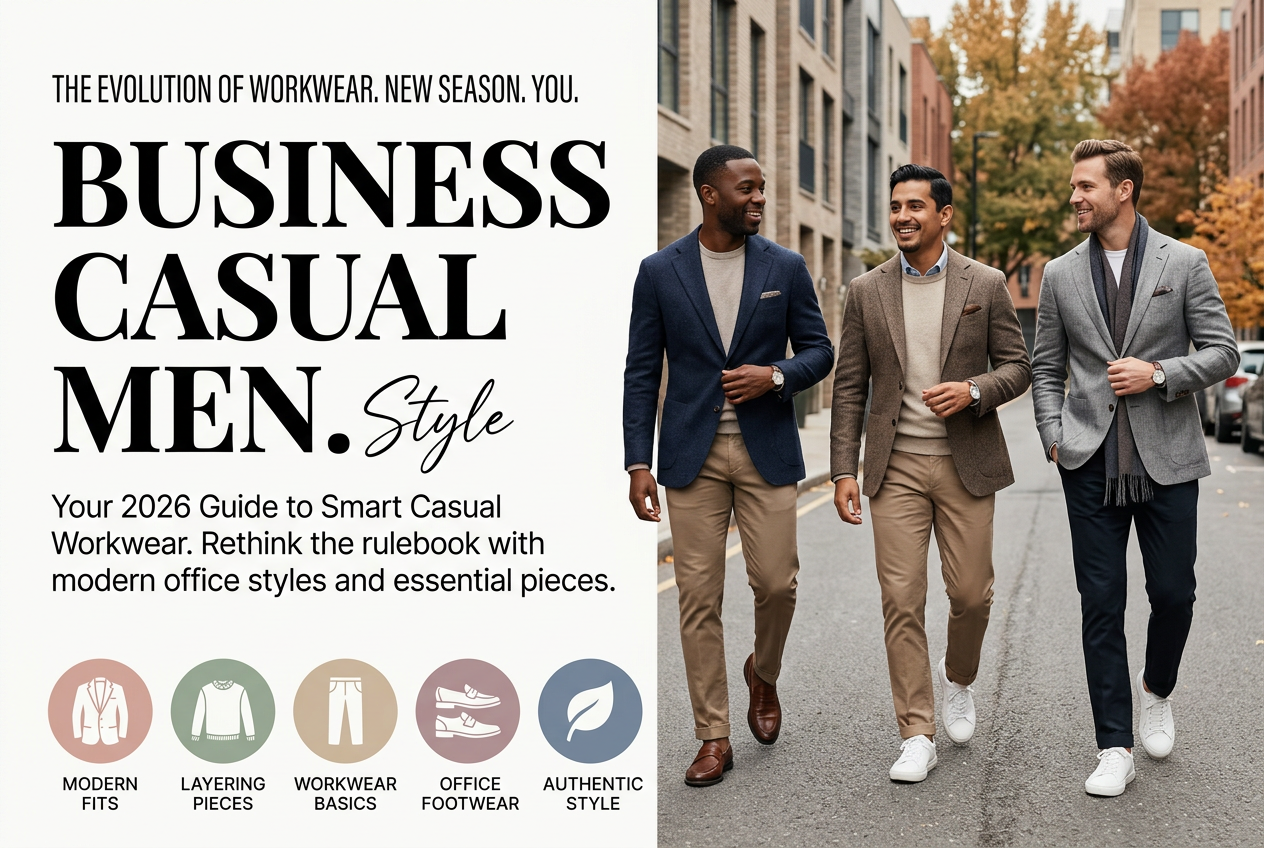
Business casual for men isn’t what it was five years ago. The old rulebook—khakis, button-ups, maybe a blazer if you’re feeling fancy—has gotten a real rethink. And honestly, that’s good news. The way we work has changed, and the way we dress for work has changed with it.
If you’re navigating the shift from pure dress code to something more flexible, or if your office just finally loosened the tie requirement, you’re probably wondering what actually counts as business casual men’s wear in 2026. The boundaries have blurred in ways that feel both liberating and slightly confusing. So let’s sort through it together.
This guide walks you through what’s shifted, what actually works, and how to build a wardrobe that feels like you—not like you’re playing dress-up in your dad’s closet.
The Evolution of Business Casual: What’s Changed?
Business casual used to mean one thing: predictable. You’d see the same uniform across every office—the same neutral palette, the same silhouettes, the same vague sense that everyone was trying not to stand out. That’s not entirely gone, but it’s loosened considerably.
The biggest shift? Authenticity is now part of the dress code. Workplaces have realized that people work better when they feel like themselves. Remote work normalized casual clothes for professional contexts. Gen Z entered the workforce with different expectations. And companies started competing for talent by offering flexibility—including what you wear.
What’s actually changed in practice:
Fit matters more than formality. A well-fitted casual shirt now outranks a baggy dress shirt. Color isn’t limited to navy, gray, and white—though those still work. Textures and patterns are fair game if they’re intentional. Sneakers have graduated from ‘absolutely not’ to ‘depends on the context.’ And the whole thing feels less like a costume and more like, well, getting dressed.
The new business casual men’s approach is less about following rules and more about understanding context. There’s still a spectrum. A tech startup in Brooklyn operates differently than a law firm in Chicago. But even traditional industries have loosened their grip. You’re expected to look polished and professional, but you’re also expected to look like a person, not a catalog model.
Decoding the New Dress Code: Dos and Don’ts
Here’s where it gets practical. Modern business casual dressing isn’t complicated, but it does require intention. You’re not randomly throwing things together—you’re making choices that signal you care about how you show up.
Do: Prioritize fit above all else. A slim-fit oxford in the right size beats an oversized linen button-up every time. Do invest in neutral basics—they’re your foundation. Do mix textures; a knit polo feels fresher than a flat cotton one. Do wear clean sneakers if your office allows it; a pristine white leather low-top is absolutely professional in 2026. Do layer thoughtfully; a cardigan or unstructured blazer adds dimension without formality. Do pay attention to proportions; if your pants are tapered, your top shouldn’t be oversized, and vice versa.
Don’t: Wear anything that looks like you slept in it. Wrinkles, stains, and general dishevelment still read as careless. Don’t confuse casual with sloppy. Don’t wear gym clothes to the office unless your office is literally a gym. Don’t go too trendy; you’re not trying to be a fashion influencer, you’re trying to work. Don’t ignore your shoes—they’re one of the first things people notice. Don’t wear the same outfit twice in one week if you can help it; it’s noticeable and it matters. And don’t overthink it so much that you’re paralyzed every morning. That’s the opposite of the point.
The real rule? Look like you made a decision. That’s what separates business casual from just casual.
Key Staples for a Modern Business Casual Wardrobe
Building a workwear essentials men’s collection doesn’t mean buying a ton of stuff. It means buying the right stuff and making it work together. Think of this as your foundation—the pieces that do the heavy lifting.
Neutral Bottoms: You need three pairs of pants that fit perfectly. One charcoal gray, one navy, one in a warm beige or tan. These should be comfortable enough to sit in for eight hours but structured enough to look intentional. Flat-front, tapered or straight-leg depending on your body type. Not skinny. Not baggy. Just right.
Casual Button-Ups: Oxford cloth, linen, cotton blends—these are your workhorses. White and light blue are non-negotiable. From there, add a subtle stripe, maybe a muted plaid, a soft green, or a pale pink. Fit is everything. The shirt should skim your body without clinging or billowing. Sleeves hit at your wrist bone. Length covers your backside.
Polos and Knits: A well-made polo in navy or gray is incredibly versatile. Merino wool blends are worth the investment—they breathe, they don’t wrinkle as much, and they look elevated. Add a few lightweight sweaters or cardigans for layering. Crew neck or v-neck, nothing too chunky.
Shoes: One pair of leather loafers or oxfords in brown or black. One pair of clean white or neutral sneakers. That’s genuinely enough. Shoes should be clean and well-maintained. If they’re scuffed, they undermine everything else you’re wearing.
The Blazer Question: You don’t need one every day, but having an unstructured blazer or sport coat changes everything. It’s the piece that instantly elevates casual into professional. Navy, gray, or a subtle pattern. Wear it open, never buttoned. It should feel like a layer, not armor.
Accessories: A simple watch. A leather belt that matches your shoes. That’s it. Don’t overcomplicate this part.
Outfit Ideas for Every Office Environment
Knowing your staples is one thing. Knowing how to actually combine them is another. Here’s where it gets real—because context matters, and different offices have different vibes.
Tech or Creative Office (Relaxed): White oxford, navy chinos, white sneakers, no blazer. Add a lightweight cardigan if you want to layer. This reads as ‘I care’ without screaming ‘I’m overdressed.’ Swap the sneakers for loafers if you’re in a meeting with clients.
Finance or Corporate (Traditional): Light blue oxford, charcoal pants, brown loafers, unstructured blazer. You’re not wearing a tie, but you’re signaling that you understand the room. This is business casual men’s wear at its most conventional, and that’s fine—it works.
Mixed Environment (Some Days Casual, Some Days Client-Facing): Build around the blazer. On relaxed days, wear it over a polo and sneakers. On client days, layer it over an oxford and loafers. The blazer is your variable. Everything else stays consistent.
Startup or Flexible (Very Casual): Quality jeans, a casual button-up or knit, sneakers. You’re not trying to look corporate. You’re trying to look competent and intentional. A watch and a leather belt still matter. Details matter even when the dress code is loose.
Hybrid or In-Between (You’re Not Sure): Err slightly formal. Navy chinos, white oxford, loafers, optional blazer. This works in almost any setting. You won’t be overdressed, and you’ll feel confident.
The pattern you’ll notice: consistency matters more than individual pieces. If every outfit follows a similar formula—neutral pants, intentional top, clean shoes, optional layer—you’ll look put-together without looking like you’re trying too hard. That’s the sweet spot.
Making It Your Own: Personalizing Your Professional Look
Here’s where business casual men’s wear gets interesting: you’re not supposed to disappear into the dress code. You’re supposed to look like yourself while respecting the context.
That means you get to make choices. If you’re drawn to patterns, wear a subtle check or stripe instead of solid colors. If you prefer warmer tones, build your palette around camel, olive, and rust instead of cool grays. If you like textures, seek out linen blends, cable knits, and woven fabrics instead of flat cottons. If you’re into color, a soft sage or dusty blue reads professional while still being distinctly you.
The key is intention. Don’t wear something just because it’s different. Wear it because it reflects how you actually dress when no one’s watching. The best professional wardrobes are just slightly elevated versions of someone’s natural style.
Think about your lifestyle, too. If you commute by bike, invest in wrinkle-resistant fabrics and keep a blazer at the office. If you’re in and out of meetings, prioritize comfortable fits that move with you. If you work from home two days a week, you don’t need as many pieces—focus on quality over quantity. If you travel for work, stick to a color palette that mixes and matches easily.
And honestly? Wear what makes you feel confident. That’s not nothing. When you feel like yourself at work, other people notice. You show up differently. You work better. That’s the real point of modern business casual—it’s supposed to work for you, not against you.
The 2026 approach to business casual men’s wear is less about following a rulebook and more about understanding the context you’re in, building pieces that work together, and showing up as a polished version of yourself. It’s flexible enough to feel like choice, but structured enough to feel intentional. And that balance—that’s what separates business casual from just throwing on whatever’s clean.
At Unwritten, our editors choose every product and story idea independently — we only recommend things we’d genuinely tell a friend about.