I wore the same navy blazer to the office for six years, and nobody ever told me it no longer fit. They did not need to. The sleeves had crept past my wrists, the shoulders sagged, and I looked like a man wearing his older brother’s jacket to a meeting he had not been invited to.
Here is the lesson I took from that, and it covers most of what follows: look like you made a decision. That one idea is what separates business casual from just casual. Everything else is detail.
The rules have loosened, but the need for intention has not.
Business casual for men is not what it was five years ago. The old rulebook of khakis and a button-up, with a blazer if you were feeling fancy, has had a serious rethink. Honestly, that is good news. The way we work has changed, and the way we dress for work changed with it.
Maybe your office just dropped the tie requirement. Maybe you are moving from a strict dress code to something more flexible, and you are wondering what actually counts as business casual men’s wear in 2026. The boundaries have blurred in ways that feel both liberating and slightly confusing. So let’s sort through it.
What actually changed in the last few years?
Business casual used to mean one thing: predictable. Walk into any office and you would see the same uniform, the same neutral palette, the same silhouettes and the same vague sense that everyone was trying not to stand out. That has not vanished entirely, but it has loosened a lot.
The biggest shift is that authenticity became part of the dress code. Workplaces figured out that people work better when they feel like themselves. Remote work normalized casual clothes in professional settings. Gen Z arrived with different expectations. Meetings moved onto video calls where nobody sees your shoes. And companies began competing for talent by offering flexibility, including what you wear.
Here is what that looks like in practice.
Fit matters more than formality now. A well-fitted casual shirt outranks a baggy dress shirt. Color is no longer stuck on navy and gray, though both still work. Textures and patterns are fair game if they are deliberate. Sneakers have graduated from ‘absolutely not’ to ‘depends on the context.’ The whole thing feels less like a costume and more like getting dressed.
So the modern approach is less about following rules and more about reading the room. There is still a spectrum. A tech startup in Brooklyn operates differently from a law firm in Chicago, but even traditional industries have loosened their grip. You are expected to look polished and professional, and you are also expected to look like a person instead of a catalog model.
Dos, don’ts and one real rule
Modern business casual dressing is not complicated, but it does take intention. You are not throwing things together at random. You are making choices that signal you care about how you show up.
Start with the dos. Prioritize fit above all else: a slim-fit oxford in the right size beats an oversized linen button-up every time. Invest in neutral basics, because they are your foundation. Mix textures, since a knit polo feels fresher than a flat cotton one. Wear clean sneakers if your office allows it, and know that a pristine white leather low-top is absolutely professional in 2026. Layer thoughtfully with a cardigan or an unstructured blazer, which adds dimension without formality. Watch your proportions too: if your pants are tapered, your top should not be oversized, and vice versa.
Now the don’ts. Do not wear anything that looks like you slept in it, because wrinkles and stains still read as careless. Casual is not the same as sloppy. Skip the gym clothes unless your office is literally a gym. Do not chase every trend either, since you are trying to work, not to become a fashion influencer. Your shoes are one of the first things people notice, so do not ignore them. Try not to repeat the same outfit twice in one week, because people do notice and it does matter. And do not overthink it to the point where you are paralyzed every morning, which defeats the whole purpose. I once spent forty minutes picking a shirt for a Tuesday standup (nobody looked at it, and I have been quietly annoyed about that ever since).
What do you actually need in the closet?
Building a workwear wardrobe does not mean buying a ton of stuff. It means buying the right stuff and making it work together. Think of these as your foundation, the pieces that do the heavy lifting.
Pants. A few pairs that fit perfectly do more than a drawer full of pairs that almost do. Start with charcoal gray and navy, and let a warm beige or tan round things out. They should be comfortable enough to sit in for eight hours and structured enough to look intentional. Flat-front, tapered or straight-leg, depending on your build. Not skinny. Not baggy. Just right.
Casual button-ups. These are your workhorses: oxford cloth, linen, cotton blends and maybe a little chambray. White and light blue are non-negotiable. From there add a subtle stripe, a muted plaid, a soft green or a pale pink. Fit is everything. The shirt should skim your body without clinging or billowing. Sleeves hit at the wrist bone, and the length covers your backside.
Polos and knits. A well-made polo in navy or gray is incredibly versatile. Merino wool blends are worth the investment because they breathe and they wrinkle less. Add a couple of lightweight sweaters or cardigans for layering, crew neck or v-neck, nothing too chunky.
Shoes. Two pairs cover it. One is a leather loafer or oxford in brown or black, and the other is a clean white or neutral sneaker. That is genuinely enough. Keep them clean and well maintained, because scuffed shoes undermine everything else you are wearing.
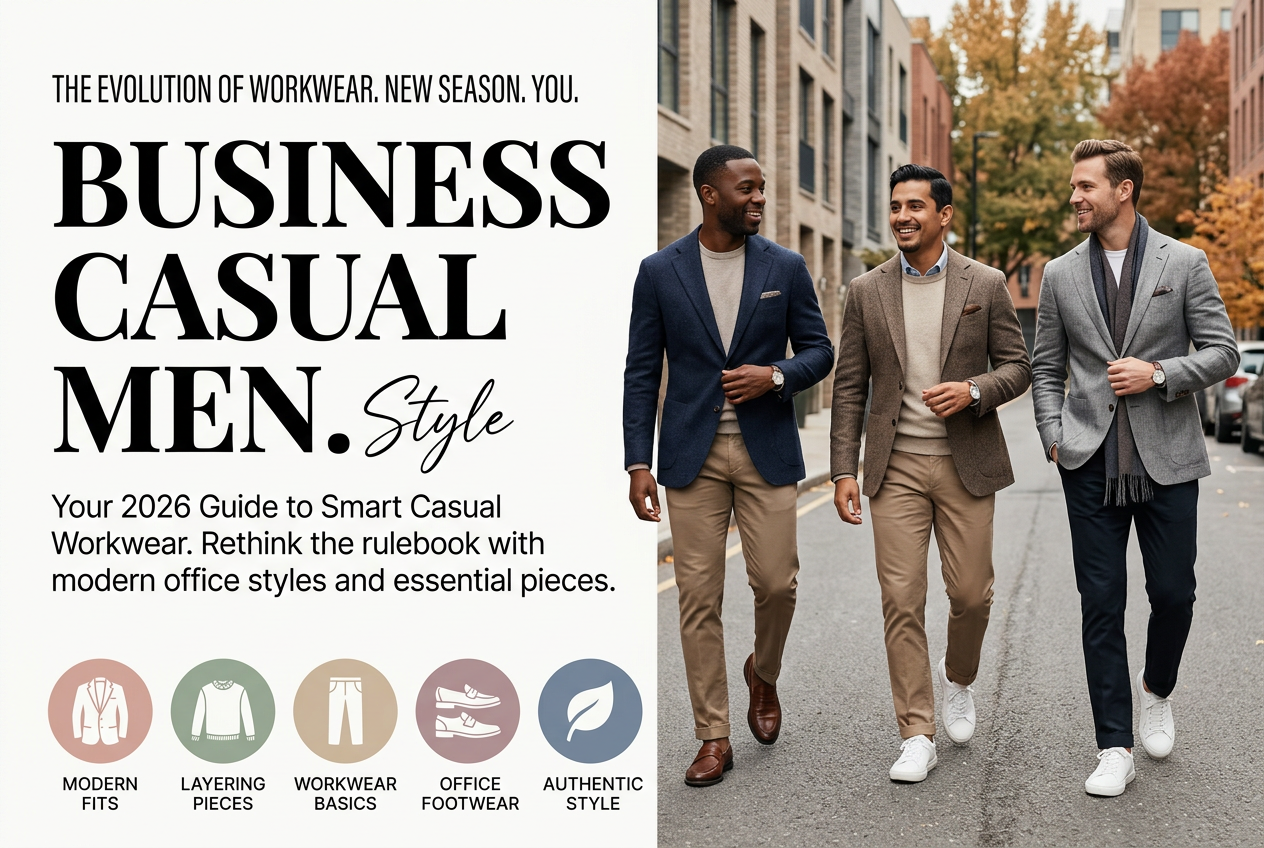
The blazer question. You do not need one every day, but an unstructured blazer or sport coat changes everything. It is the piece that lifts casual into professional. Pick navy or gray, or something with a subtle pattern. Wear it open, never buttoned. It should feel like a layer, not armor.
Accessories. A simple watch and a leather belt that matches your shoes. That is it.
One formula, five kinds of office
Knowing your staples is one thing. Combining them is another, and context matters, because different offices have different vibes.
Tech or creative, relaxed: white oxford, navy chinos, white sneakers and no blazer. Add a lightweight cardigan if you want a layer. This reads as ‘I care’ without shouting ‘I’m overdressed.’ Swap the sneakers for loafers if you have a client meeting.
Finance or corporate, traditional: light blue oxford, charcoal pants, brown loafers and an unstructured blazer. There is no tie, but you are signaling that you understand the room. It is business casual men’s wear at its most conventional, and that is fine. It works.
Mixed days, some casual and some client-facing: build around the blazer. On relaxed days wear it over a polo and sneakers. On client days layer it over an oxford with loafers. The blazer is your variable, and everything else stays the same.
Startup or very flexible: quality jeans, a casual button-up or a knit, and sneakers. You are not trying to look corporate. You are trying to look competent and intentional. A watch and a leather belt still matter, because details count even when the dress code is loose.
Hybrid or not sure: err slightly formal. Navy chinos, a white oxford, loafers and an optional blazer work almost anywhere. You will not be overdressed, and you will feel confident.
The pattern is clear once you see it: consistency matters more than any single piece. If every outfit follows a similar formula (neutral pants, an intentional top, clean shoes and an optional layer) you will look put together without looking like you are trying too hard. That is the sweet spot.
Make it yours without breaking the room
This is where it gets interesting. You are not supposed to disappear into the dress code. You are supposed to look like yourself while respecting the context.
That means you get to make choices. If patterns draw you in, wear a subtle check or stripe instead of solid colors. If you prefer warmer tones, build your palette around camel and olive instead of cool grays. If you like texture, look for linen blends and cable knits instead of flat cottons. If you like color, a soft sage or dusty blue reads professional while still being distinctly you.
The key is intention. Do not wear something just because it is different. Wear it because it reflects how you dress when no one is watching. The best professional wardrobes are slightly elevated versions of someone’s natural style.
Think about your lifestyle too. If you commute by bike, invest in wrinkle-resistant fabrics and keep a blazer at the office. If you are in and out of meetings, prioritize fits that move with you. If you work from home two days a week, you need fewer pieces, so focus on quality over quantity. If you travel for work, stick to a palette that mixes and matches easily.
And honestly? Wear what makes you feel confident. That is not nothing. When you feel like yourself at work, other people notice. You show up differently, and you work better. That is the real point of modern business casual. It is supposed to work for you, not against you.
My own take for 2026: buy fewer clothes and get the fit right on every one of them. Take two pairs of pants and a blazer to a tailor before you buy a seventh shirt. A cheap shirt that fits beats an expensive one that does not, and I have never once regretted paying someone to fix a sleeve.
At Unwritten, our editors choose every product and story idea independently — we only recommend things we’d genuinely tell a friend about.
Frequently Asked Questions
What counts as business casual for men in 2026?
A well-fitted casual button-up or knit, neutral pants, clean shoes and an optional unstructured blazer. The look is polished but relaxed, and it changes a little with each office.
Can men wear sneakers in a business casual office?
Often yes. A clean white or neutral leather sneaker is accepted in many offices now. Swap to loafers when you meet clients or when your workplace is more traditional.
What are the basic pieces of a business casual wardrobe for men?
Start with well-fitting pants in charcoal gray and navy, white and light blue button-ups, a polo or merino knit, leather loafers or oxfords, clean sneakers and an unstructured blazer. Add a simple watch and a matching leather belt.
What is the safest business casual outfit if I am not sure about the dress code?
Err slightly formal. Navy chinos, a white oxford shirt and loafers, with a blazer if you want one, work in almost any setting.