
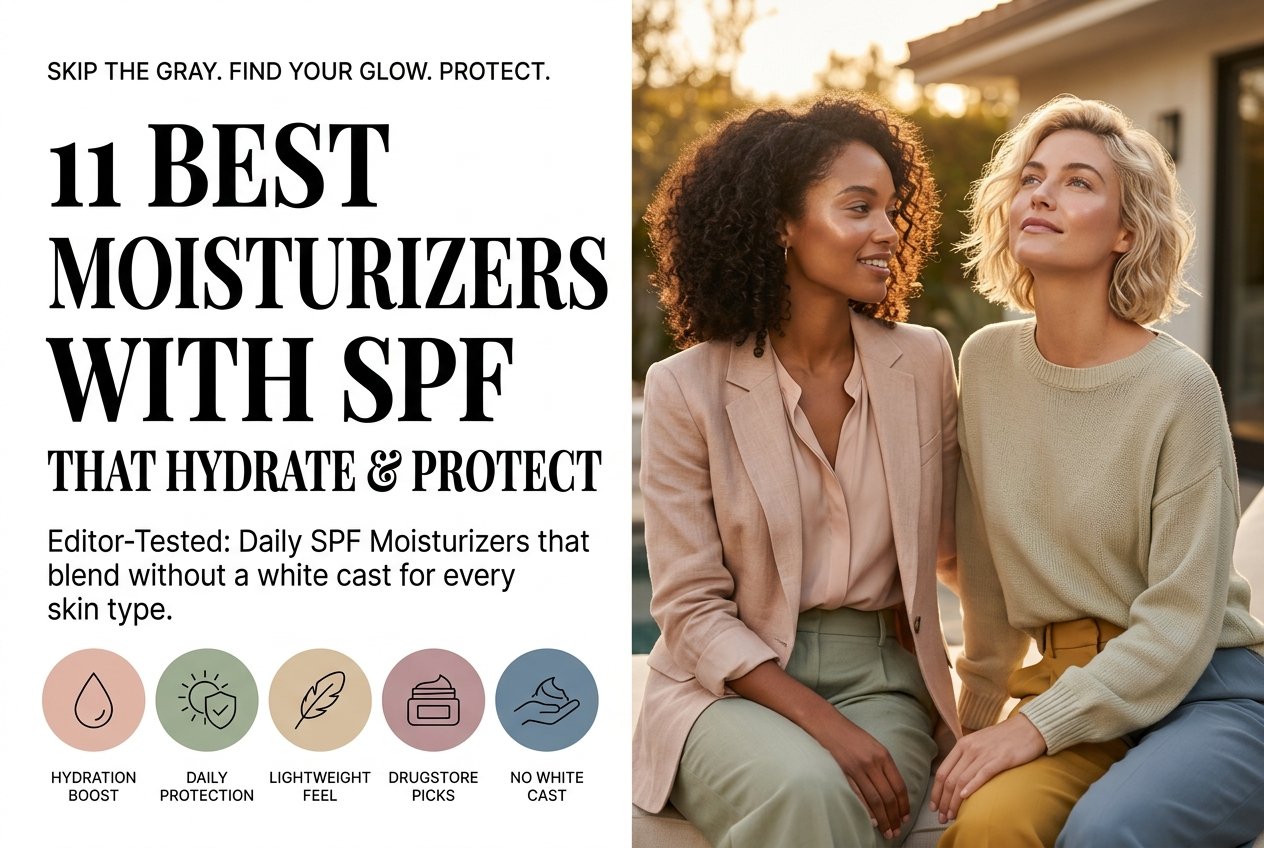
The white cast situation is what finally made me switch. I’d been layering a separate SPF over my moisturizer for years, and one morning I caught myself in office fluorescent lighting looking genuinely gray. That was enough. A good moisturizer with SPF was always the smarter move — I’d just been too stubborn to admit it.
Here’s what actually matters when picking one: it has to blend into skin rather than sit on top of it, feel comfortable through a full workday, and not quietly dry you out while pretending to hydrate. Plenty of formulas fail at least one of those. The eleven below don’t.
Why Bother Combining Them at All?
Fewer steps doesn’t just mean a faster morning — it means you’re more likely to actually do it. Sun protection is the single most effective anti-aging thing most people can add to their routine, and yet skipping it is absurdly common precisely because it feels like one step too many. A moisturizer with SPF removes that friction entirely. What’s interesting is that older SPF moisturizer formulas really were either too heavy or chalky enough to make the compromise feel not worth it. Modern hybrid filter systems changed that. Now the same product that gives you SPF 30 or higher can also carry hyaluronic acid, ceramides, peptides, or glycerin — actual hydration ingredients, not just filler. The protection doesn’t come at the cost of skin feel anymore, which is the thing that shifted my thinking about these products entirely. If you have very oily or severely acne-prone skin, a separate gel sunscreen might still serve you better. But for most people, this is the shortcut that holds up.
The 11 Picks
These are formulas our editors have worn across seasons, repurchased, and recommended to friends with actual skin concerns. Sorted by skin type so you can get to your match faster.
Tuesday morning energy. This one works without demanding your attention — hydrating enough to feel like something, light enough that it disappears under makeup without pilling. The hybrid SPF system blends in within seconds, and there’s no gray tint even on medium skin tones. Combination skin specifically benefits here because you’re not fighting shine by noon or begging for more moisture on dry patches.
Dry skin needs a formula that commits. This one has ceramides to shore up your moisture barrier, hyaluronic acid for plumping, and a richness that reads as treatment rather than afterthought. Give it three days. The difference in how your skin feels is noticeable. (Fair warning: oily skin types should skip this one — it’s genuinely rich and will read as too heavy.)
Sensitive skin and SPF have a complicated history.
This formula uses mineral filters only — zinc oxide and titanium dioxide — which are less likely to trigger stinging or redness than chemical alternatives. It’s fragrance-free, skips the common irritants, and actually has a calming effect rather than an aggravating one. The white cast is minimal for a mineral formula, which isn’t always easy to pull off. Impressive formulation.
Oily skin’s problem with most SPF moisturizers is that they add to the problem rather than solving it. This gel formula uses glycerin to pull moisture into skin, then dries to a matte finish. No grease. No slippery base that makes foundation slide off by 10 a.m. Just hydration that stays put without shining.
For skin that wants sun protection and anti-aging support in the same step, this formula earns its price. Peptides support firmness. The texture is rich enough to address fine lines without feeling suffocating. The SPF integrates so smoothly you stop noticing it’s there, which is exactly how it should feel. Consistent daily use is where this one pays off most.
Niacinamide in an SPF moisturizer is a genuinely useful combination because the ingredient addresses the texture and redness issues that accumulated sun damage tends to cause — while the SPF prevents new damage from piling on. Apply every morning for three weeks. The improvement in evenness is real and, once you see it, hard to give up.
You do not need to spend $80 on a moisturizer with SPF. Actually, that’s not quite right — sometimes you do, for texture reasons or specific ingredient needs. But this drugstore option handles the fundamentals without apology: it hydrates, blends without white cast, and holds up under sun exposure without breaking down. Start here if you’re testing whether SPF moisturizers work for your skin before committing to something pricier.
Combination skin is annoying to shop for because most formulas pick a lane. Too rich for the T-zone, too light for the cheeks. This one doesn’t force you to choose — it hydrates where you need it and stays matte where you don’t. The SPF coverage is even across the whole face, which sounds basic but is harder to achieve than it should be.
Almost serum-like. It layers under other products without friction, sits invisibly on skin, and delivers genuine hydration through well-dosed hyaluronic acid. The SPF filters are integrated well enough that the formula doesn’t feel like a sunscreen at all — it feels like skincare that happens to protect you. If the dewy, plump skin look is what you’re going for, this is where to start.
Prestige SPF moisturizers earn their cost in two ways: better texture engineering and higher ingredient concentrations that make the product last longer because you need less per application. This one hydrates deeply, has truly invisible SPF, and has the kind of sensory experience that makes you want to use it every morning rather than treating it like a chore. Worth it if you’ve tried cheaper options and found yourself skipping them.
Clean beauty formulas used to compromise on performance. This one doesn’t. Plant-based hydrators, mineral SPF filters, nothing suspicious in the ingredient list — and it performs on par with conventional alternatives. If ingredient transparency matters to your purchasing decisions, this is the one that doesn’t make you trade efficacy for peace of mind.
Does Price Actually Predict Performance?
Not reliably. Drugstore brands have spent the last decade catching up on formulation technology, and several of the picks above cost under $20. What prestige brands often do better is texture refinement and packaging that makes daily use feel less like maintenance and more like something you chose. I’ve used both tiers and honestly rotate between them — a nicer formula when I have somewhere to be, a reliable drugstore version on gym mornings when I don’t want to think about it. Both approaches work.
How to Actually Apply It
Application technique matters more than most people realize, and almost everyone uses too little. A quarter-teaspoon covers your face and neck adequately — roughly the size of a full pea, not a half-pea. Using less doesn’t just reduce hydration; it cuts your actual SPF protection by a meaningful amount because SPF ratings are calculated at full application weight. Apply to clean skin after serums or treatments, give it sixty seconds to set before foundation, and don’t skip the neck. Reapplication every two hours is the technical standard, but if you’re primarily indoors, a morning application is sufficient for most days. If you’re outside for a stretch at midday, reapply once. SPF powder or a setting spray with SPF makes that easier without disturbing makeup.
What to Look For on the Label
Hydration ingredients worth seeking out: hyaluronic acid, glycerin, ceramides, peptides. These four do the actual work of drawing moisture in and keeping it there. On the SPF side, hybrid formulas combining mineral and chemical filters tend to offer the best balance of invisible finish and broad-spectrum protection for most skin types. Watch out for alcohol listed high in the ingredients (drying), fragrance if your skin reacts easily, and anything marketed as ‘waterproof’ in a daily moisturizer context — that usually signals a formula too occlusive for everyday wear.
A moisturizer with SPF that’s actually good at both jobs is the kind of product that makes your routine smaller without making it worse. Pick the one that matches your skin type, use it consistently for a few weeks, and you’ll stop thinking of sun protection as the step you sometimes skip.
At Unwritten, our editors choose every product and story idea independently — we only recommend things we’d genuinely tell a friend about.
Frequently Asked Questions
Can a moisturizer with SPF replace a separate sunscreen?
For everyday indoor-to-outdoor life, yes. If you’re spending extended time in direct sun, a dedicated SPF 50 sunscreen gives more reliable protection. But for most mornings, a well-formulated SPF 30 moisturizer is genuinely sufficient and far better than skipping sun protection entirely because layering feels like too much.
How much moisturizer with SPF do you actually need to apply?
More than you think. A quarter-teaspoon covers your face and neck. Most people apply half that, which means they’re getting significantly less protection than the label promises. If the product feels heavy at that amount, you probably need a lighter formula, not less of it.
Is mineral or chemical SPF better in a moisturizer?
Mineral filters (zinc oxide, titanium dioxide) are gentler on sensitive or reactive skin but can leave a white cast on deeper skin tones if the formula isn’t well-made. Chemical filters blend invisibly but occasionally irritate sensitive skin. Hybrid formulas split the difference and tend to work well across most skin types.
Do moisturizers with SPF work for oily or acne-prone skin?
Some do. Look specifically for gel-based or oil-free formulas that dry to a matte finish. Avoid anything labeled ‘rich’ or ‘nourishing’ if your skin already produces excess oil. Gel SPF moisturizers with humectants like glycerin give you hydration without adding to shine.
Do you need to reapply moisturizer with SPF throughout the day?
Technically yes, every two hours in direct sun. Practically, if you’re mostly indoors, your morning application covers you. If you’re outside for a few hours at midday, reapply once. Setting sprays with SPF or SPF powders make midday reapplication easier without disturbing makeup.


