
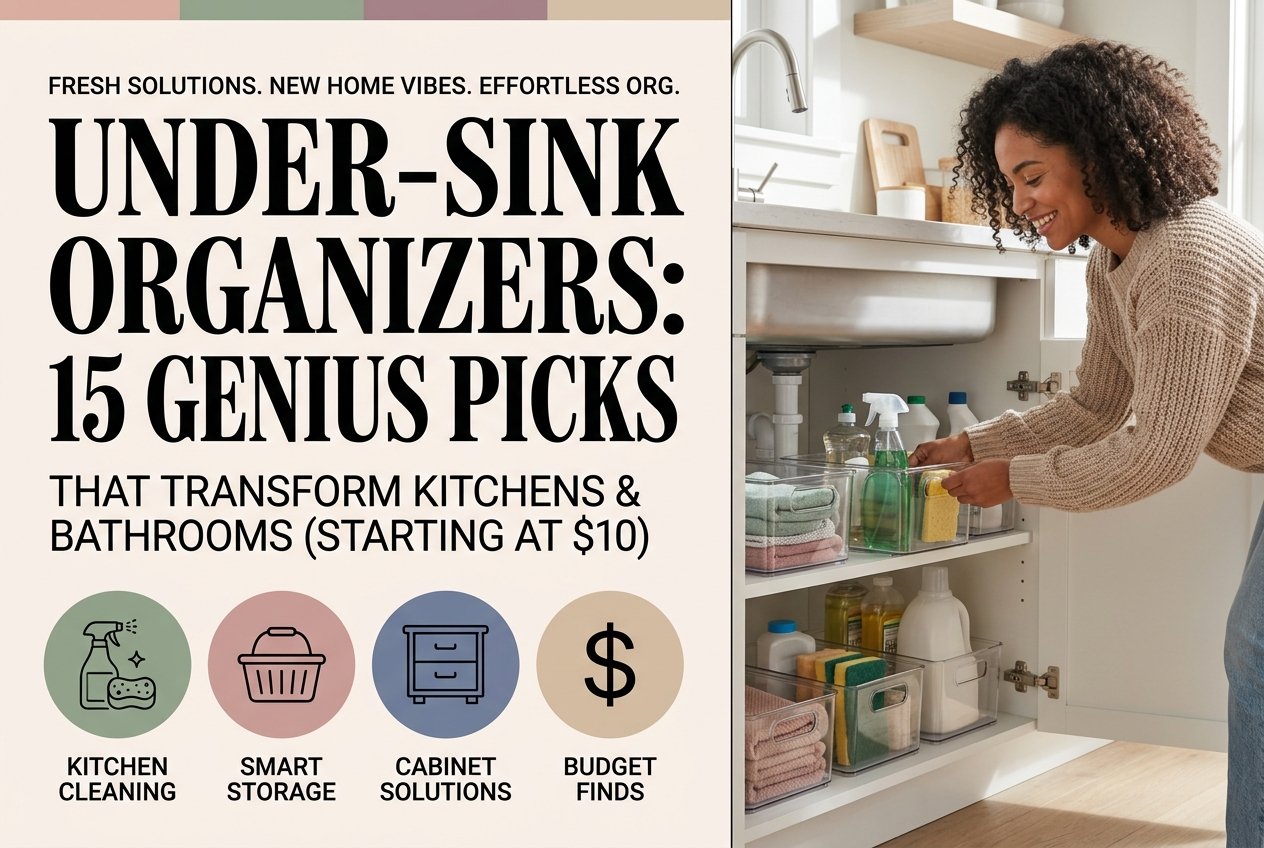
I knelt on the kitchen floor last winter, reached to the back of the cabinet under the sink, and pulled out a bottle of drain cleaner I had no memory of buying. It was the third bottle. Actually, that is not quite right: it was the fourth.
That day taught me the one thing I would tell anyone. Organizing the cabinet under your sink is a small job with an immediate payoff, and you can start with just one or two organizers. No massive investment, no complicated setup. Your future self, the one who actually knows where everything is, will thank you.
The cabinet under your sink is either a carefully organized oasis or a chaotic jumble of cleaning supplies and plumbing bits, plus that one thing you swear you will use someday. If you are nodding, you are not alone. Most of us treat under-sink space like a black hole: toss it in and hope for the best. But under-sink organizers do not have to cost a fortune or turn into a weekend project. The right storage solution turns a cramped, dark space into something functional. And once you see how much room you suddenly have, you will wonder why you waited. I have tested a bunch of them across my own kitchen and bathroom, and I am sharing the 15 that actually work. Most cost less than a coffee run, and they make reaching for your stuff infinitely easier.
So where do you even begin with a space that small and that dark?
What should you do before you buy anything?
The organizers matter, but how you set up the space matters just as much. These are the tricks that have kept my own cabinets functional long-term.
Start by measuring everything. Before you buy anything, measure the cabinet’s width and depth, then its height. Note where your pipes run too, because they are rarely centered, which means you have more usable space than you think. Most people skip this step and end up with organizers that almost fit.
Group like items together. Put the cleaning supplies in one zone and the personal care items in another. It sounds obvious, but it changes how the space works. You will know where things are, which means you will use what you already own instead of buying duplicates.
Use the vertical space aggressively. The biggest mistake I see is a few inches of height left empty above everything. A tiered shelf or shelf riser can double your storage capacity. It is wild how much difference those inches make.
Keep it visible. If you cannot see it, you will not use it. Translucent containers are your friend here, since you can see what you have without opening everything up. They also stop you from buying things you already own.
Leave some breathing room. Do not pack the cabinet so tightly that you cannot grab anything. A slightly emptier cabinet works far better than one where every bottle is wedged in. Trust me on this.
Your under-sink cabinet is wasting your best real estate
The cabinet under your sink is prime real estate. It is easy to reach, it sits exactly where you need it, and it can usually hold far more than it does now. The problem? Most of us shove things in without a system.
That is where under-sink organizers come in. A few strategic pieces can double your usable storage and make everything visible at a glance, which ends that moment of panic when you cannot find the bathroom cleaner. Organized spaces feel calmer, too. That is not me being sentimental (there is actual research showing that clutter stress is real).
The best part? You do not need to spend much. I have found solid organizers for under $15 that hold up just as well as the pricey options. It is one of those rare cases where budget-friendly really means smart shopping, not settling.
Kitchen sink first, because that is where the chaos starts
Your kitchen sink gets the most traffic. Between cleaning supplies, dish soap, sponges and whatever else lives down there, it needs a system that works hard. These picks handle the chaos without taking up precious space.
Bathroom cabinets, a special kind of mess
Bathroom under-sink cabinets are a special kind of chaos. You have hair products, cleaning supplies, spare toilet paper and a collection of half-empty bottles that somehow multiplied. The space is usually smaller than the kitchen’s, so organization matters even more.
These organizers are built with bathroom reality in mind. They handle moisture and tight spaces, and they keep things from rolling around when you open the cabinet door.
A $12 organizer can work as hard as a $45 one
You do not need to spend $50 on a fancy system. Some of the best organizers I have found cost under $15, and they are honestly as effective as the premium options. The difference between a $12 organizer and a $45 one is usually just branding and packaging.
These picks prove that smart storage does not have to hurt your wallet. They are durable and they look clean, and they will make you feel like you have your life together.
My advice, plainly
Organizing your under-sink cabinet might seem like a small thing, but it genuinely makes daily life easier. No more reaching blindly into the back. No more bottles falling out when you open the door. No more wondering where the cleaning spray went. No more buying a second drain cleaner because you forgot the first. It is one of those projects where the payoff is immediate, and honestly kind of satisfying.
Start with one or two organizers and build from there. Pick the pieces that fit your space and your needs, and watch the cabinet change.
My vote: spend your first $12 on a tiered shelf for the kitchen cabinet, measure before you click buy, and leave the rest for later.
At Unwritten, our editors choose every product and story idea independently — we only recommend things we’d genuinely tell a friend about.
Frequently Asked Questions
How do I know which under-sink organizer will fit my cabinet?
Measure the width and depth of the cabinet, then its height, before you buy anything. Note where the pipes run too, since they are rarely centered and you often have more usable space than you think.
Do I need to spend a lot on an under-sink organizer?
No. Solid organizers exist for under $15 and hold up just as well as the pricey options. The difference between a $12 organizer and a $45 one is usually branding and packaging.
How can I get more storage space under the sink?
Use the vertical space. A tiered shelf or shelf riser can double your storage capacity, because most cabinets leave several inches of height empty.
What is the best way to arrange things once the organizers are in?
Group like items together, such as cleaning supplies in one zone and personal care in another. Use translucent containers so you can see what you own, and leave a little breathing room so nothing is wedged in.