
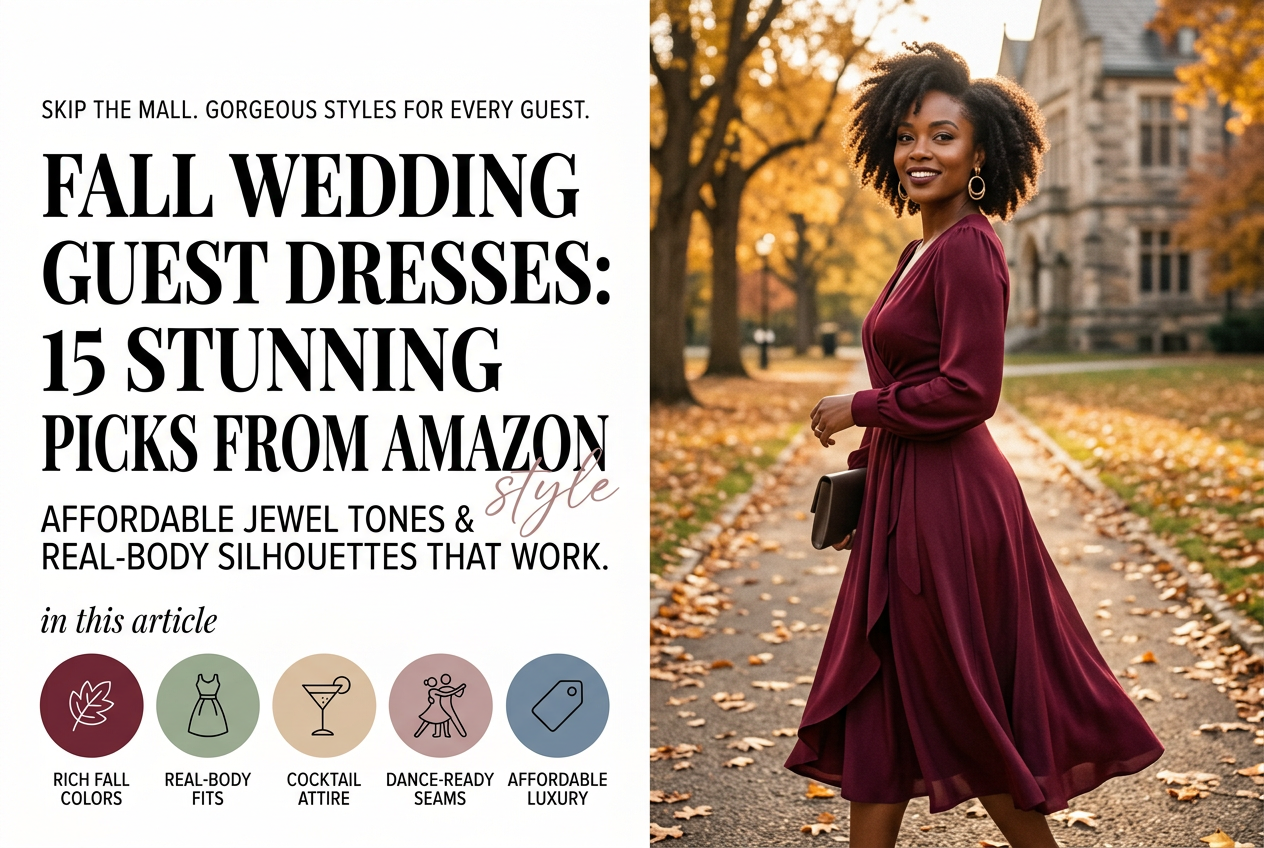
Here is the thing most people figure out only after overspending at a department store: Amazon is actually good at this now. Not “fine for the price” good. Genuinely good. Jewel tones in fabrics that drape properly, silhouettes cut for real bodies, and seams that survive an entire reception including the dancing portion. I ordered three dresses for my cousin’s November wedding last year half-expecting to return all of them, and I kept two. That surprised me more than anything else about the whole experience.
Below are 15 fall wedding guest dresses worth your time — spanning garden ceremonies in September all the way through black-tie events in late November.
Why Fall Weddings Demand a Different Approach
Summer pastels photograph beautifully in July. By October they look faded, seasonally wrong, like you grabbed the wrong dress on the way out the door. Fall weddings have their own visual logic: the light turns golden and low, the backgrounds go warm and saturated, and a dress in dusty rose that looked fresh in June now reads as washed out against amber leaves and candlelit reception halls.
Rich colors absorb that light rather than fighting it. Burgundy, deep plum, forest green, navy, warm rust — these don’t just look seasonal, they actually photograph better in fall conditions because they hold contrast. Warm metallics do the same thing. This is why every fall wedding season you see roughly the same color palette dominating the guest photos, and it is not because everyone coordinates. It is because those colors simply work.
Fabric weight matters more in fall than in any other season, too. A lightweight chiffon that flows perfectly in August heat goes limp and shapeless when temperatures drop into the fifties. Velvet, structured satin, heavier crepe blends — these hold their shape whether you are outside for a garden ceremony or inside a heated ballroom. They also happen to look considerably more expensive than their price tags suggest, which is convenient when you are shopping on Amazon.
The 15 Dresses
These span a range of silhouettes, formality levels, and body types. Some are quiet and polished. Others make more noise. All of them look like they cost more than they do.
The burgundy here is the right shade — deep enough to feel intentional, not so dark it reads as black in photos. Midi length means it works for a garden ceremony and a ballroom reception without adjustment. The fabric has enough weight that it drapes instead of clinging, and reviewers keep mentioning how well it photographs, which matters when there is a professional photographer capturing every angle of every guest.
Sequin detail without full sequin commitment. The champagne tone flatters a wide range of skin tones, the short sleeves solve the temperature problem, and the fit is forgiving through the torso while still looking deliberate. (Finding that combination at this price point is genuinely strange. I checked the seams twice.)
Go full drama here.
Forest green has become the unofficial color of fall weddings, and this floor-length cut earns that association. The silhouette is sleek and minimal — the color does the work. The fabric moves like it costs three times as much, and paired with strappy heels and a small clutch, this handles black-tie optional without any anxiety about being underdressed.
Wrap dresses persist because they solve real problems: they fit a wide range of body types, they are comfortable enough to wear for six hours, and they look like you made a deliberate choice rather than grabbed the first thing that fit. This rust-orange version is peak fall color, the midi length keeps it wedding-appropriate, and the wrap closure means you can adjust the fit slightly as the day progresses — which, if you have ever sat through a three-course reception dinner, you will appreciate more than you expect to.
Slip dresses earn their place in this category because they do something most dresses cannot: they work alone for casual weddings and work equally well layered under a structured blazer for something more formal. This navy version in satin catches light beautifully in photos, does not wrinkle during travel, and keeps the focus on how you wear it rather than on the dress itself. Reviewers who travel to weddings specifically call out the no-wrinkle quality, which is not a small thing when you are pulling a dress out of a suitcase in a hotel bathroom.
Fit-and-flare silhouettes are reliable for one reason: they are structured enough to look intentional and comfortable enough to actually survive the whole event. This plum version has enough body to photograph well and enough ease that sitting through a ceremony does not require planning. Knee length makes it practical across venue types.
Velvet is fall. Full stop. This emerald version is streamlined enough that the fabric does all the work — no competing details, no unnecessary embellishment, just a rich texture that reads as expensive without being expensive. Long sleeves extend its usefulness into early winter, and the color is the kind that makes people ask where you got the dress even after you tell them.
Rose-gold metallic sits in useful territory: more interesting than a solid color, less demanding than full sequin. The asymmetrical cut adds enough edge to feel current without veering into anything that distracts from the couple getting married. Reviewers consistently describe it as more comfortable than it looks, which is always a good sign for something this visibly glamorous.
Pockets on a wedding guest dress. Actual, functional pockets. The A-line silhouette is broadly flattering, the autumn color palette works with the season rather than against it, and the ability to carry your phone, lipstick, and a folded speech card without a clutch is — and I do not think this is overstating it — genuinely life-improving for a six-hour event. The construction is solid; the seams are not going anywhere.
Off-shoulder necklines add formality without adding coverage, which is a useful trick for events where you want to look dressed up without feeling overdressed. This burgundy version is modest enough for traditional ceremonies, interesting enough to not read as an afterthought, and structured enough that it stays in place rather than requiring constant adjustment throughout the night.
Ruffles here are not decoration. They are structure — the tiered detail creates movement and visual interest that photographs well from every angle, including the side profile that always shows up in candid reception shots. Navy keeps it grounded. Knee length keeps it appropriate. The dress looks polished without looking stiff, which is harder to pull off than it sounds.
Sheath cuts communicate competence in a way that is hard to explain but easy to recognize. This version, with a cinched waist and included belt, lets you dial in the fit rather than accepting whatever the standard cut delivers. It is the kind of dress that works across multiple seasons and multiple types of events, which means buying it is actually a reasonable decision even if you are trying to be thoughtful about spending.
Lace with long sleeves is a fall wedding combination that never really stops working, and this blush version understands why. The overlay creates texture without sacrificing elegance, the champagne undertone is broadly flattering, and the long sleeves handle temperature drops from outdoor ceremony to air-conditioned reception. Actually, that is not quite right — the sleeves handle the whole day, not just the transition. You will not spend the ceremony wishing you had brought a wrap.
Color-blocking done in fall tones looks deliberately modern in a way that solid colors sometimes cannot match. The geometric lines are clean, the palette feels seasonal without being a costume, and the streamlined cut keeps the color from overwhelming the silhouette. It is the kind of dress that photographs as more considered than its price suggests.
High-low hemlines solve a specific problem: the desire to wear something with drama and movement without sacrificing the ability to walk quickly or dance without incident. This burgundy version with tulle on the longer back half has genuine visual presence, photographs beautifully from behind (which matters at weddings), and still allows normal human locomotion in the front. It is a reasonable trade.
Shirt dresses are criminally underused as wedding guest options. This plaid version is structured enough to read as intentional, cozy enough to feel right in fall temperatures, and versatile enough to layer over a slip dress if the evening gets cold. It also works outside the wedding context, which means you will actually wear it again — and that matters when you are trying to make smart choices about what you spend money on.
What Do You Actually Need Besides the Dress?
Shoes are the fastest way to either elevate or undermine everything else. Gold and copper metallics work with almost every jewel tone on this list. Black pumps are reliable. Ankle boots are appropriate for outdoor or rustic venues, less so for formal ballrooms. Embellished flats handle casual outdoor ceremonies without the heel-in-grass problem that ruins at least two pairs of shoes at every garden wedding.
For jewelry, the rule is simpler than most people make it: if the dress has texture — velvet, sequin, lace — keep the jewelry minimal. One pair of statement earrings is enough. If the dress is clean and minimal, that is where you can layer. Gold, rose gold, and copper read as more seasonal in fall than silver does, though silver is not wrong, just less warm.
A wrap or shawl pulls double duty as practical outerwear and as something to do with your hands during the ceremony. Faux fur stoles feel very fall, silk scarves work for more formal events, and a structured blazer handles the transition from outdoor ceremony to indoor reception without looking like you forgot to dress up.
Fit Over Price, Every Time
A well-fitting dress in a modest fabric beats an expensive dress that fits badly. This is not a close call. Amazon’s return policy exists specifically to take advantage of this — order two sizes, keep the one that fits, return the other. That is not a workaround. That is the correct approach to online dress shopping, and it takes most of the risk out of the process.
The fabrics in this roundup are worth paying attention to: satin, velvet, and structured blends photograph better and hold their shape better than thin polyester alternatives. That is not an accident on the brands’ part. It is a deliberate choice, and it is the reason reviewers keep noting that these dresses feel more expensive than they are. What they are actually noticing is that the fabric behaves properly — it drapes instead of bunching, it holds a seam, it moves when you move rather than sticking where it lands.
Color is doing more work than most people give it credit for. A dress in deep emerald or warm burgundy communicates intention before you have said a word. It reads as considered. Basic black is safe, but it is not doing you any favors in fall light — the jewel tones here are doing the visual heavy lifting that basic black simply cannot.
Spend the money you save on shoes. That is my actual recommendation. A great pair of metallic heels worn with three different Amazon dresses across a wedding season is a better use of a budget than one expensive dress you wear once.
At Unwritten, our editors choose every product and story idea independently — we only recommend things we’d genuinely tell a friend about.
Frequently Asked Questions
What colors are appropriate for fall wedding guest dresses?
Jewel tones like burgundy, forest green, and plum are classic fall choices. Warm metallics — gold, copper, rose gold — also photograph beautifully in autumn light. Avoid white, ivory, and anything that reads as bridal.
Can you really find good wedding guest dresses on Amazon?
Yes, genuinely. The selection has expanded a lot in the past few years. Look for dresses made from satin, velvet, or structured blends rather than thin polyester, and read reviewer photos rather than just the product shots. Amazon’s return policy also means you can order two sizes without risk.
What length dress should I wear to a fall wedding?
It depends on the venue and formality. Midi lengths work for almost every scenario — garden ceremonies, indoor receptions, semi-formal events. Floor-length is best reserved for black-tie or formal evening weddings. Knee-length works for casual outdoor ceremonies but can feel underdressed at a ballroom event.
What shoes work best with fall wedding guest dresses?
Gold or copper metallic heels pair well with jewel tones. Ankle boots can work for outdoor or rustic venues. Black pumps are always a safe fallback. If the event is casual or outdoors, an embellished flat is a practical choice that still looks intentional.
How do I dress for a ‘black-tie optional’ fall wedding?
Black-tie optional means floor-length or a very formal midi is appropriate, but not required. Lean toward structured fabrics — velvet, heavy satin, or a sequin overlay — rather than something lightweight or casual. A sleek floor-length dress in forest green or deep navy reads as appropriately dressed without being overdone.