
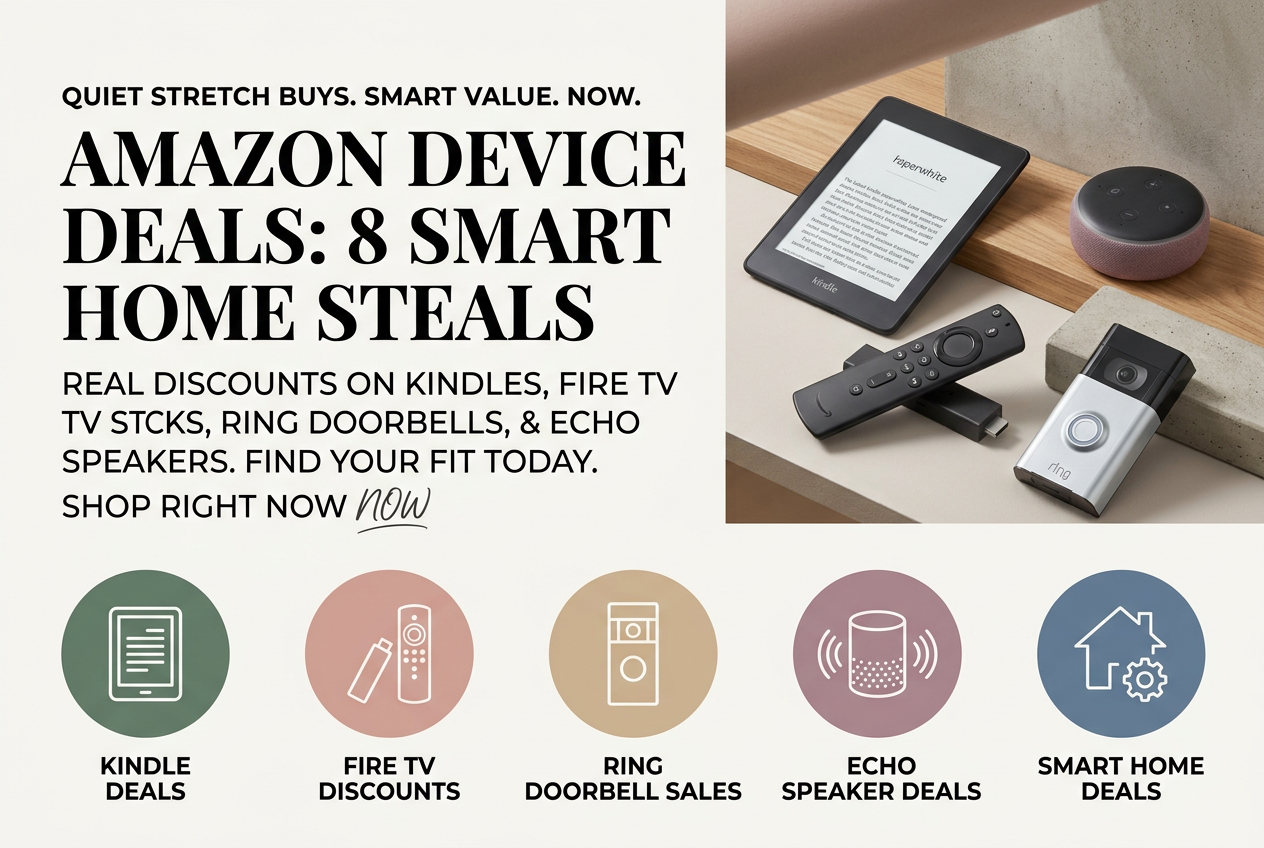
Three hours. That’s how long I spent last week comparing Fire TV stick prices, only to land on the exact deal I’d seen two weeks earlier. Amazon device deals are genuinely maddening that way — they flash, vanish, and occasionally come back wearing a slightly different discount badge. The frustrating part isn’t missing a deal. It’s not knowing whether waiting will actually pay off.
Here’s what I’ve figured out after tracking these things longer than I’d like to admit: the best window to buy isn’t always the flashiest sale. It’s the quiet stretch between Prime Day and Black Friday when Amazon quietly marks down older models to clear space for new ones. That’s where the real value hides.
Kindle & Fire Tablets — Are They Actually Worth It?
Entry-level Kindles see the steepest percentage discounts, sometimes 30–40% off when Amazon refreshes its lineup. But the premium models occasionally hit genuinely good price points too. I picked up a Paperwhite during one of these in-between sales and paid less than I would have during the actual Prime Day event — which, honestly, felt a little unfair to everyone who set a calendar reminder. The base Kindle is fine for casual readers. The Paperwhite is waterproof, brighter, and the battery lasts so long you’ll forget charging it is even a thing. The Oasis is beautiful hardware, but unless you read for hours every single day, you’re paying for something you’ll appreciate but won’t fully use.
Fire TV: The Streaming Upgrade That Actually Makes Sense
Fire TV sticks have gotten quietly good. That’s not faint praise — two years ago I would have told you to look at Roku first. The 4K Max version now handles app switching without the small hesitation that used to make me reach for my phone instead. If your TV is 1080p, skip the 4K entirely. The cheaper stick does the job and you will not notice a difference.
The main reason to upgrade at all is if you’re adding streaming to a bedroom TV or a guest room setup where you don’t want another full smart TV. At a discounted price, it’s a hard argument to make against.
Ring Doorbells Actually Work. With One Caveat.
Video quality on Ring devices has improved enough that I stopped being skeptical about them around 2022. The doorbell versions outsell the standalone cameras for obvious reasons — most people want to know who’s at the door, not monitor their backyard 24/7. Both drop in price regularly, and both are worth considering if you own your place. Actually, that’s not quite right — they’re worth considering even if you rent, depending on your setup. The video doorbell installs in minutes and replaces a standard doorbell, so it’s removable. The subscription fees are the part worth thinking through. Without a plan, you get live view and motion alerts but no recorded footage, which defeats half the purpose. Factor that ongoing cost into what you’re actually spending.
Echo Speakers
The standard Echo is a decent speaker and a genuinely useful smart home hub for the price. Step up to the Echo Show — the screen version — and it becomes something you actually interact with rather than just talk at. I use mine in the kitchen more than I expected to. Recipes, timers, quick video calls. The screen adds enough that it’s not just a gimmick, which I was prepared for it to be.
So When Should You Actually Buy?
Know what you need before you start browsing. That Ring doorbell at 30% off is a great deal if you’re staying put. It’s a minor hassle if you’re moving in eight months. Same logic applies to tablets — the fanciest Kindle won’t make you read more if you weren’t reading before. The discount is only good if the device fits your actual life, not the version of your life where you read 40 books a year and cook elaborate meals from scratch every night.
Amazon device deals cycle through often enough that patience usually pays off. But if you see something you want at a price that doesn’t make you wince, just buy it. Waiting for a better deal that might not come is its own kind of expensive.
At Unwritten, our editors choose every product and story idea independently — we only recommend things we’d genuinely tell a friend about.
Frequently Asked Questions
When do Amazon devices go on sale most often?
The biggest drops happen around Prime Day and Black Friday, but Amazon runs smaller sales throughout the year, especially on older models when new versions launch. Signing up for price alerts is the easiest way to catch them without obsessively checking.
Is it worth buying a refurbished Amazon device?
Amazon’s own certified refurbished devices are generally fine — they go through the same quality checks as new units and come with a warranty. Third-party refurbs are hit or miss, so stick to Amazon’s own listings if you go that route.
What’s the difference between Fire TV Stick and Fire TV Stick 4K?
Processing speed and resolution, mostly. The standard stick handles HD streaming without much trouble. The 4K version is noticeably faster when navigating menus and supports Dolby Vision and HDR10+. If your TV is 1080p or older, the cheaper model is genuinely all you need.
Do Ring doorbells work without a subscription?
Yes, but you lose cloud video storage and some features like rich notifications. Without a plan, you can still see live video and get motion alerts — you just won’t be able to review recorded footage after the fact.
Which Kindle model is best for first-time buyers?
The base Kindle is fine if you read casually and don’t mind charging it more often. The Paperwhite is the sweet spot for most people — waterproof, better screen brightness, and the battery lasts weeks. The Oasis is genuinely great but hard to justify unless you read constantly.