
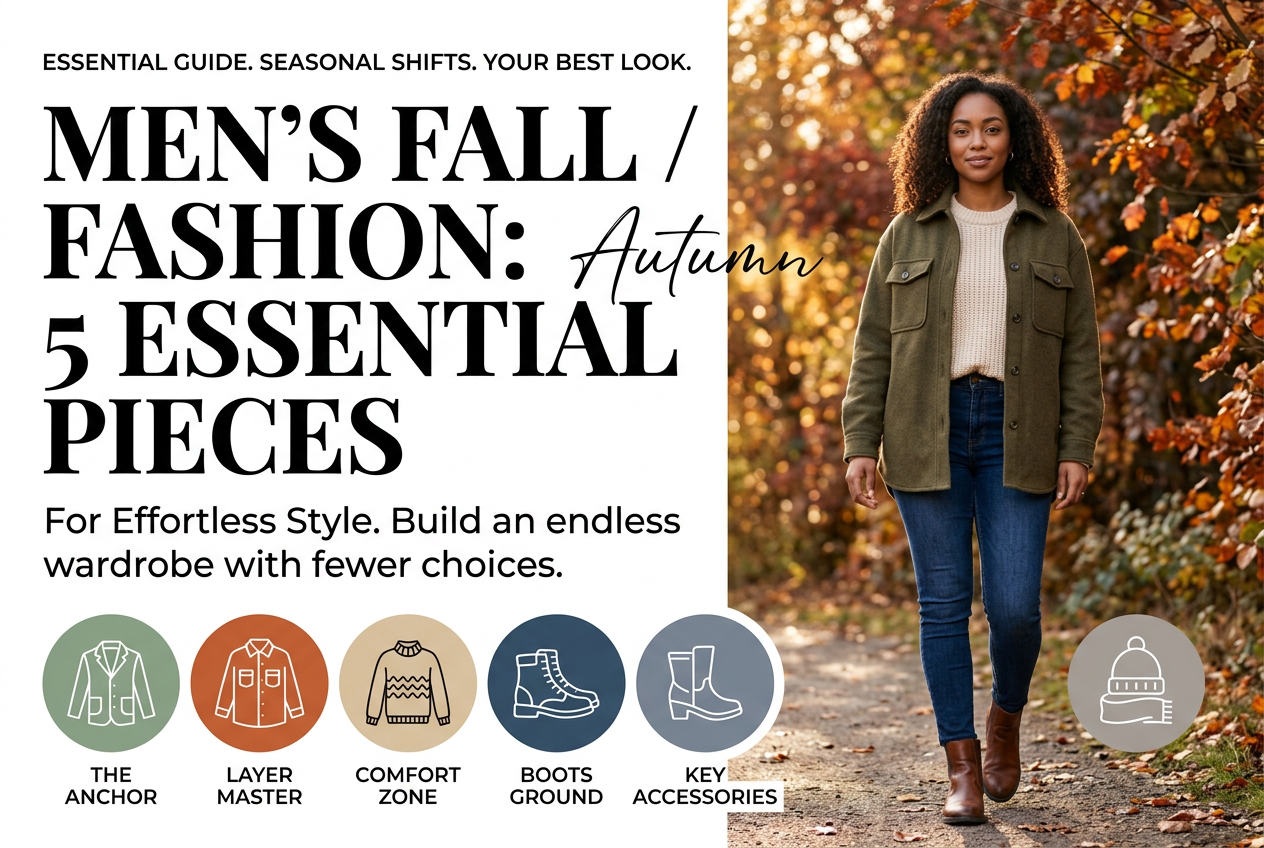
Here’s the thing nobody tells you about dressing well in fall: the season does half the work for you. Cooler temperatures demand layers, and layers — when you get the pieces right — make any outfit look considered. I spent a few years buying the wrong stuff before I figured out that men’s fall fashion isn’t about owning a lot. It’s about owning the right five or six things and letting them talk to each other.
That insight should probably be at the top of every guide like this one. It almost never is.
Why Your Jacket Decision Matters Most
An autumn jacket is the piece that anchors everything else. Not the heavy winter parka you drag out in January — the one you actually grab on a random Tuesday when the temperature drops fifteen degrees overnight and you need something real. The sweet spot is somewhere between a shirt jacket and a proper winter coat, substantial enough to handle genuine cold but relaxed enough to layer over a sweater without turning you into a stuffed sausage. Classic wool overshirts work here. So do structured cotton canvas pieces and technical harringtons. What you’re really choosing is fabric weight and cut — you want something that moves with you, sits right in the shoulders, doesn’t fight you when you reach for things, and comes in a color neutral enough to disappear into your rotation without demanding its own outfit logic. Camel, charcoal, olive. These are the colors that stop requiring decisions.
The Overshirt Is Not Just a Shirt
A lot of guys get this wrong. An overshirt is a jacket pretending to be a shirt, and that’s the whole point — wear it open over a t-shirt in early September, buttoned over a crewneck in November, under your main jacket in December. Three jobs. One piece.
Fabric weight is everything here. Heavyweight cotton twill, brushed flannel, a linen-cotton blend that’s actually dense — if it feels thin in your hands, it’ll read like a regular shirt and you’ve wasted your money. The fit should be relaxed without being oversized, which is a harder balance to find than it sounds. (Most brands get this wrong in one direction or the other, so try before you buy if you can.)
A Sweater That Earns Its Space
Good sweaters change the whole equation. Not the scratchy kind — something that feels genuinely comfortable against your skin and still looks like you have your life together. Cashmere is the dream, merino wool is the practical answer, and cotton blends work if the weight is substantial enough to actually provide warmth. Crew neck is your safest starting point because it layers under everything and works completely on its own. Go for some texture — cable knit or waffle weave beats flat stockinette every time because it gives the sweater visual weight even when you’re wearing it solo. Charcoal, cream, caramel. Pick colors that match what you already own, because you’ll reach for this thing constantly and you don’t want it creating problems.
Dark Denim. Full Stop.
Fall denim is simple. Dark wash, mid-weight fabric, a fit that hits cleanly at the ankle and doesn’t bunch when you sit down. Raw or sanforized, slim or straight — that’s personal preference. But the wash matters because a dark jean reads intentional in a way that a faded or distressed pair just doesn’t when you’re layering heavier pieces on top. This is your year-round workhorse that happens to look especially good when a sweater is tucked into it and boots are involved.
What Actually Goes on Your Feet
Fall opens doors that summer keeps closed. Sneakers still work — clean white leather, neutral canvas — but suddenly Chelsea boots, desert boots, and plain-toe oxfords all feel completely appropriate. Leather ages better than anything else, developing what people politely call character, which just means it looks better the more you wear it. Brown and black are the obvious choices, but a tan or cognac leather option adds dimension without forcing you to rebuild anything. Whatever you pick, it needs to feel good for eight hours straight. The fancy thing that sits in your closet is not a shoe. It’s a waste of money.
How It Fits Together
Start with what you already own. Decent jeans and a solid sweater? Your next move is probably the jacket. Weak on layering? The overshirt comes first. The point isn’t to buy everything at once — it’s to add pieces intentionally, knowing each one earns its place by working with what’s already there.
That’s how you stop accumulating clothes and start actually having a wardrobe. Five pieces, dozens of combinations, no wasted space in your closet.
At Unwritten, our editors choose every product and story idea independently — we only recommend things we’d genuinely tell a friend about.
Frequently Asked Questions
How many pieces do I actually need for a complete fall wardrobe?
Five solid pieces will cover most situations: a jacket, an overshirt, a good sweater, dark jeans, and boots. Each one should work with the others, so you’re building combinations rather than isolated outfits.
Is cashmere worth the price for a fall sweater?
If you’ll wear it constantly, yes. But a quality merino wool sweater costs significantly less and performs almost as well in fall temperatures. The key is weight and construction — avoid anything that feels thin or pills after a few washes.
What’s the difference between an overshirt and a regular flannel shirt?
Weight and intention. An overshirt is cut to function like a light jacket — heavier fabric, roomier fit, meant to be worn over other layers. A regular flannel is a shirt. If it doesn’t feel substantial in your hands at the store, it’s probably just a shirt.
What color jacket works best for fall?
Camel, charcoal, and olive are the easiest to work into an existing wardrobe. They pair with dark denim, earth-tone sweaters, and brown or black footwear without requiring you to plan outfits around them.
Can I still wear sneakers in fall, or do I need boots?
Sneakers absolutely still work — a clean white leather pair or a low-profile neutral option reads intentional rather than lazy. Boots just open up more options, especially as temperatures drop and you’re wearing heavier layers on top.