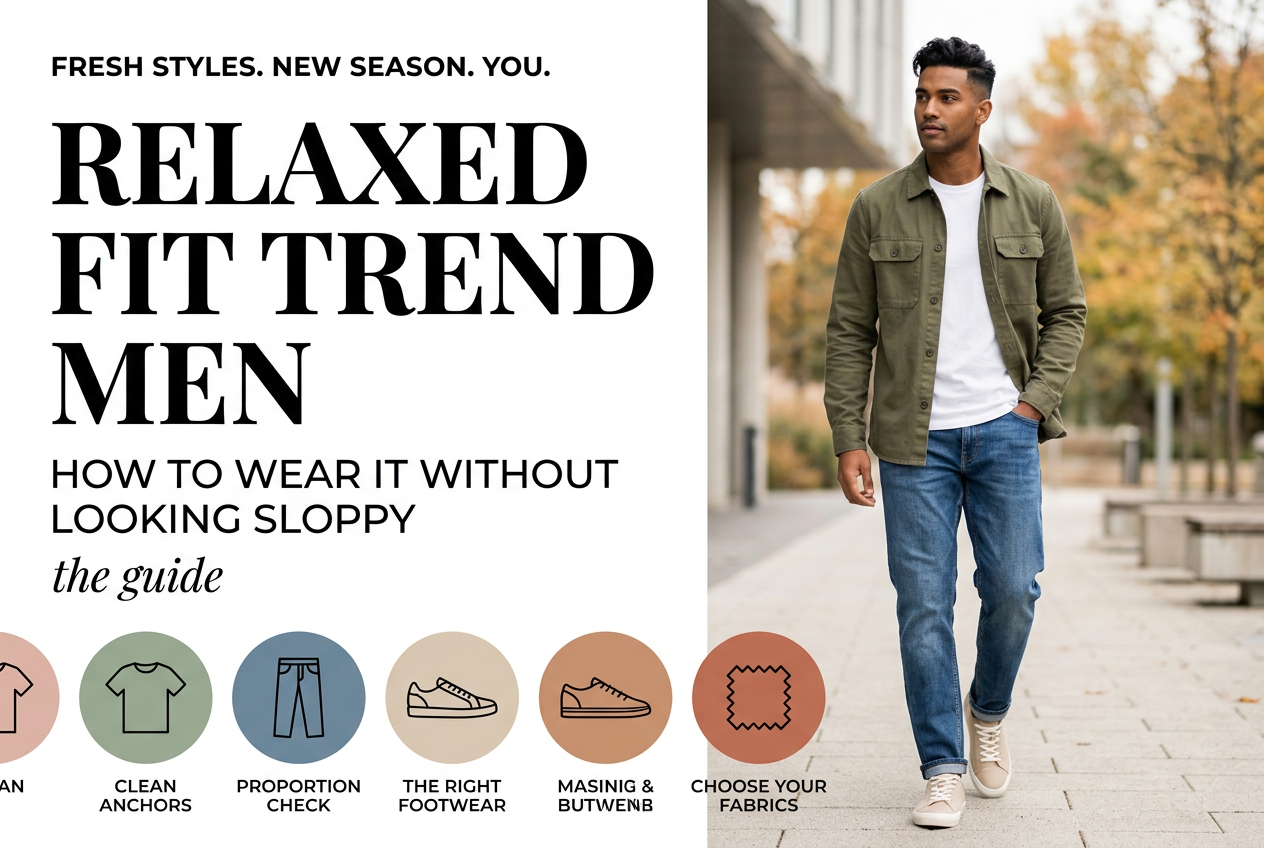
Olive overshirt, mid-weight denim, plain white tee. That was the outfit that finally made me stop apologizing for wearing roomy clothes.
Here is the point I wish someone had told me earlier: relaxed clothes only look careless when nothing about them looks chosen. Give the eye one crisp thing to land on, and the ease reads as a decision. Everything else in this guide is a way of getting there.
Why is everyone suddenly dressing like this?
The relaxed fit trend men are wearing right now has a simple appeal. Clothes that let you move, sit, and get through a long day without feeling shrink-wrapped. Think fuller jeans, easy overshirts, and room through the shoulders. Not a costume-sized hoodie swallowed by extra fabric.
After years of slim cuts running office-casual wardrobes, comfort has earned a permanent spot. It makes sense. People want clothes that work across a commute, a desk, a quick grocery run, and dinner with friends, and they still want to look put together when they arrive. So the trend is less about going oversized everywhere and more about picking ease where you will actually feel it.
Relaxed silhouettes are not new, of course. Workwear, skate style, and roomy tailoring have cycled back every few years. The current version works because it borrows from all of that without demanding a full streetwear uniform.
Start with one piece
Do not overhaul your closet. If your jeans have more room through the thigh, a clean tee or tidy knit gives the outfit a quiet anchor. Or keep your usual trousers and try a boxier overshirt. I started this way, and it taught me what kind of volume actually felt like me before I spent real money.
Relaxed and baggy are not the same thing. Relaxed clothes leave extra room through the body but keep a recognizable shape and a sensible length. Baggy cuts add width and drape, often with a stronger streetwear feel. Neither is better. If you are new to this, relaxed is the easier door to walk through.
Next, try a substantial cotton tee with a little space in the body. It should skim rather than cling, with sleeves landing around mid-bicep. A thin tee looks limp in a bigger cut, so fabric weight matters more than the size on the label.
The pieces that do the heavy lifting
You do not need a dozen purchases. Pick items with a clear job that pair with things you own: a clean overshirt gives a tee some structure, straight chinos suit casual offices, and a knit polo adds texture without going formal.
Fabric is quietly doing most of the work. Denim with enough weight hangs cleanly instead of collapsing around your shoes. Cotton twill gives trousers a defined line. A textured knit adds interest, which keeps a simple outfit from looking like you rolled out of bed, and a crisp collar or neat hem sharpens an otherwise easy silhouette.
The overshirt might be the most useful layer here. Wear it open over a tee when the afternoon cools, or button it up as a light shirt-jacket. Choose a hem around the hip, because anything reaching far below the seat makes the whole outfit look heavier.
For cooler days, a relaxed crewneck sweater gives you room without a giant hoodie’s bulk. Ribbed hems and cuffs keep the outline tidy. One catch: thick knits get warm indoors, so go midweight if you move between outside and heated rooms.
Outerwear can make the shape look deliberate. A short work jacket or clean bomber sits well over fuller trousers since it does not add a long block of fabric. Prefer a longer coat? Keep the rest quiet and check that the shoulders still sit where they should.
Proportion, or why volume needs a map
Proportion separates relaxed from overwhelmed. There is no strict rule about roomy tops and slim bottoms, but notice where the volume sits. Wide pants? Keep the top half cleaner. Boxy jacket? Straight or gently tapered trousers usually feel easier than another oversized layer.
Length matters as much as width. Trousers should meet your shoes cleanly, with a small break or a deliberate crop. A pile of fabric at the ankle makes even good jeans look like the wrong size, so wear the shoes you will actually use when trying them on. The hem changes everything.
Shoulders give you a fast check. A bit of extra chest room is comfortable. But if the seam drops dramatically and sleeves swallow your hands, the piece is probably too large rather than relaxed. Size charts help, yet a two-minute mirror check is still worth it.
Need a starting formula? Roomier trousers with a neat tee. An easy top with straight-leg jeans. A boxy jacket over a more fitted knit. These are not laws, just places to begin, and you can loosen the balance once you know which shapes suit you.
Shoes shift the proportions too. A very slim dress shoe looks stranded under wide pants, while an enormous sneaker makes the outfit bottom-heavy. A low-profile sneaker, sturdy loafer, or modest boot connects top and bottom more smoothly, and comfort counts here because the wrong pair announces itself by lunchtime.
Dodging the sloppy trap
The fastest fix is keeping one detail crisp. A white tee, a tucked knit, a sharp collar, or shoes that have not seen every muddy parking lot in town. You do not need all four.
Fit the waist properly even when the legs are roomy. A belt helps, but the waistband should not need rescuing every time you stand up. If trousers bunch at the front or slide, try another cut or size instead of letting a belt fix it. Sleeves follow the same logic: a quick roll looks relaxed, while a cuff that keeps eating your hand is less charming.
Color helps. A small palette of navy, cream, olive, and tan makes different textures feel connected. That does not mean everything must be neutral. A strong color can look great if it is the main event rather than one of several competing statements. I am partial to olive with denim because it looks considered without much thought.
Mind the condition of your clothes. Roomy garments show wrinkles and stretched collars just like slim ones, sometimes more. Steam a creased shirt, lift lint off a dark jacket, and check that your tee’s neck has not gone wavy. Small effort, real payoff.
How many oversized pieces is too many?
A roomy tee under a roomy overshirt with very wide trousers can work, but it demands more attention to fabric, length, and footwear. For most weekday outfits, two relaxed pieces and one cleaner piece is dependable. Not a law. Just a shortcut for dressing half-awake.
Accessories can finish things without adding noise. A plain leather belt, a simple watch, or a compact canvas bag is usually enough. Skip anything that yanks the clothes out of their everyday context unless that contrast is your style. You want to look comfortable, not like you styled a mood board before breakfast.
Which brands are worth a look?
No single label owns relaxed style, and you do not need a designer budget. Shop by category and construction instead: denim makers with several leg shapes, workwear labels using sturdy cotton, and contemporary menswear shops offering roomier cuts next to slim basics.
Check garment measurements rather than assuming every medium fits alike. One brand’s relaxed jean may be close to another’s straight fit. Look at rise, thigh width, leg opening, and inseam. Those numbers tell you more than a product name that just says oversized.
If you can, visit stores that let you compare cuts in person. Take your usual size and one nearby into the fitting room, then sit, walk, and check the hem. Online, read the material breakdown and return policy before ordering. A little research beats keeping trousers you only wear because returning them feels like a chore.
For a capsule wardrobe, spread across a few price levels rather than chasing a head-to-toe brand identity. Spend more on what you wear constantly, often jeans, a jacket, or everyday shoes, and keep tees and seasonal layers simple. Cost per wear is a decent gut check, since a sturdy overshirt worn twice a week earns its place faster than a trendy piece saved for one occasion.
A solid starter mix: one pair of straight relaxed denim, one pair of chinos, two substantial tees, a versatile overshirt, and a clean sneaker. Add a knit or jacket when weather calls for it. That makes plenty of outfits without turning your closet into a heap of competing silhouettes.
Give yourself time to adjust. If you have worn slim jeans for years, a straighter leg can feel wildly wide in the fitting room, then look perfectly normal in daylight. Take a quick photo from the front and side. It is a better test than squinting at a mirror from six inches away.
My view: the best relaxed outfit is the one where you forget what you are wearing but someone still says you look sharp. Chase that, not a formula.
At Unwritten, our editors choose every product and story idea independently — we only recommend things we’d genuinely tell a friend about.
Frequently Asked Questions
What is the difference between relaxed fit and baggy fit?
Relaxed clothes leave extra room through the body but keep a recognizable shape and a sensible length. Baggy cuts add more width and drape, and usually carry a stronger streetwear feel.
How do I stop relaxed clothes from looking sloppy?
Keep one detail crisp, such as a clean tee, a sharp collar or tidy shoes. Fit the waist properly, check the hems, and limit yourself to about two roomy pieces per outfit.
What should I buy first if I’m new to relaxed fits?
Pick one roomy piece, like straight relaxed denim or a boxy overshirt, and pair it with things you already own. A heavyweight cotton tee is another easy starting point.
What shoes work with wide trousers?
A low-profile sneaker, a sturdy loafer or a modest boot. Very slim dress shoes look stranded, and huge sneakers can make the outfit bottom-heavy.