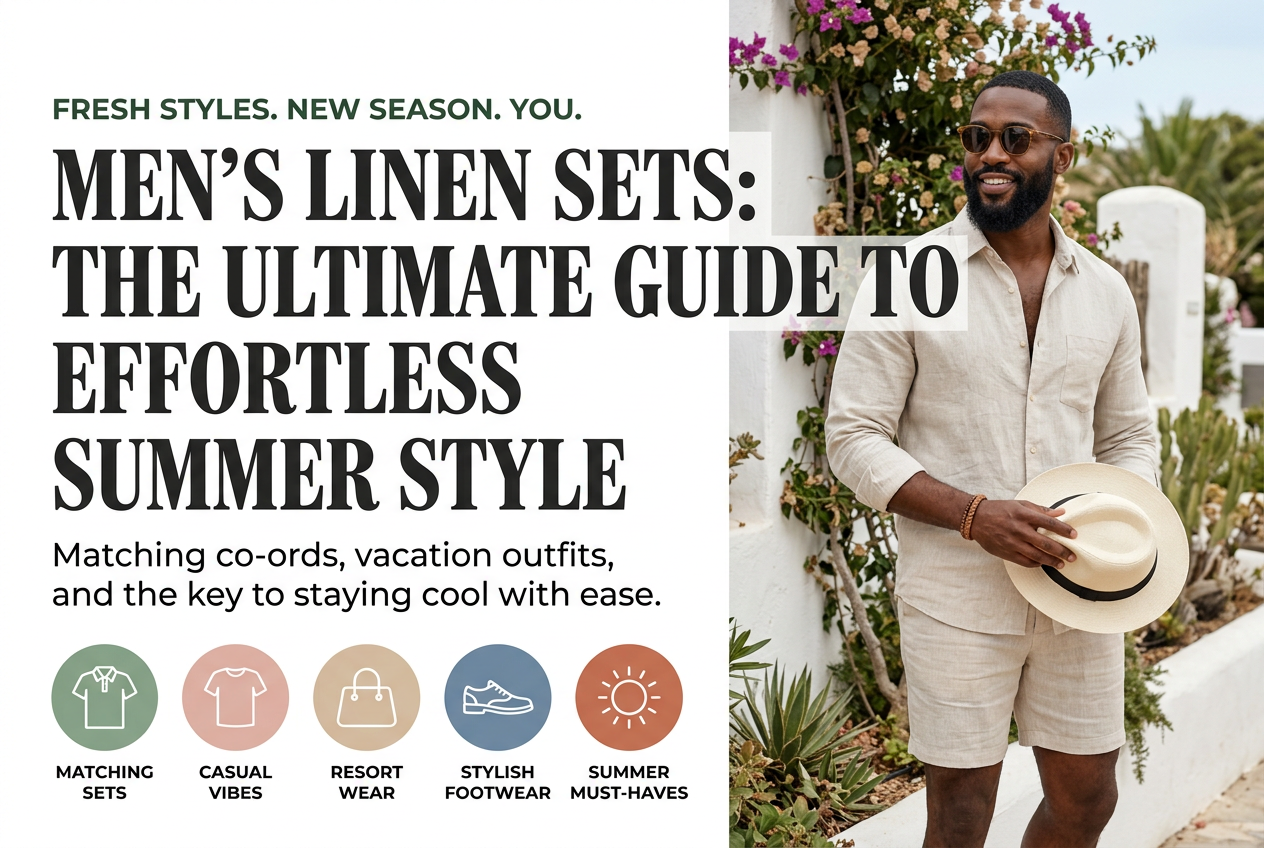
My first linen set was a cream shirt and matching shorts that I bought on a whim before a beach trip, and I wore the pair on four of the six days. That surprised me. I’d packed a duffel full of options and kept reaching for the two pieces that took no thought at all. There’s a reason linen has become the unofficial uniform of summer: it breathes, it moves, and it looks effortlessly put-together even when you’re standing still in 85-degree heat.
Here’s the conclusion I wish somebody had handed me earlier. A men’s linen set is about simplicity and intention. It means choosing pieces that work together, that make getting dressed easier, that pack small, and that look genuinely good without much thought. Whether you wear it to a casual lunch or take it on a trip, a quality set pays for itself through constant wear. You wake up, pull on two pieces, and look like someone who has their life figured out. No overthinking required. Everything below is about picking the right one.
That’s the whole pitch.
A proper set, meaning a shirt and shorts in the same fabric or a coordinated palette, takes the ease factor of linen and multiplies it. Men’s linen sets are having a real moment, and it isn’t only because they’re comfortable. They point to a shift toward pieces that work harder for you and blur the line between resort wear and everyday style. A family barbecue, a casual dinner out, a rooftop drink, an actual beach somewhere: a solid linen set handles all of it, and it’s the kind of investment that pays dividends all season long.
How much should a linen set cost?
Quality matters with linen. A cheap set feels thin and falls apart after a few washes. You want some weight to it, fabric that feels substantial in your hand. That’s where the brand matters, and where price point becomes relevant.
Luxury options come from designers who built entire reputations on linen, and they run $300 to $500 for a set. These are investment pieces with exceptional tailoring and fabric quality, and with proper care they’ll last years. Mid-range brands in the $100 to $200 range offer solid quality without the luxury markup. Budget options under $100 work fine for occasional wear, though they might not hold up as well long-term.
The real key is reading reviews and checking the fabric weight. Look for linen described as ‘medium weight’ or ‘substantial.’ Skip ‘lightweight’ unless you specifically want something ultra-breathable for extreme heat. Check the care instructions too, since some sets need special handling and others are more forgiving. And honestly, try things on if you can. Fit varies wildly between brands.
Color first, then cut
Not all linen sets are created equal, and the first decision you’ll make is color. Neutrals like white, cream, tan and khaki are the safe bet. They go with everything, they hide stains reasonably well, and they feel timeless. If you want your set to stand out, try a soft blue or a sage green and, if you’re feeling bold, a muted terracotta. These colors feel fresh without being loud, and they photograph well (which matters more than you’d think once you’re actually wearing the thing).
Style-wise, you’re choosing between a few silhouettes. The classic button-up with shorts is straightforward and versatile. The camp collar shirt, that Cuban-style open collar, leans more toward resort wear, but it works beautifully if you’re comfortable with it. Then there’s the oversized or relaxed fit, increasingly popular for a reason: it’s comfortable, and it looks intentional rather than sloppy.
Fit matters here, honestly. Linen wrinkles and moves, so you want enough structure to feel deliberate and enough ease that you’re not fighting the fabric. A shirt that’s slightly oversized in the shoulders but tapered at the waist tends to beat anything too slim or too baggy.
Wrinkles are the point
The beauty of a men’s linen set is its flexibility. Wear it exactly as it comes, matching shirt and shorts, and you look completely put-together. Or break it up and remix it with other pieces in your wardrobe, which is where the real value emerges.
For a casual vibe, wear the set as intended: shirt unbuttoned at the collar, shorts just above the knee, bare feet or simple sneakers. Add a lightweight watch, maybe some sunglasses. That’s it. You’re done. This works for a beach day, a backyard gathering, a casual dinner somewhere warm, or a quick grocery run.
To dress it up, tuck in the shirt, not all the way, just a half-tuck or a front tuck, and add a belt. Swap the shorts for linen trousers in a complementary color. Add a lightweight overshirt or a linen blazer if the occasion calls for it. Suddenly you’re appropriate for a nicer restaurant or an outdoor wedding. The linen pieces become the foundation of something more intentional.
The key is confidence. Linen is supposed to look a little relaxed. If you’re fighting the wrinkles or the movement of the fabric, you’ll come across as uncomfortable. Lean into it. The slight rumple, the way the fabric moves when you walk: that’s the whole point.
And here’s something that might sound counterintuitive. Don’t over-iron. A little wrinkle is intentional, and a set ironed flat actually looks less sophisticated, like you’re trying too hard. A light steam or a quick pass on low heat is plenty. Let the fabric do its thing.
Build outward from one good set
Once you own one solid men’s linen set, the game changes. You start thinking about how those pieces work with the rest of your summer wardrobe. A cream linen shirt pairs beautifully with navy shorts you already own. Khaki linen shorts work with almost any neutral-toned top. This is where the cost-per-wear math gets interesting, because you’re not just buying a set. You’re buying pieces that extend your entire warm-weather rotation.
The strategy is to invest in one or two sets in truly neutral colors first, like white or cream, khaki or tan. These are your anchors. If you want to expand after that, add a set in a softer color, maybe a sage or a soft blue. From there, you can mix the pieces with other linen items, cotton basics, or even lightweight synthetics that complement the linen look.
One pro move: buy linen in colors that already exist in your closet. If you have navy shorts you love, get a linen shirt that coordinates with navy. If you have a favorite khaki, build around that. Every new piece then feels like it was meant to be there, instead of like you’re starting from scratch.
Storage matters too. Linen wrinkles in the closet, but that’s okay, since the creases come out when you wear it. Store your pieces loosely, not crammed in, and they’ll be ready to go. Some people hang everything and some fold. Either works. The wrinkles are part of the linen story.
Small tweaks, big shift
Accessories can completely change the vibe of your set. A simple straw hat or a baseball cap moves it from resort wear to running errands. Leather sandals make it feel intentional, while rubber flip-flops make it feel thrown-together (which, again, can work if that’s what you’re going for). A lightweight watch or some simple jewelry adds polish without fuss.
Layering is your friend too. A linen set on its own is great, but add an unstructured linen jacket or a lightweight cotton overshirt and it works for evening. Keep everything light and breathable, because you don’t want to layer so much that you overheat.
Why everyone suddenly wants linen
Linen’s comeback isn’t accidental. After years of athleisure dominating the casual-wear conversation, there’s a quiet push back toward intentional, considered dressing. Linen sets fit that perfectly. They signal that you care how you look without screaming that you tried too hard, and they’re sophisticated enough for a nice lunch yet casual enough for a Sunday errand run.
There’s a practical angle as well. Matching your linen shirt to coordinating shorts means you’re not standing in front of the closet for 10 minutes trying to work out what goes with what. The pieces are designed to work together, and that’s the appeal. Linen also wrinkles naturally (it’s kind of the fabric’s signature move), so you don’t have to stress about perfection. A little rumple actually looks intentional.
Plus, linen breathes in a way cotton blends and synthetics just don’t. If you live somewhere humid or you’re planning a summer trip, a linen set is genuinely one of the smartest things you can pack. It takes up minimal space and mixes with everything else in your bag, and it keeps you from overheating.
My verdict: if you buy one thing for this summer, make it a medium-weight set in cream or tan. Wear it until it goes soft, then buy a second one in sage.
At Unwritten, our editors choose every product and story idea independently — we only recommend things we’d genuinely tell a friend about.
Frequently Asked Questions
How much should I spend on a men’s linen set?
Luxury sets run $300 to $500 and are built to last for years. Mid-range brands in the $100 to $200 range offer solid quality without the markup. Budget sets under $100 work for occasional wear but may not hold up as well over time.
What color linen set should I buy first?
Start with a neutral such as white, cream, tan or khaki. These go with almost everything, hide stains reasonably well and never feel dated. Add a softer color like sage or soft blue later.
Should I iron my linen set?
Only lightly. A little wrinkle looks intentional, and a set pressed flat looks stiff. A light steam or a quick pass with a low-heat iron is plenty.
Can I wear the linen shirt and shorts separately?
Yes, and that is where the value is. The shirt works with denim or navy shorts you already own, and the shorts work with most neutral tops.
What fabric weight should I look for in linen?
Look for linen described as medium weight or substantial. Skip lightweight unless you want something ultra-breathable for extreme heat.