
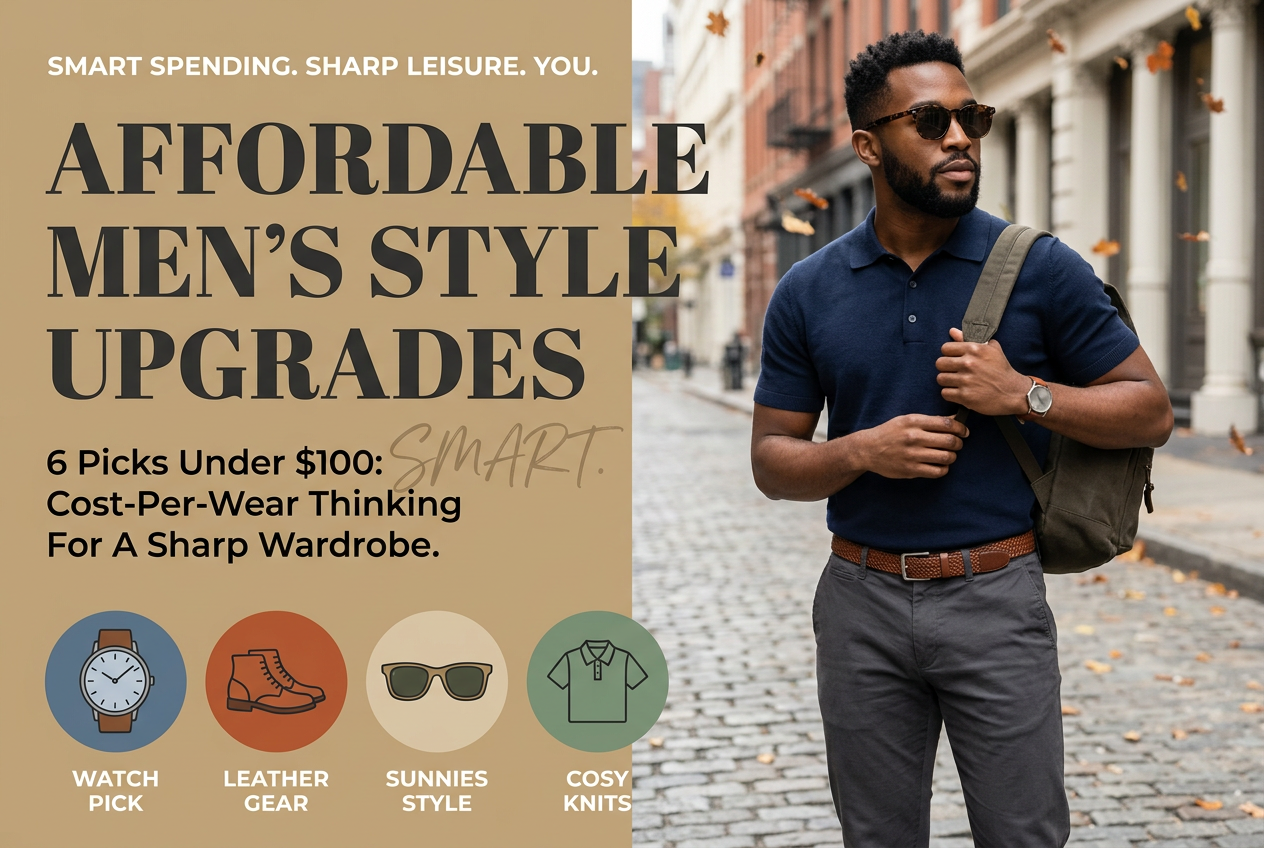
Here is the thing nobody says out loud: the guys who consistently look put-together are rarely spending more than anyone else. They have just figured out that five solid $80 pieces beat one $400 gamble, because more wears means a lower price per wear, and lower price per wear means the math starts working in your favor instead of against you. That is the whole game. I spent an embarrassing amount of time learning this the hard way — buying one expensive shirt I babied for two years instead of actually wearing it — before the cost-per-wear logic finally clicked.
Why Accessories Win Every Time
Accessories are where affordable men’s style upgrades happen fastest, and the reason is simple: they sit on top of what you already own. You do not need to replace your wardrobe. You need one good watch, a leather belt that actually fits your waist, and maybe a pair of sunglasses that suit your face shape. Same jeans, same shirt — totally different read.
The trick is picking pieces that do not announce their price. Leather ages beautifully; a $60 belt at year three genuinely looks better than it did in the store. Metal hardware on a watch catches light the same way whether it cost $80 or $800. What you are specifically trying to avoid is anything that feels hollow or plasticky the second you pick it up, because that feeling does not go away and neither does the impression it makes on other people. Focus on materials that reward time rather than fighting it. That is the actual upgrade, and it costs less than most people assume.
The Basics Aren’t Boring
A good white t-shirt. A neutral sweater. Chinos that fit without alterations. These are not boring — they are bulletproof, and the reason style-conscious guys seem to have it all figured out is almost always because they invested in basics that work together rather than statement pieces that work alone.
Run the cost-per-wear math on a $70 sweater you reach for twice a week. Over two years, you are looking at roughly $0.27 per wear. That is not a splurge. The guys who complain about price are usually the ones cycling through cheap basics that shrink in the wash, fade by summer, and get donated before the year is out. Buy once, actually wear it — that mindset is the whole secret to affordable men’s style upgrades, and it applies whether you are shopping at $50 or $500.
One Layer. Five Outfits.
Layering is genuinely underrated. A good overshirt or lightweight jacket does not just add warmth — it multiplies what you can do with clothes you already have, which means that plain t-shirt you have worn a hundred times suddenly becomes five different looks, your summer basics push into fall without buying anything new, and one $85 piece in the right fabric and color is functionally like buying three new outfits. The caveat — and this is worth saying — is that smart layering forces you to think about proportion and color, which sounds like extra work but is actually freeing. It means you are building something cohesive instead of accumulating a pile of random pieces that never quite go together.
Do Shoes Actually Matter That Much?
Yes. Not in a spend-$400-on-sneakers way, but in a clean-leather-and-canvas-matters way. A pair of white leather sneakers under $80 does more for your overall look than most people realize, and a shoe that is slightly too trendy will feel dated in two years. Pick the boring one. It will still be working for you when the trendy version is at the back of your closet.
Actually, that is not quite right — it is not just about boring versus trendy. It is about shoes that age gracefully versus shoes that just age. Canvas and leather develop character. Rubber soles that actually grip pavement matter. Anything that looks like it cost $40 probably communicates that, regardless of what else you are wearing.
Free Upgrades Exist
Sometimes the upgrade is not a purchase at all.
A fresh haircut every four weeks changes more than most new clothing items. Tucking your shirt properly, cuffing your jeans instead of letting them pool over your shoes, making sure what you are wearing actually fits your current body — these cost nothing and they matter more than people admit. Style is intention as much as it is product, and no amount of spending fixes a lack of it.
The real affordable men’s style upgrade is figuring out that you do not need to spend a lot to look like you did. Buy pieces that work together. Stick to neutral colors for the foundation, add personality in smaller doses. Choose materials that improve with time. Wear things enough to justify the cost. That formula works, and the difference between looking sharp and looking sloppy is almost never the price tag — it is the thinking behind the choices. Anyone can dress well on a real-world budget. The ones who do not are usually just skipping that step.
At Unwritten, our editors choose every product and story idea independently — we only recommend things we’d genuinely tell a friend about.
Frequently Asked Questions
What are the best affordable men’s style upgrades to start with?
Accessories are the fastest win. A clean watch under $80, a leather belt that fits properly, and a pair of white leather sneakers will change how your existing clothes read without requiring a full wardrobe overhaul.
How do I build a stylish wardrobe on a tight budget?
Think in cost-per-wear, not sticker price. A $70 sweater you wear twice a week for two years costs roughly $0.27 per wear. Cheap basics that shrink or fade after six months are the real money-wasters.
Are expensive clothes actually worth it?
Not always. Five solid $80 pieces you rotate constantly will serve you better than one $400 shirt you’re afraid to wrinkle. The goal is wearability, not prestige.
What materials should I look for in affordable menswear?
Leather, canvas, and natural-blend fabrics that age well rather than falling apart. Metal hardware on watches and belts looks the same whether it cost $60 or $600. Avoid anything that feels cheap on first touch.
Can layering really expand my wardrobe options?
Yes, dramatically. One well-chosen overshirt or lightweight jacket in a neutral color can turn a plain t-shirt into several distinct outfits and extend your summer pieces into fall without buying anything else.