
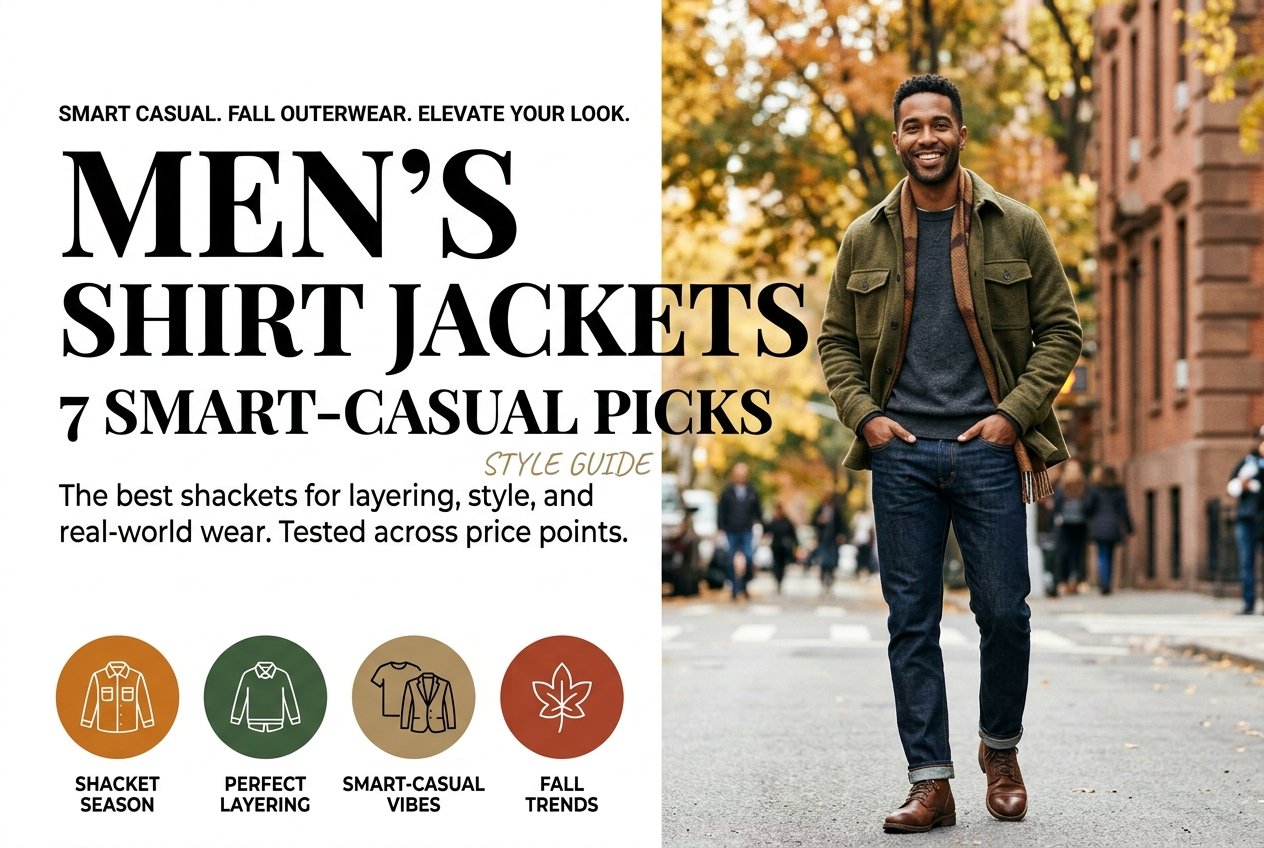
Here is the thing nobody tells you about fall dressing: the problem was never finding a coat. It was finding something for the forty-degree temperature swings that happen between 8am and 3pm. That specific problem is exactly what a men’s shirt jacket solves — and once you own a good one, you will wonder why it took you so long.
I grabbed my first shacket three years ago mostly because I kept leaving my heavier jacket at work and freezing on the walk in. What I didn’t expect was how often I’d reach for it even when I had other options. It became the piece I put on without thinking — over a tee for errands, over a sweater for dinner, worn fully open like a shirt when the day warmed up. That kind of flexibility is genuinely rare in a single garment.
Why Does This Piece Work So Well?
Fall refuses to pick a temperature. One afternoon you’re sweating on a south-facing stoop; the next morning you need a real layer the second you step outside. Men’s shirt jackets handle this without forcing you to haul a full coat around everywhere. They’re lighter than traditional outerwear but structured enough to feel substantial — not flimsy, not stiff, just right for that in-between stretch from September through November.
There’s also a versatility angle that most outerwear simply can’t match. Wear one with jeans and sneakers and you look effortlessly put-together. Swap in chinos and Chelsea boots and the same jacket works for a dinner reservation. Most pieces lock you into one register or the other. The shacket doesn’t.
The cost-per-wear math is worth doing. If you wear a quality men’s shirt jacket sixty times between September and December — which is not hard to imagine once you have one you like — even a $200 piece works out to under $3.50 a wear. That math gets more compelling every year you keep wearing it.
Fabric Is Everything
Cotton is the default, and for good reason: breathable, machine-washable, works across a wide temperature range. But fall genuinely opens up more interesting options, and it’s worth knowing what you’re choosing between before you buy.
Wool-blend fabrics — typically somewhere around 80% wool with a synthetic added for durability — are warmer than cotton without being heavy, they develop real character as they age, and they handle wrinkles better than you’d expect from a fabric that sounds that delicate. The trade-off is care (most need to be hand-washed or dry-cleaned) and a higher upfront cost. Worth it if you’ll actually maintain them; probably not if your laundry habits are chaotic.
Corduroy is the underrated option. It’s textured, it photographs well, it feels substantial in a way that reads as quality even from across a room, and it’s less common than the usual cotton canvas choices — which means you’ll stand out without trying. The one honest downside: corduroy shows wear patterns in high-friction areas over time. Some people find that charming. Others find it annoying. (Actually, I should be more precise — it’s less about wear patterns and more about the pile flattening along the collar and cuffs after a year or two. Easy fix is brushing it out, but it’s worth knowing.)
Canvas and heavy cotton twill are your workhorses. Durable enough for actual physical work, they soften noticeably with washing, and they tend to look better the more beaten-up they get. If longevity and low maintenance are your priorities, start here.
Three Ways to Actually Style It
The casual version is almost too easy: plain white tee underneath, dark jeans, sneakers. Done. The shacket carries the look so you don’t have to think about it.
For something more pulled-together, layer it over a lightweight sweater or a long-sleeve henley, switch the jeans for chinos, and add leather sneakers or boots. Same jacket. Completely different read. This is the configuration that works for casual dates, dinner with friends, or any situation where you want to look like you made an effort without it being obvious that you did.
The third approach is the one most people don’t think to try: wearing the shacket as the shirt itself. Leave it unbuttoned over a white or cream crew-neck tee, add tailored trousers or wool pants, and you’ve got something that works in a business-casual office or at a nice dinner. This is where fabric choice really shows up — a wool-blend shacket in olive, tan, or charcoal looks genuinely expensive styled this way. A thin cotton one just looks like you forgot to put a jacket on.
Fit note, because it matters more than people realize: the shoulders need to sit at the edge of your shoulder joint — not drooping off, not pulling tight. Through the chest, you want enough room to layer a midweight sweater without bunching at the buttons. Try it on if you can. If you’re buying online, read the return policy before you commit.
What to Expect at Different Price Points
The $80–$150 range is where you go if you’re new to shackets or want a low-stakes backup piece. You can find natural fabrics and solid construction here — nothing fancy, but nothing embarrassing either. These pieces might not develop the same character as pricier options over years of wear, and they may need replacing sooner, but they’ll do the job without requiring a financial commitment you’re not ready for.
Spend $200 or more and you’re buying into a different category of garment entirely. Better fabrics (heritage wool blends, Japanese cotton, heavier corduroy), better hardware, better seams. More importantly, you’re buying something that should genuinely improve with age rather than just wear out. A really good men’s shirt jacket in this range becomes a foundational piece — the thing you reach for on a Tuesday morning when you can’t decide what to wear, the layer that makes everything else make sense. It works with pieces you bought five years ago and pieces you haven’t bought yet. That kind of durability, both physical and stylistic, is what justifies the price for people who actually wear their clothes rather than just own them.
Buy cheap if you’re experimenting. Buy well if you already know you’ll wear it constantly.
Our Picks
We’ve pulled together seven men’s shirt jackets across different fabrics and price points below. Some are built for durability and everyday wear. Others are investment pieces worth saving for. All of them are things we’d actually recommend to a friend — which is the only standard that matters.
At Unwritten, our editors choose every product and story idea independently — we only recommend things we’d genuinely tell a friend about.
Frequently Asked Questions
What is a shirt jacket (shacket) and how is it different from a regular shirt?
A shirt jacket is heavier and more structured than a standard button-up, but lighter than a traditional coat. It’s designed to function as outerwear on mild days while still working as a layering piece under heavier coats when temperatures drop.
What fabric should I look for in a men’s shirt jacket?
For fall, wool blends and corduroy offer the best warmth-to-weight ratio. Cotton canvas and heavy twill are better if you want something durable for daily wear. Cotton flannel sits in the middle — warm enough for cool days, easy to wash, and it softens nicely over time.
How should a shirt jacket fit?
The shoulders should sit cleanly at the edge of your shoulder joint. Through the chest, you want enough room to layer a midweight sweater without bunching. Too tight and it functions as a shirt; too boxy and it reads as sloppy. If you’re between sizes, size up.
Can you wear a shirt jacket to work?
Yes, in most business-casual environments. Leave it unbuttoned over a crew-neck tee with tailored trousers and leather shoes, and a wool-blend shacket reads as smart-casual rather than weekend wear. It won’t work in formal office settings, but for creative or relaxed workplaces it’s a solid option.
Are shirt jackets worth the money at the premium price point?
If you actually wear them, yes. A quality shacket in the $200–$400 range should last a decade or more and will look better as it ages. The cost-per-wear on a piece you grab three or four times a week during fall and spring works out to almost nothing over a few years.