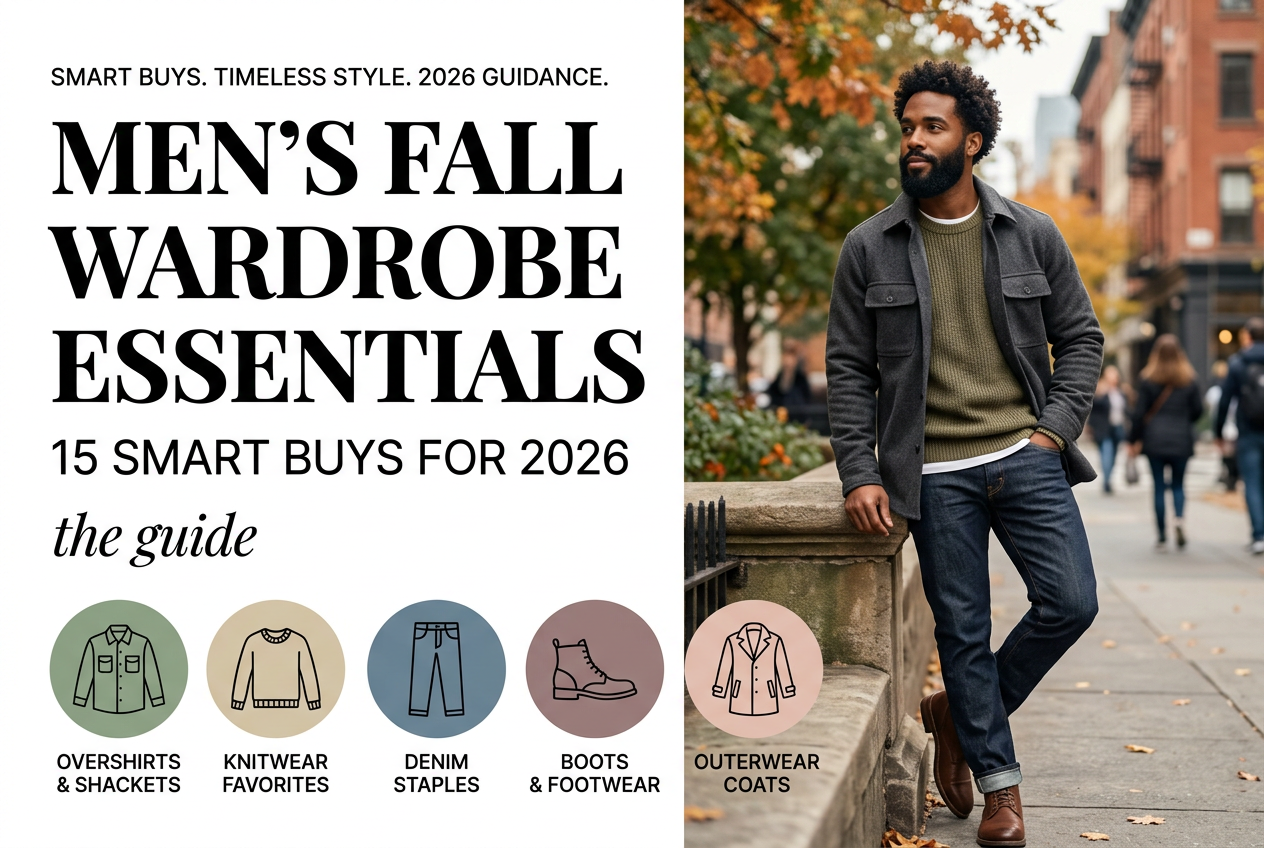
I own a olive overshirt that has outlasted three jackets. That’s the whole argument for this guide.
Men’s fall wardrobe essentials earn their closet space when they handle a chilly morning, a warm afternoon and a last-minute dinner plan without a change of clothes. For 2026, build around layers you can repeat and fabrics you trust, and skip the urge to buy a fresh look every month. The price notes below are typical estimates, not live listings. Materials and construction can push the tag either way.
Why does fall reward so few pieces?
Because the weather swings. A sturdy overshirt can stand in for a light jacket, and a good knit turns plain jeans into an actual outfit.
Overshirts and shackets
Start with the middle layer. It should be light enough for indoors and thick enough to blunt a breezy walk. Leave room in the shoulders and chest so a tee or thin sweater fits underneath. Relaxed is useful, but oversized swallows your frame, so check hem and sleeve length before you commit.
1. Wool-blend overshirt — typical price: $90–$180. A wool-blend overshirt adds texture without the formality of a blazer. Wear it open over a heavyweight tee, or button it under a rain shell when the forecast gets fussy. Read the fabric label, because a scratchy finish means it will sit on the hanger. Charcoal, olive or brown repeat easily.
2. Cotton twill shacket — typical price: $60–$130. Twill gives a shirt-jacket a clean workwear feel and enough structure to hold its shape. It works over a flannel on a cold commute, though the thicker cloth may feel bulky under a slim coat. Pick a straight or relaxed fit so nothing pulls across your back.
3. Flannel overshirt — typical price: $45–$110. Brushed flannel is a soft answer to days that don’t quite need a jacket. Solid colors are most flexible, while a subtle check livens up dark jeans. Lighter flannel can pill at the cuffs with frequent wear, so choose cloth that feels substantial rather than thin and fuzzy.
Sweaters first, if you must pick one thing
One good sweater covers a surprising number of fall situations. I’d begin with a crewneck in a color already hanging in your closet. Medium weight usually gets more wear than very chunky, since it layers cleanly under a coat or over a tee for errands.
4. Merino crewneck sweater — typical price: $90–$200. Merino is light, warm, and happy with chinos or worn-in denim. A crewneck sits neatly over a tee without the fuss of a collar. The trade-off is care. Follow the wash label instead of tossing it into a hot cycle.
5. Cotton cable-knit sweater — typical price: $70–$160. Cable knit brings texture to simple outfits and feels right with straight jeans or cords. It suits anyone whose skin protests at wool. The thicker stitch can run warm indoors, so if you spend your days inside, go for a breathable knit rather than a dense winter-weight one.
6. Quarter-zip sweater — typical price: $60–$150. A fine-gauge quarter zip gives you some temperature control when your day swings between outdoors and heated rooms. Zip it high over a tee for a clean look, or leave it open over a collar. Some styles lean sporty. A plain knit texture and restrained trim make it wearable beyond the golf course.
Denim and chinos, fit before fashion
Bottoms set the tone, and fall is a fine time to get the fit right. Straight and gently tapered cuts leave room to move and sit over boots without bunching. If your current jeans fit well, don’t replace them because the calendar flipped. Add one new fabric or color instead.
7. Straight-leg dark denim — typical price: $70–$160. Dark indigo works with nearly every layer here, from a grey sweater to an olive overshirt. A straight leg keeps the shape current without chasing trends. Raw denim can stay stiff for weeks (I gave up on a pair after about ten days, honestly), so if you want comfort now, buy a washed pair with a little stretch and a rise where you like it.
8. Brushed cotton chinos — typical price: $55–$130. Brushed cotton has a softer hand and more seasonal weight than crisp summer twill. Pair them with a crewneck and sneakers for a casual office day. The fabric attracts lint, especially in dark shades, so keep a brush handy if you live with a dog or own a black wool coat.
9. Corduroy trousers — typical price: $65–$150. Fine-wale corduroy adds warmth and texture without looking like costume. Try a straight leg in tobacco, navy or dark green, then keep everything else simple. Wide-wale cords make a bolder statement but are harder to dress up. Finer ridges make the safer first pair.
Boots, sneakers, and the wet sidewalk problem
Fall shoes need to handle a damp sidewalk as well as a long day on your feet. Think about your real week. If you walk several miles, cushioning and grip matter more than a perfectly polished toe. A practical rotation often starts with one leather boot and one low-profile sneaker, and yes, clean shoes can make an old outfit feel newly considered.
10. Leather Chelsea boots — typical price: $120–$280. Chelsea boots slip on fast and look sharp with dark denim or chinos. A rounded toe and modest sole keep them easy with casual clothes. Smooth leather scuffs, which is part of the deal. Polish and a quick wipe help, but these are not for a muddy field.
11. Lace-up service boots — typical price: $140–$320. A lace-up boot gives ankle coverage and a sturdy feel on cool, wet days. Look for a grippy rubber sole and leather that can be conditioned as it ages. They are heavier than sneakers and may feel like overkill on a warm afternoon, which is why a lighter everyday shoe still earns a spot.
12. Suede low-top sneakers — typical price: $70–$160. Suede gives a familiar sneaker a softer, less summery finish. Wear a neutral pair with jeans or chinos when boots feel too dressed up. Rain is the weak spot. Protective spray helps, but it won’t make suede waterproof, so save them for dry days.
Coats you won’t regret
Outerwear takes the wind, the drizzle and the occasional coffee spill on a crowded train. You don’t need a coat for every forecast. One dependable everyday layer plus one warmer option covers a lot. Check the fit over a sweater before buying, because a coat that only works over a thin tee has a short season.
13. Waxed cotton field jacket — typical price: $160–$380. A waxed field jacket looks rugged and shrugs off light drizzle. The pockets are handy when you’d rather leave a bag at home, and the shape works over a knit or overshirt. Wax needs occasional care and feels stiff at first, so it suits someone who likes a jacket that develops character.
14. Wool-blend topcoat — typical price: $180–$500. A simple topcoat makes a sweater and jeans ready for dinner or a meeting. Pick a length that covers your seat and sleeves that still show a little shirt cuff. Blends vary widely, so check fabric content and lining. A very heavy coat is too much for a mild fall, and a thin one won’t carry you into winter.
15. Lightweight insulated jacket — typical price: $100–$260. A lightly insulated jacket helps when a sweater alone won’t cut it but a parka would be silly. Look for low-bulk insulation and a collar that sits comfortably under a shell. It can look technical with dressier clothes, so keep the color quiet. Navy or charcoal does the job.
Buy less than you think
Fifteen options don’t mean fifteen purchases. Start with the gaps you notice in a normal week: maybe your old boots leak, or every sweater feels too heavy for the office. Then pick a couple of pieces that work with what you own. That’s how men’s fall wardrobe essentials become a real rotation instead of another stack of hopeful purchases.
Where would you start?
Try dark denim with a merino crewneck and a field jacket, then swap in chinos and Chelsea boots when you want a cleaner finish. Wear each new piece with at least three outfits before deciding it’s a keeper. Cost per wear adds up quietly, and the best fall staples are the ones you stop thinking about. My pick is the overshirt.
At Unwritten, our editors choose every product and story idea independently — we only recommend things we’d genuinely tell a friend about.
Frequently Asked Questions
What are the most important men’s fall wardrobe essentials?
Start with an overshirt, a merino or cotton sweater, dark straight denim, a pair of leather boots and one dependable jacket. Those five cover most weather and most outfits.
How many fall pieces do I actually need to buy?
Probably two or three. Look at the gaps in your current week, such as leaky boots or sweaters that run too warm, and fill those first.
Is merino or cotton better for fall sweaters?
Merino is lighter and warmer and dresses up easily, but needs gentler washing. Cotton cable knit suits people whose skin reacts to wool.
Are the prices listed live?
No. They are typical estimates, and fabric and construction can move the final price up or down.