I once sat through a three-hour planning meeting in pants with a waistband that felt like a rubber band that had given up.
That was the last time I bought trousers based on how they looked on a hanger.
What should work pants actually do?
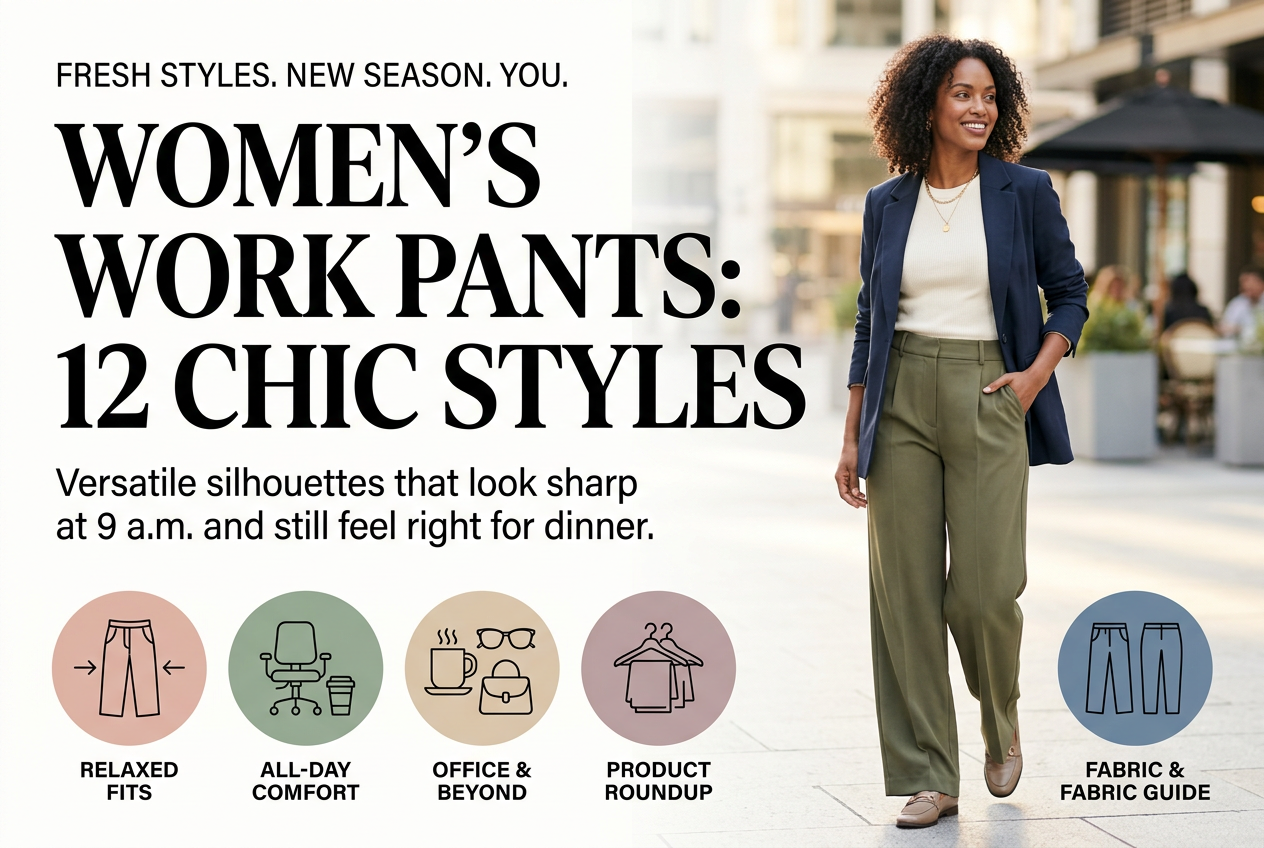
They need to look pulled together at 9 a.m., feel fine after a long sit-down meeting, and still make sense when your plans carry on after work. The best pairs don’t wait in your closet for Monday. They go with a knit top for the office, a tee on Saturday, and whatever shoes you can comfortably walk in, and that flexibility is why shopping for trousers has become a bit more fun and a lot less rigid, since you can pick a sharp crease or a relaxed drape, a high rise or a gentle mid-rise, without treating comfort as a trade-off. Below are 12 silhouettes, plus notes on fit, fabric and wearing them beyond the office. Prices are approximate typical retail ranges in USD. They shift by retailer, fabric and season.
Workwear got looser, and that’s fine
Tailoring still gives an outfit its structure. But stretch waistbands, softer fabrics and easier leg shapes make trousers simpler to wear for a full day, and you no longer need a matching suit to look polished. A well-fitting pair does the job under a cardigan, with a crisp shirt, or beneath a blazer over a plain tank.
My test is an ordinary one. Can you sit through a long meeting, walk out for lunch, and still feel like yourself? A little stretch helps, and so does a rise and leg shape that don’t need constant tugging. If your office is casual, a relaxed trouser looks just as deliberate as a sharply pressed one.
Six pairs to start with
These cover the everyday range: crisp, soft, roomy, and somewhere between. Treat the prices as broad estimates. Fit and fabric can push the final number up or down.
1. The classic straight-leg trouser. A straight leg is an easy anchor if you want a clean line without a snug fit. Look for a mid- or high-rise waist with a little stretch; it works with loafers and doesn’t feel stiff with sneakers. Typical price: about $35–$120. One catch: a hem even slightly too long will bunch at the ankle, so check the inseam.
2. The wide-leg draped trouser. Wide legs bring movement and a relaxed feel while still looking considered, especially with a tucked top or short jacket. A fluid woven fabric gives the swish, and a firm waistband keeps things neat. Typical price: about $40–$160. All that fabric can feel warm on a packed train, so go lighter weight.
3. The pull-on ponte pant. Ponte is smooth and substantial, so it reads like a trouser but wears like a soft knit. A clean front and plain ankle opening make it the pick for days when comfort wins. Typical price: about $25–$90. Strict dress codes may rule it out, and thicker ponte runs warm indoors.
4. The ankle-length cigarette pant. This tapered shape shows a little ankle and looks good with flats, low heels or a slim sneaker. It adds structure to a roomy blouse without demanding a full suit. Typical price: about $30–$110. Want more room through the calf? Check garment measurements, because some cuts taper harder than the photos suggest.
5. The pleated trouser. A front pleat gives the fabric somewhere to fall instead of pulling across the hip and thigh. Try a tucked tee or fine-gauge sweater to show the waist without fuss. Typical price: about $40–$180. Pleats add volume up front, which is lovely for some outfits and wrong if you like a flat-front line.
6. The relaxed tapered trouser. Looser at the top and narrower toward the ankle, it gives ease without the full sweep of a wide leg. I find it handy for days that mix a commute, errands and a desk chair. Typical price: about $35–$130. On taller frames it can look cropped, so compare inseams instead of trusting the model photo.
From boardroom to brunch
One quick change can alter how the same trousers read. Swap the blazer for a denim jacket. Trade pointed flats for canvas sneakers. Let a soft tee replace the tucked work shirt. You don’t need a second outfit, only a few pieces that shift the mood, and my rule is simple: keep one item structured and let everything else feel easy.
The next two styles lean into that. They handle a meeting but won’t look odd at a casual lunch or on a weekend walk to the farmers market.
7. The soft twill trouser. Cotton twill has a casual texture that looks less formal than suiting, yet a straight cut and pressed crease keep it office-ready. Wear it with a knit polo or button-front shirt, then a tucked tee and light jacket after work. Typical price: about $30–$100. Twill wrinkles over a long day, so a blend may be easier to maintain.
8. The knit trouser with a clean finish. A fine knit is comfortable at a desk or on a travel day, and a smooth waistband with a simple hem keeps it intentional. Pair it with a matching knit top, or split it up with a crisp shirt. Typical price: about $35–$140. Some knits bag at the knees after repeated wear, so read the fabric content and care label.
Fit is personal, so stop following body-type rules
There isn’t one correct trouser shape for every body, and there shouldn’t be. Start with how the pants feel when you move and sit, not with a rule about who can wear which cut. If you like room through the hip, try a pleat or a wider leg. If you want a close, streamlined line, a straight cut may suit. Both are fine.
Rise is personal too. A high rise can feel secure and define the waist, while a mid-rise sits comfortably under a longer top. Check the waistband when seated. If it digs in at your desk, it won’t magically get kinder because the outfit looks great. (I learned that the hard way, as you’ve gathered.) And get a tailor involved. A small hem adjustment can make an inexpensive pair look expensive.
9. The stretch suiting trouser. A woven suiting fabric with a touch of elastane keeps a tailored finish while giving at the waist and knee. It’s a strong choice when you want dress pants for women that survive a full day without feeling stiff. Typical price: about $50–$200. Stretch content varies, and too much can make a trouser lose its crisp shape over time.
10. The high-rise trouser with an elastic back. A partly elasticated waistband adds breathing room while the front stays smooth under a tucked blouse. It’s a practical middle ground if fixed waistbands feel tight by late afternoon. Typical price: about $35–$125. The elastic can show when you sit or tuck in a fitted top, so inspect the waistband construction.
Fabric matters as much as cut. Wool blends drape well and suit cooler months, and cotton blends feel more casual and breathable. Ponte and other knits forgive a lot but may run warmer than you expect. If you walk or take transit, ask whether the fabric wrinkles, collects lint, or needs special care. Not glamorous questions. Still, they often decide whether you reach for the pants again.
Does a bigger budget buy a better pair?
Not always. At a lower price, check seams, lining, and how the waistband behaves when you move. Mid-range pairs often bring more fabric choices and useful details like partial lining or a wider spread of inseams. Premium pairs can offer finer materials or careful tailoring, but a higher tag is no guarantee of a better fit, and the mirror gets a vote, along with your actual chair.
Two more options bring the total to 12: an easy summer pick and a more formal silhouette. I wouldn’t buy either just because it’s on trend. I’d buy it only if I could name four things I already own that work with it.
11. The linen-blend trouser. A linen blend feels breezy on warm commutes and gives a plain outfit a relaxed texture. Try a wide or straight leg with a tucked tank and light cardigan in an office with a casual dress code. Typical price: about $35–$150. Linen blends still crease. That’s part of the charm, honestly, but know it if you want a fresh-pressed look all day.
12. The tailored bootcut trouser. A subtle flare balances a fitted top and sits neatly over a low heel or sleek shoe. It has a classic office feel, yet works for dinner with a fitted knit and simple earrings. Typical price: about $40–$180. The hem is fussier about shoe height than a cropped style, so keep your usual shoes in mind when choosing length.
When you’re comparing the best office pants for your own routine, start with the days you actually have. Maybe that’s a long commute and back-to-back meetings. Maybe it’s a few hours at a shared workspace and then dinner. Choose the rise you can sit in, the fabric you can care for, and a leg shape that feels like you. Women’s work pants should support your day, not turn it into a series of waistband adjustments.
Which silhouette feels like the sure thing in your closet?
Buy that one first, then try a second that nudges your usual style. A soft ponte pair may become your travel favorite, and a pleated trouser could be what makes a plain sweater look finished. My vote goes to the pleated pair for most people.
At Unwritten, our editors choose every product and story idea independently — we only recommend things we’d genuinely tell a friend about.
Frequently Asked Questions
What are the most comfortable women’s work pants?
Pull-on ponte pants, stretch suiting trousers and styles with a partly elastic waistband tend to be the easiest to wear through a long day of sitting, walking and commuting.
How should work pants fit when you sit down?
The waistband should not dig in or gap when you are seated. Rise matters as much as size, so test pants in a chair before you commit.
Which fabric is best for work pants?
Wool blends drape well in cooler months, cotton and linen blends breathe better in warm weather, and ponte or knits are forgiving but can run warm.
Can work pants be worn outside the office?
Yes. Swap the blazer for a denim jacket, the flats for canvas sneakers, and a tucked shirt for a soft tee. Keep one piece structured and let the rest relax.
Do expensive work pants fit better?
Not necessarily. A higher price can mean finer fabric or better tailoring, but fit depends on the cut and on small alterations like a hem adjustment.