
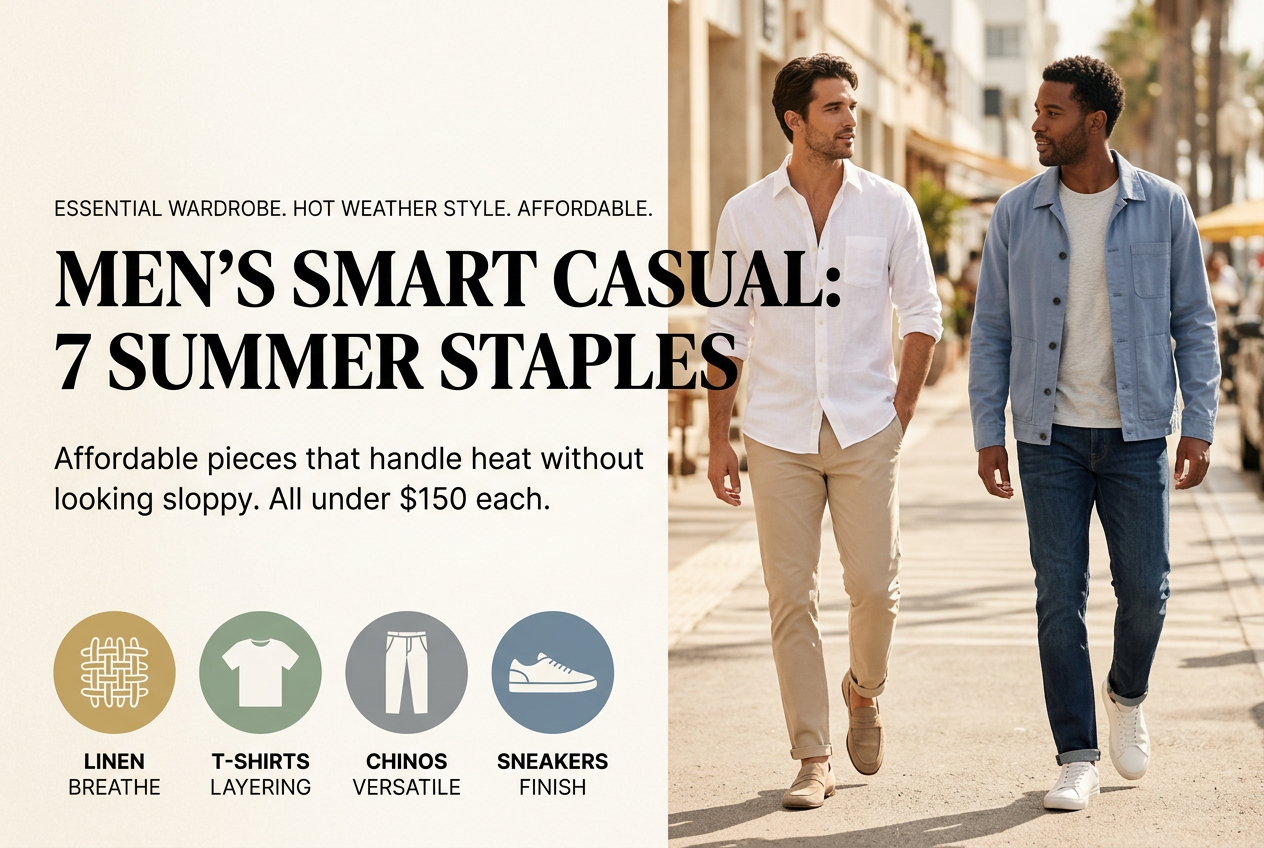
Here’s something most style advice gets wrong: men’s smart casual in summer is actually easier than any other season. More breathing room, more color options, and fewer layers to second-guess. The hard part isn’t figuring out what to wear — it’s knowing which pieces are worth buying in the first place.
A few quality basics in the right fabrics and you’re covered for everything from weekend coffee runs to casual Fridays. The trick is choosing pieces that actually earn their closet space — things that layer well, transition between occasions, and don’t feel like you’re trying too hard. We’ve rounded up seven essentials that do exactly that, all under $150. Not trend pieces. Staples you’ll reach for every single week.
Linen: The Only Fabric That Makes Sense in Heat
I’ll be honest — I resisted linen for years because I thought the wrinkles would look messy. Then I wore a linen shirt through a July afternoon and never looked back. It breathes in a way cotton simply doesn’t, and the wrinkles aren’t a flaw you’re tolerating; they’re the whole aesthetic. A solid linen shirt in white, cream, or soft blue becomes your default for almost everything: worn open over a tee with shorts, layered under a lightweight jacket for something sharper, or on its own tucked loosely into chinos. The collar holds structure without feeling stiff, and — this matters — a $60 linen shirt looks nearly identical to a $200 one after a few wears anyway.
Get two. White is basically mandatory. The second one in sand or sage gives you options without feeling like you’re repeating yourself mid-week.
If you genuinely can’t live with texture, a linen-cotton blend gets you about 80% of the breathability with less creasing. Still looks good.
What Actually Makes Chinos Worth Buying
Chinos are the bridge between jeans and dress pants — basically the uniform of smart casual. In summer you want lighter weights and colors that don’t absorb heat. Stone, khaki, and navy each give you a different energy while working with the same shirts and shoes, so two pairs in different colors already doubles your combinations. A third in a lighter shade rounds things out. The fit question matters more than people admit: too baggy and you look like you raided someone else’s closet, too slim and you’ll be miserable in actual heat. You want something that sits naturally at the waist without needing a belt to hold it up, tapers slightly through the leg, and hits at the top of your shoe. Cotton-poly blends dry faster, wrinkle less, and hold their shape better after washing — not a dramatic difference on any given day, but it adds up after a summer’s worth of wear.
The Case for a Better Polo
Polos get dismissed because too many of them are cheap, stiff, and look like a dress code requirement. A quality polo is actually one of the smartest pieces you can own for summer — more dressed-up than a tee, far more comfortable than a button-up in heat, and versatile enough to go from casual Friday to weekend plans without changing. The difference between a $30 polo and an $80 polo is almost entirely fabric: better versions use a tighter pique weave that holds its shape, breathes properly, and keeps the collar structured after repeated washing instead of going floppy. Solid colors work best here — navy, white, light gray, maybe a sage. Skip the logos unless you’re genuinely into them. A plain polo layers under a linen shirt, works solo, or sits under a lightweight jacket without demanding attention.
Cheap polos shrink unpredictably. Spending more here actually saves money.
Does a Lightweight Jacket Actually Matter in Summer?
Summer nights cool down faster than you expect, and you need something between a bare shirt and a full jacket. An unstructured blazer in linen or cotton-linen blend is the cleanest option — it looks sharp but feels casual, and pairing one with chinos and a plain tee reads as considered without being formal. If blazers feel like too much, a well-made overshirt in a neutral color does similar work. The point isn’t warmth. It’s adding a layer that looks intentional rather than like you grabbed whatever was near the door. Navy, khaki, stone, or gray all pair with everything else in this list without competing for attention. Actually, that’s not quite right — a patterned jacket can work, but it limits your combinations considerably. Save the personality for accessories.
Shoes That Don’t Undercut Everything Else
Shoes make or break smart casual. Full stop. A clean white leather sneaker in a minimal silhouette is the baseline — not high-tops, not chunky, just proportional and easy to wipe down. These pair with shorts, chinos, and everything in between. A leather or suede loafer in brown or tan is the other essential: it adds polish without feeling formal, works with shorts in a way that sounds odd until you try it, and looks intentional in situations where sneakers fall slightly short. Suede breathes better in heat and has a softer, more relaxed look than leather — the downside is maintenance, but occasional brushing keeps them in good shape for years.
Tees
You already own tees. The question is whether they actually fit and hold up. Quality matters here because thin, cheap cotton shrinks, pills, and fades after a season. What you want: white, gray, and black in a fabric with some weight to it — not see-through, not stiff, just present. The fit should do nothing dramatic in any direction. A good tee is invisible, which is exactly the point. It supports everything else without drawing attention to itself, and it layers under polos or linen shirts without adding bulk.
Accessories: Two Things, Done Right
A leather belt in a color that matches your shoes keeps your proportions clean and adds a small detail that actually registers. A watch — nothing complicated, just something that looks deliberate and isn’t a glowing smartwatch screen — does the same. Sunglasses count too, and this is one place where quality genuinely shows: a pair that fits your face in a classic shape is worth the investment because cheap ones look cheap in a way that’s hard to ignore.
That’s the whole list.
Putting It Together
A white linen shirt with stone chinos and white sneakers is effortless. Swap in a polo and navy chinos for something slightly different. Layer the linen shirt open over a tee with khaki chinos and loafers when you need to look sharper. None of these combinations feel forced — they just work because the pieces were chosen to work together. If you’re starting from scratch, a white linen shirt and khaki chinos get you through most of summer on their own. Add a polo and clean sneakers and you’ve got real options. Build from there based on what actually fits your life, not what a list told you to buy.
Quality over quantity isn’t a cliché here — it’s the only approach that doesn’t leave you with a closet full of things you don’t wear. These seven pieces make up the 80% of your rotation that does the actual work. They’re not flashy. They’re not seasonal. They’re just solid basics that make getting dressed in summer genuinely easy.
At Unwritten, our editors choose every product and story idea independently — we only recommend things we’d genuinely tell a friend about.
Frequently Asked Questions
What fabrics work best for men’s smart casual in summer?
Linen and cotton-linen blends are your best options. They breathe well, handle heat without feeling suffocating, and look intentional even when slightly wrinkled. Cotton-poly blend chinos also work well since they dry faster and hold their shape after washing.
How many pieces do I actually need to build a smart casual summer wardrobe?
Honestly, fewer than you think. A white linen shirt, two pairs of chinos in different colors, a decent polo, and clean sneakers covers most situations. Start there and add a lightweight jacket and loafers once you’ve got the basics working.
Can I wear loafers with shorts for smart casual?
Yes, and it works better than most people expect. A suede or leather loafer with shorts reads as intentional rather than formal. The key is keeping the rest of the outfit simple — a plain tee or fitted polo, not a printed shirt.
What’s the difference between a cheap polo and an expensive one?
Almost entirely fabric and construction. Better polos use a tighter pique weave that holds its shape, doesn’t pill, and keeps the collar structured after multiple washes. A $30 polo often looks fine on day one but deteriorates quickly. A $70-80 polo can last years with basic care.
Do linen shirts need to be ironed?
No, and ironing them perfectly actually defeats the purpose. Linen is supposed to have texture and some wrinkling — that’s part of why it looks good in summer. If you genuinely can’t stand the wrinkles, a linen-cotton blend gives you most of the breathability with noticeably less creasing.