Here’s something nobody tells you upfront: the glass skin look you’re obsessing over on TikTok — that poreless, almost wet-looking glow — is mostly a hydration and consistency problem, not a budget problem. I went through an embarrassing number of products last year trying to crack this, including a $68 essence I returned after two weeks because a $9 version from Walgreens outperformed it. That experience pretty much reframed everything I thought I knew about building a drugstore glass skin routine.
Glass skin doesn’t require a dermatologist or a Seoul-imported haul. What it requires is the right sequence, the right ingredients, and the willingness to actually stick with something long enough to see it work.
What Glass Skin Actually Is
Smooth. Clear. So hydrated it looks translucent. That’s the whole definition — a complexion with no visible texture, no dullness, no dry patches catching the light wrong. It came out of Korean beauty culture, where the philosophy has always been about maintaining healthy skin rather than covering up unhealthy skin, and it spread because the results speak for themselves. The common misconception is that it’s something you achieve with expensive products. It isn’t. The foundation of glass skin is boring: hydration, sun protection, and time. Boring works, though.
The Six Steps — In Order
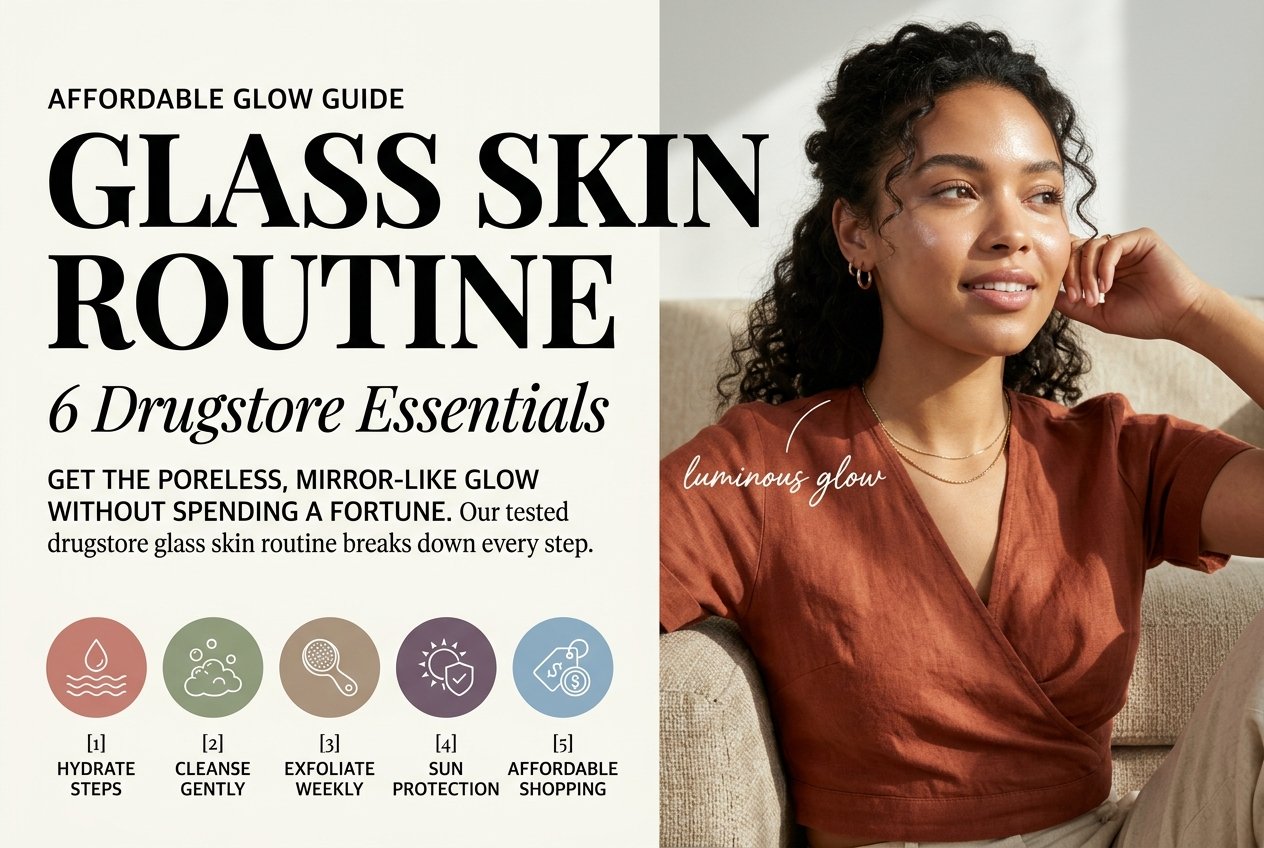
Sequence matters here more than brand names. Each step primes your skin for the next one, and skipping around undermines the whole system. Here’s how to build it from cleanest skin to finished face.
Step 1: Gentle Cleanser
You cannot build glass skin on a stripped, irritated barrier. A harsh gel or foam cleanser that leaves your face feeling tight is actively working against you — reach for something milk-based or cream-based instead, something that removes sunscreen and makeup without disrupting your skin’s natural moisture. Clean skin should still feel soft. Squeaky-clean is not the goal.
Step 2: Hydrating Toner or Essence
Think of this as your hydration primer. A good toner or essence is watery, absorbs fast, and doesn’t leave any stickiness behind. It softens skin slightly so that whatever comes next can actually penetrate instead of sitting on the surface. Skip this step and you’ll notice your serum pilling or sitting unevenly.
Step 3: Niacinamide Serum
Niacinamide is the workhorse of any affordable glass skin routine, and honestly, it’s one of those ingredients where the drugstore version performs just as well as the prestige one. It minimizes pores, regulates oil, repairs the skin barrier, and calms redness — all in one ingredient. Look for a concentration around 4-5%. More isn’t always better; some people find high concentrations (10%+) cause flushing.
Step 4: Hydrating Moisturizer
Not a heavy cream that sits on top of your skin. You want something that absorbs fully and leaves skin plump — ingredients like hyaluronic acid, glycerin, and ceramides are what you’re looking for on the label. The finish should feel like a second skin, not a coating. (Actually, that’s not quite right — it should feel like nothing at all, which is how you know it absorbed properly.)
Step 5: Eye Cream
Optional for some, but the skin around your eyes is genuinely thinner than the rest of your face and shows dehydration faster. A lightweight formula with peptides or caffeine keeps that area smooth and reduces the hollowness that makes people look tired even when they aren’t. A tiny amount — smaller than a grain of rice per eye — is all you need.
Step 6: Broad-Spectrum SPF 30+
This step determines whether your glass skin routine succeeds or fails over time. UV damage causes the texture, dark spots, and uneven tone that glass skin is specifically the opposite of. Every single day, including overcast days and days you’re mostly inside near windows. Reapply if you’re spending time outdoors. No exceptions.
Which Ingredients Are Actually Doing the Work?
Knowing what to look for on a label is more useful than memorizing brand names, because formulations change and drugstore shelves rotate constantly. The ingredients that reliably deliver glass skin results are hyaluronic acid (draws moisture into skin and holds it there — apply to damp skin or it can backfire in dry climates), niacinamide for pore refinement and barrier repair, glycerin as a secondary humectant that softens and hydrates, peptides for gradual improvement in firmness and texture over weeks and months, and ceramides to lock everything in and prevent the moisture loss that causes dullness and irritation. When you’re reading labels, check where these ingredients appear in the list. Glycerin buried near the end of a 40-ingredient formula isn’t doing much for you.
What Skincare Can’t Fix On Its Own
Products get you maybe 60% of the way there.
Sleep is where your skin actually repairs itself — consistently getting five or six hours will undermine even a perfect routine. Seven to nine hours isn’t a luxury recommendation. Chronic dehydration makes skin look dull and tired in ways that no topical product fully compensates for. Diet matters too: omega-3 fatty acids from salmon or walnuts, antioxidants from berries and leafy greens, and limiting excess sugar all make a visible difference in skin quality over time. And stress hormones directly trigger oil production and inflammation, so whatever helps you actually decompress — movement, time outside, whatever it is — that’s skin care too, even if it doesn’t come in a bottle.
Don’t over-exfoliate.
Seriously. Using a chemical exfoliant (AHA or BHA) once or twice a week is enough to remove dead skin cells and improve texture. More than that damages the barrier you’re trying to build. Physical scrubs with gritty particles should be avoided entirely — they create micro-tears and set your progress back.
Does the Budget Approach Actually Work?
Yes, and I’ll be direct about why: the active ingredients that create glass skin results — niacinamide, hyaluronic acid, glycerin, ceramides, broad-spectrum UV filters — are not expensive to manufacture. What you pay for with prestige products is packaging, marketing, and fragrance. The drugstore versions of these ingredients work. The six-step routine above, built entirely from CVS or Walgreens shelf staples, will outperform a half-hearted luxury routine every time.
What’s the catch? Time. Most people see noticeable change around the six-week mark, and real transformation takes three to four months of consistent daily use. The products are cheap. The commitment isn’t.
My actual opinion, after a year of testing: start with the niacinamide serum and SPF if you’re not ready to commit to all six steps. Those two alone will change what your skin looks like in two months. Add the other steps when you’re ready. The full routine is worth it, but entry-level glass skin is closer than most people think.
At Unwritten, our editors choose every product and story idea independently — we only recommend things we’d genuinely tell a friend about.
Frequently Asked Questions
How long does it take to see results from a glass skin routine?
Most people notice real improvements after 6-8 weeks of consistent use. Full transformation — the kind where strangers ask what you’re doing differently — typically takes 3-4 months. Patience is genuinely non-negotiable here.
Can oily skin types achieve glass skin?
Yes, and in some ways oily skin has an advantage — it tends to age more slowly and already has some natural dewiness. The key is balancing hydration without adding heaviness. Niacinamide is especially helpful for regulating oil while keeping that glassy finish intact.
Is glass skin just a Korean beauty trend or is it actually achievable?
It started in Korean beauty culture, where skincare has always emphasized prevention over coverage. But the goal — smooth, clear, hydrated skin that reflects light — is achievable for most people regardless of background. It’s less about genetics and more about consistency.
Do I really need all six steps, or can I simplify?
You can absolutely streamline. If you had to pick just three steps, go with a gentle cleanser, a niacinamide serum, and SPF. That covers barrier protection, pore refinement, and UV defense — the three things that matter most for long-term glass skin results.
Why does hyaluronic acid sometimes make my skin feel dry?
This is a real and frustrating problem. Hyaluronic acid is a humectant, meaning it pulls moisture from its environment. In dry climates or dry indoor air, it can actually draw moisture out of your skin instead of into it. Apply it to slightly damp skin and always follow with a moisturizer that seals it in.