
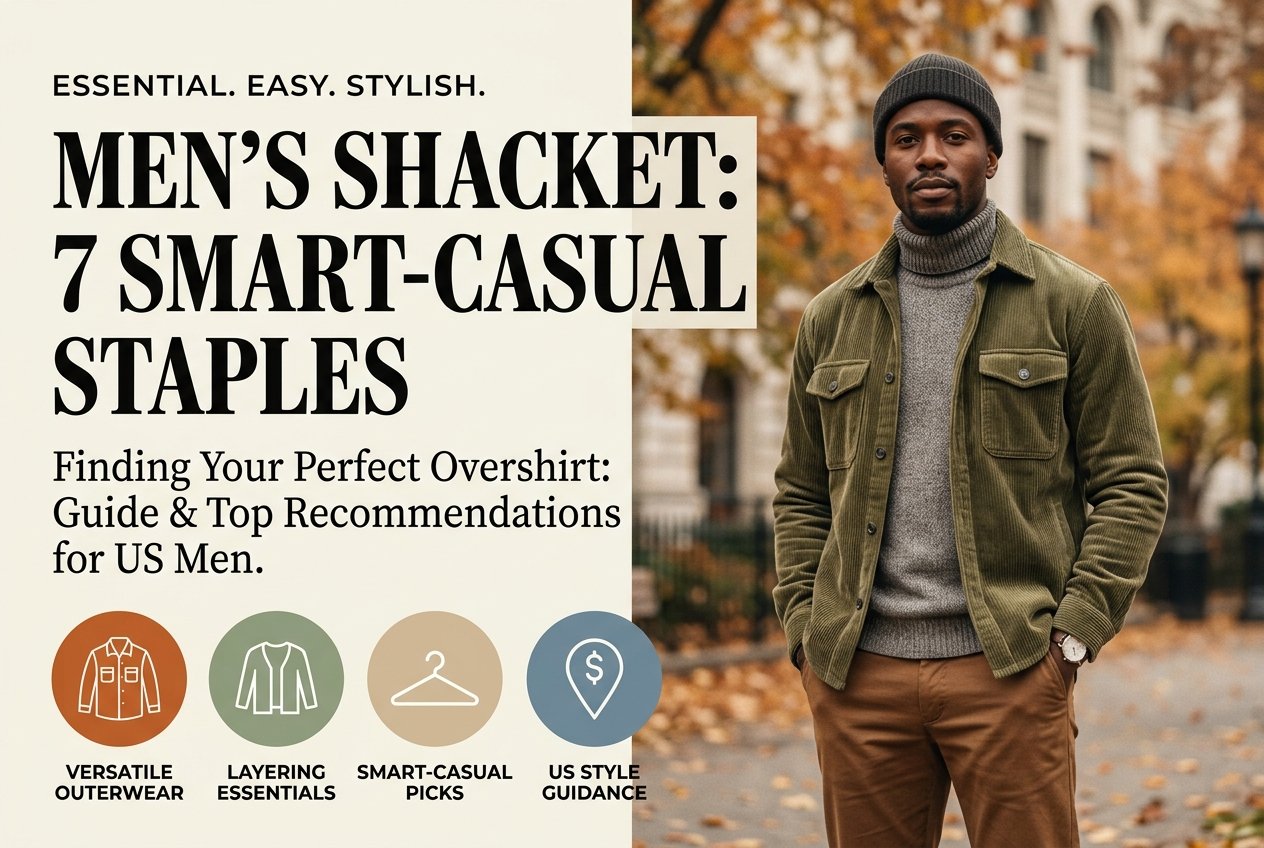
I grabbed a flannel shacket off a clearance rack about four years ago, mostly because it was cheap and the color was right. I’ve worn it more than almost anything else I own. That’s really the whole argument for this category right there.
Here’s the thing most style guides won’t tell you upfront: a men’s shacket might already be the most practical piece missing from your closet. Not because it’s trendy — it isn’t, particularly — but because it solves a specific problem that a t-shirt and a proper jacket both fail at. It’s too heavy to be a shirt, too relaxed to be a blazer, and perfectly comfortable doing the work of both on any given morning when the weather hasn’t made up its mind. You wear it over a tee when it’s cool, peel it off when the sun shows up, tie it around your waist when you’re done with it. No ceremony required.
Why Most Guys Don’t Own Enough of These
Most men have too many t-shirts and not nearly enough layering pieces. A shacket fixes that gap without asking you to think too hard about outfit construction. It’s the thing you reach for when a lone t-shirt looks a little underdressed but a full jacket feels excessive — early fall, late spring, those strange weeks in March where the temperature swings fifteen degrees between 8am and noon. The overshirt does something similar but with a slightly different personality. Where a shacket edges toward jacket territory, an overshirt stays rooted in shirt DNA: less structured shoulders, slightly lighter fabric, more casual overall. Both solve the same problem. Neither is better. They just fit different moments in your week, which is why most guys who own one end up wanting the other eventually.
Cost-per-wear is the honest case for spending real money here.
Wear a shacket fifty times across a year — which is genuinely easy to do — and even a $180 option starts looking like a bargain. These aren’t pieces that sit in the back of your closet waiting for a special occasion. They’re the things you grab without thinking, which is exactly how you know a piece has actually earned its place.
Shacket vs. Overshirt — Does the Distinction Actually Matter?
It does, but only because it changes how you wear it. A shacket — typically flannel, a wool blend, canvas, or sometimes waxed cotton — has enough structure and weight to work as a standalone piece on a cool day. Jeans, boots, shacket. Done. An overshirt lives in the space between a regular button-up and a shacket: thicker than a shirt, yes, but with softer construction and a more casual read. It almost always needs something underneath it to look intentional. Think of the overshirt as the more easygoing sibling — great open over a t-shirt on a weekend, slightly less convincing as a solo layer when the temperature drops below 55. Actually, that’s not quite right — a heavy overshirt in a dense brushed cotton can absolutely hold its own on a mild day. The line between the two categories is blurrier than most guides admit.
The Best Accessible Picks Right Now
You don’t need to spend a fortune to get a men’s shacket that’ll hold up for years. The sub-$150 market is genuinely good right now.
Worth the Splurge?
Premium shackets aren’t just about the label. Better construction means the buttons stay on, the seams don’t pucker after ten washes, and the fabric actually improves with age rather than pilling into oblivion — and when you’re wearing something fifty-plus times a year, that difference compounds fast. Heritage brands and quality mid-tier makers put their money into fabric weight and finishing details that you won’t notice on a hanger but absolutely feel after a year of regular wear.
How to Actually Wear It
The baseline is simple: shacket over a plain white or grey tee, dark jeans, clean sneakers. That’s a complete outfit that works almost anywhere casual. But the format is flexible enough to go further — layer it over a henley or thermal on cold mornings, swap jeans for chinos when you want something slightly more put-together, throw it open over a hoodie when the temperature drops fast. Roll the sleeves on warmer afternoons. The overshirt plays by similar rules but reads a touch more casual, which makes it better suited to shorts in warmer weather or worn fully open as more of a light outer layer than a proper top.
One thing I’ve never seen work: wearing either of these buttoned all the way up with nothing underneath. It just looks odd. Leave the top button open at minimum, or wear a crew neck tee underneath if you want it fully closed.
The Bottom Line
A men’s shacket is one of those rare wardrobe additions that doesn’t require you to rethink anything else you own — it just slots in and starts earning its keep immediately. Start with one, in a neutral color you’ll actually wear, and see how often you reach for it. My guess is more than you’d expect.
At Unwritten, our editors choose every product and story idea independently — we only recommend things we’d genuinely tell a friend about.
Frequently Asked Questions
What is the difference between a shacket and an overshirt?
A shacket uses heavier fabric like flannel or wool and has a more structured shoulder, so it functions almost like a lightweight jacket. An overshirt is thicker than a regular button-up but less structured than a shacket — it sits closer to shirt territory and usually needs a layer underneath.
Can you wear a men’s shacket in summer?
On cooler summer evenings or in air-conditioned spaces, yes. Look for lighter-weight options in linen or thin cotton. Most shackets, though, are best suited to fall, spring, and those unpredictable in-between weeks when a full jacket feels like too much.
How should a shacket fit?
It should fit like a relaxed blazer — room through the chest and shoulders to layer underneath, but not so oversized that it swamps your frame. Check that the shoulder seams sit at the edge of your actual shoulders, not drooping down your arms.
What fabrics are best for a men’s shacket?
Flannel and wool blends are the most popular for good reason: they’re warm, durable, and soften with wear. Canvas and waxed cotton work well if you want something more weather-resistant. For a lighter take, brushed cotton or a cotton-linen blend gets you the look without the weight.
Is a shacket worth the investment?
If you wear it regularly, absolutely. A quality shacket worn 40 or 50 times a year costs you very little per wear and doesn’t go out of style the way trend-driven pieces do. The key is buying one in a neutral color you’ll actually reach for.