
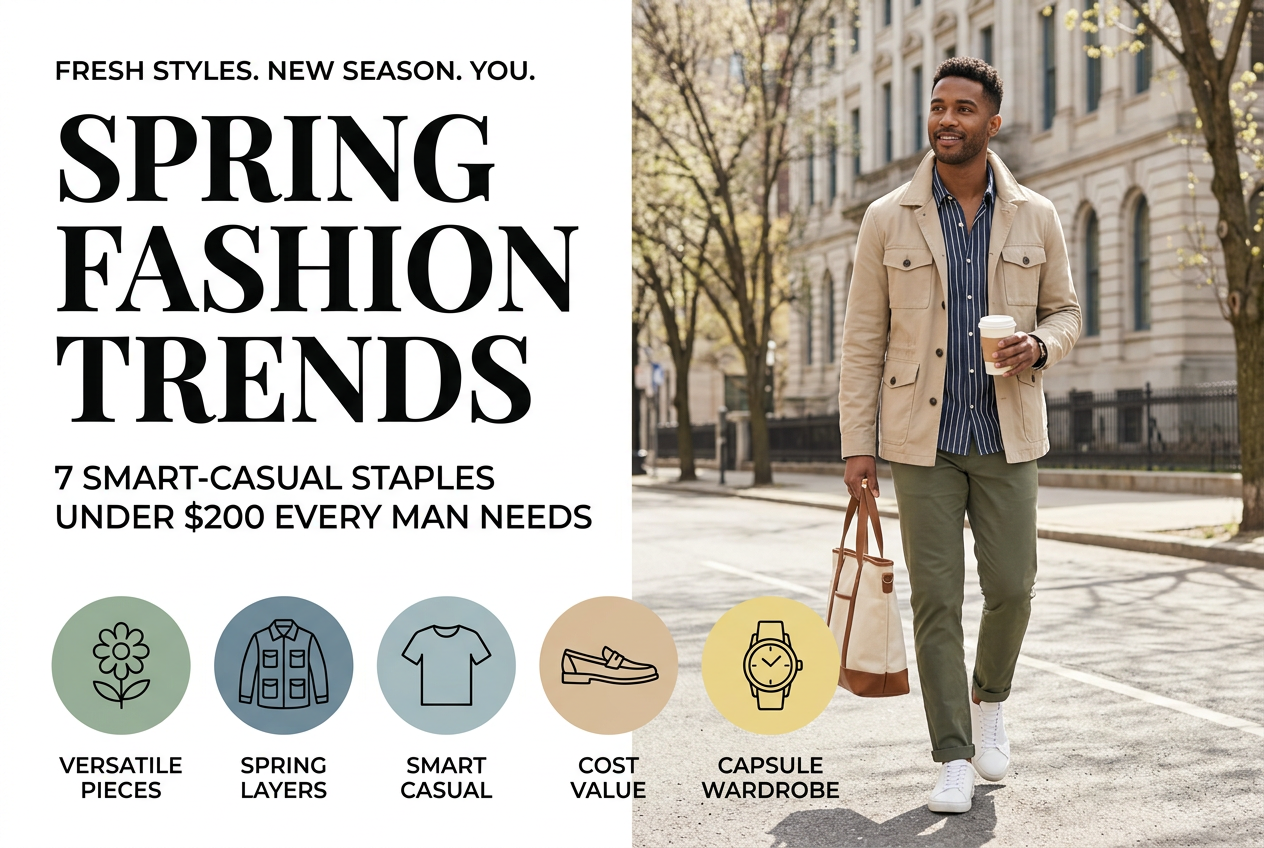
A $150 jacket worn 80 times a year costs less per wear than a $50 shirt you never touch. That single idea is the foundation of spring men’s fashion done right — and once it clicks, you stop buying things because they’re on sale and start buying things because they actually work.
Most guys building a spring wardrobe get stuck in the same trap: too much denim, too many identical white shirts, footwear that’s either too heavy or too flimsy for 55-degree mornings. The pieces listed here solve all of that. None of them cost more than $200. All of them earn their space in your closet.
Outerwear First
A spring jacket is the piece your whole rotation builds around. Not a puffer, not a heavy wool blazer — something that sits comfortably between those two extremes and handles a wide temperature range without complaint. Fabric matters more than most people realize here: cotton blends breathe noticeably better than pure polyester, and anything under about two pounds won’t make you feel like you’re wearing insulation indoors. I spent two springs in a jacket that was just slightly too heavy, kept pushing it to the back of my closet by April, and finally replaced it with a lighter cotton-blend field jacket that I’ve worn well into June. The difference was immediate. Look for something with enough structure to wear over a button-up but relaxed enough to throw over a t-shirt on a Saturday — that range of use is exactly what you’re paying for.
What Most Guys Get Wrong About Shirts
Five identical white dress shirts is not a wardrobe. It’s a uniform.
Spring is the right moment to add texture and quiet color without going overboard. An oxford cloth button-up in white, light blue, or cream is non-negotiable — but pair it with one in a thin stripe or a small check, something that reads as deliberate rather than “I grabbed what was clean.” Linen blends work well here too, as long as you find one that doesn’t wrinkle into disaster by noon (they exist; you just have to look). These shirts function untucked over chinos, tucked into trousers, or layered under that jacket. Three different contexts, one shirt.
Pants Beyond Denim
Jeans are fine. Nobody is telling you to get rid of your jeans.
But if your spring rotation is mostly denim, chinos will change what’s possible. Navy and khaki first — they pair with everything you already own and don’t require any mental energy in the morning. Olive or sage is worth adding once you have the basics covered. These aren’t trend colors; they’ve worked for decades and will keep working. Look for a fabric weight that holds shape through the day but won’t have you sweating by May. Cotton with a small amount of elastane moves with you rather than against you, which matters more than most fabric specs people obsess over.
Shoes That Actually Work in Spring
Spring footwear is genuinely tricky. Too heavy and you look like you missed the memo that winter ended. Too light and you’re cold by 7 p.m. The answer isn’t one perfect shoe — it’s two that cover different ground. A white leather sneaker with clean lines and a sole that doesn’t belong on a basketball court handles casual days, weekend errands, and most social situations without looking like you tried too hard. A simple loafer in brown or tan covers the rest: dinner, the office on a casual Friday, anything where a sneaker reads slightly wrong. (Actually, that’s not quite right — a good loafer can handle more casual situations than most people give it credit for. The line between sneaker and loafer territory is blurrier than it used to be.) Between those two, you’ve covered roughly 90% of spring scenarios.
Accessories: Less Than You Think
One leather belt in brown. One in black if you wear black shoes regularly. That’s it — you don’t need a collection.
The one accessory that actually moves the needle in spring is a watch. Not a luxury piece, not a smartwatch that announces itself across the room — something with a leather strap and a clean face that you’ll put on without thinking about it. Watches are the rare accessory that men can wear daily without overthinking, and they pull an outfit together in a way that’s hard to articulate but immediately visible. A canvas or leather crossbody bag rounds things out for weekends; a simple backpack if you commute.
So What Does This Actually Cost You?
Seven pieces. Forty-plus outfit combinations. None of them look accidental.
Wear that jacket 60 times over two years — which is a conservative estimate if you actually like it — and you’re paying around $2.50 per wear. The $100 chinos you reach for every week will have 150 wears on them by next spring. At that point, the word “expensive” stops meaning anything useful. Build slowly, buy well, and stop filling your closet with things that were on sale. The wardrobe that works is smaller than you think, and it starts with pieces that do more than one thing.
At Unwritten, our editors choose every product and story idea independently — we only recommend things we’d genuinely tell a friend about.
Frequently Asked Questions
How many pieces do I actually need for a solid spring wardrobe?
Seven well-chosen pieces — a jacket, two shirts, two pairs of pants, two shoes, and a belt — can generate 40+ outfit combinations without any of them looking accidental or thrown together.
What fabrics work best for spring men’s clothing?
Cotton blends and linen blends are your best options. They breathe better than pure polyester, hold their shape through the day, and don’t trap heat once temperatures climb into the 70s. Look for a small percentage of elastane if you want pants that move with you.
Is it worth spending $150+ on a single spring jacket?
Yes, if you’ll actually wear it. A $150 jacket you reach for 80 times a year works out to under $2 per wear. A $50 jacket that sits in your closet costs you $50. Cost-per-wear is a more honest way to think about clothing budgets than sticker price.
What color chinos should I buy first?
Navy or khaki. Both pair with almost every shirt and shoe combination you already own. Olive is a great third option once you have the basics covered — it photographs well and reads as intentional without trying too hard.
Do I need a watch if I already use my phone to check the time?
Functionally, no. But a simple watch with a leather strap is one of the few accessories men can wear without overthinking it, and it does genuinely pull an outfit together in a way that’s hard to explain until you try it.