
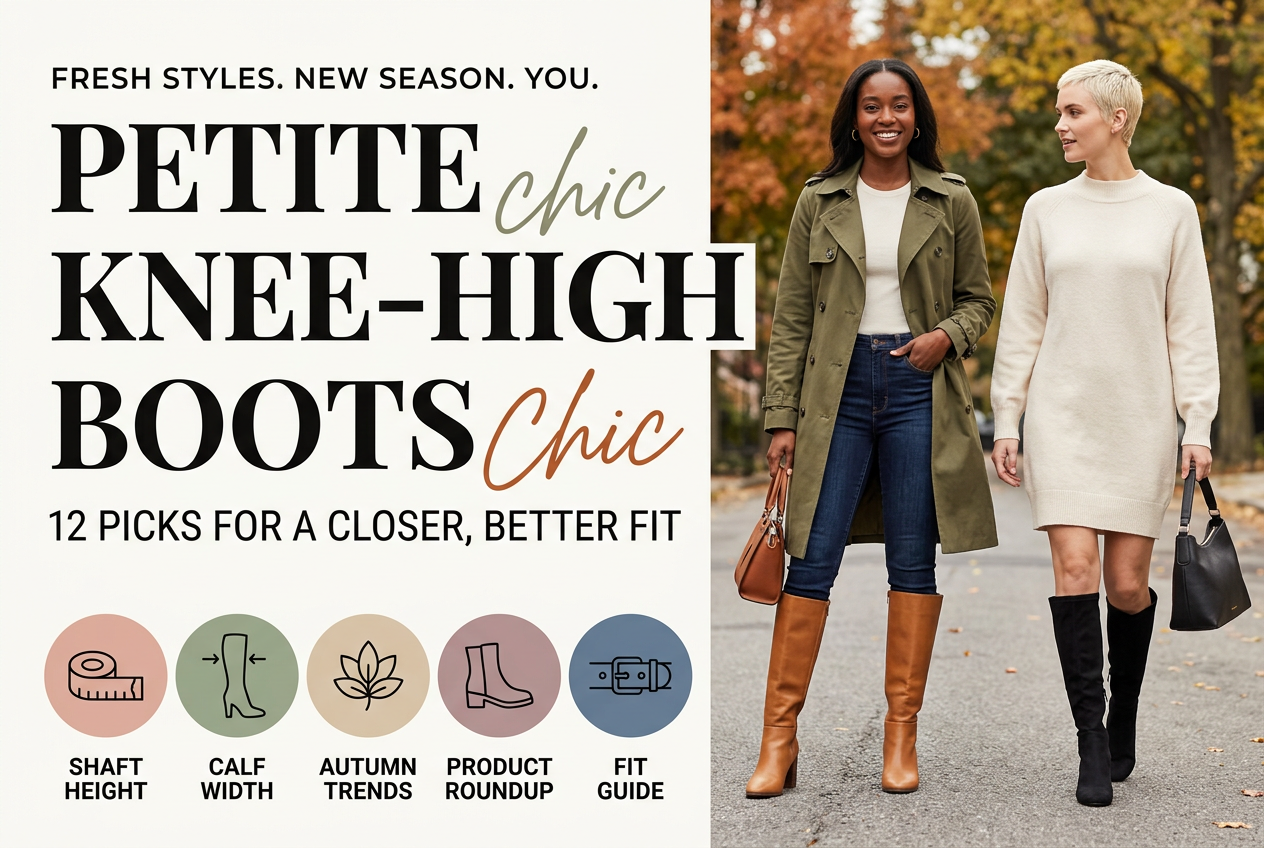
I once walked three steps in a new pair of boots and felt the shaft slump to my ankle.
That small slide ruined the whole outfit. It is the reason I now treat boot shopping as a measuring job first and a style job second. Petite knee-high boots can look sleek and deliberate, or they can bunch behind your knee, and the difference usually comes down to two numbers: shaft height and calf circumference.
Why does the label tell you so little?
Because “petite” means whatever a retailer decides it means. Many brands do not make a petite-specific shaft at all.
A knee-high boot has several measurements working at once: shaft height, calf circumference, ankle width and heel height. On a shorter leg, even a small change moves where the top edge lands, and a tall rigid shaft can press into the back of your knee when you sit, while a roomy calf leaves a gap that reads as loose instead of relaxed. So shop by measurements and construction. Look for adjustable laces or buckles, elastic panels, stretch uppers and detailed product dimensions. Measure your calf at its widest point while standing, compare it with the listing, and leave a little breathing room for socks and walking.
Prices below are typical retail ranges, not promises. Materials and seasonal sales shift them.
Boots built to fit a shorter shaft
These first four are the practical foundations. Clean shapes, a few ways to get closer to your fit, and nothing fussy.
1. Stretch-knit block-heel boots — about $70–$180. A stretch shaft hugs the calf better than stiff leather, which cuts down that hollow space at the back. The block heel is steadier for errands and long days. One drawback: knit can show wear sooner than leather if it rubs against rough denim.
2. Adjustable lace-back riding boots — about $100–$300. Lacing lets you tune the circumference rather than hoping a fixed shaft happens to match your leg. The simple riding shape works with leggings, straight jeans and skirts. The laces add some visual detail, so skip them if you want a fully minimal boot.
3. Elastic-panel knee-high boots — about $90–$250. A stretch panel, often along the back or inner calf, gives the shaft room to move without making the whole boot feel oversized. It is a good middle ground when standard calf boots are close but not right. Check where the panel sits in the photos, because a contrast panel is more noticeable than you would expect.
4. Low-heel leather-look riding boots — about $80–$220. A low heel keeps the shape classic, and a less rigid upper may settle more naturally around the calf. Try them over slim trousers or with a midi skirt. Softer materials do crease, especially where your ankle bends.
Everyday pairs
For regular wear, comfort details matter as much as the shaft. A side zipper that opens fully makes getting dressed easier. A sole with some grip is welcome when sidewalks turn slick. These lean practical but still look polished with clothes you already own.
5. Side-zip flat boots with a narrow shaft — about $75–$200. A streamlined shaft and flat sole make this an easy commuting or weekend pair. Wear them with leggings and a long sweater, or let them peek out under a knee-length skirt. “Narrow shaft” wording varies by shop, so confirm the real calf measurement first.
6. Pointed-toe knee-high boots with a kitten heel — about $100–$280. A subtle heel and elongated toe make a long, clean line with a dress or tailored trousers. It feels dressier without asking you to balance on a tall heel. Pointed toes can feel snug, so read the toe-box description if you like room.
7. Flat lug-sole boots with a flexible shaft — about $90–$240. The chunky sole brings a relaxed edge to a simple boot, and a flexible upper is easier to fit than a hard structured one. Pair them with a short hem or slim jeans to keep proportions balanced. They look heavier than classic riding boots. That is part of the charm, though not for everyone.
8. Suede-look boots with a stretch back — about $80–$220. Soft texture warms up a fall outfit, and an elasticized back helps the boot sit closer to the calf. Try a dark neutral with a knit dress or tucked-in jeans. Suede-look finishes attract lint and need gentle care, so they are less carefree than smooth faux leather.
Dressing them up without a stilt heel
Going out does not mean choosing a sky-high heel or a stiff shaft. A modest heel, clean toe and well-placed seam make a boot feel special without turning it into a one-event purchase. These can go from the office to dinner with a quick change of layers.
9. Sleek heeled boots with a side panel — about $110–$320. A side stretch panel makes a fitted shape more forgiving, and a mid-height heel works with skirts and dresses. Look for a shaft that ends below the knee crease when you stand. A slim heel is elegant but less forgiving on uneven pavement.
10. Square-toe boots with a mid-height heel — about $100–$280. The square toe feels modern and can offer more room than a sharp point. Wear these with a column skirt or a simple sweater dress. The shape reads bold, so it may feel less versatile if your wardrobe is delicate or very classic.
11. Soft faux-leather boots with an adjustable buckle — about $70–$190. A buckle at the top or back lets you fine-tune the look, and sometimes the fit, depending on construction. The smooth finish pairs easily with tailored pieces. Some buckles are purely decorative, so check the details before counting on one.
12. Low-wedge knee-high boots with a stretch gusset — about $90–$230. A wedge spreads the lift across more of the sole than a narrow heel, and a stretch gusset makes the shaft more accommodating. Try them with dark tights and a simple dress. The wedge feels casual, so a very formal dress code is out.
Outfits that make the proportions work
The simplest trick is one uninterrupted line from hem to boot. Dark tights with dark boots do that neatly, though matching colors is not a rule. A short skirt with a little space between hem and boot can look fresh; just make sure the boot top does not cut across the widest part of your knee. If it does, a slightly shorter shaft or a different hem will feel more balanced.
For a workday, wear a low-heel riding boot with slim trousers and a blazer that ends around the hip. On a rainy Tuesday commute, a grippy flat pair and a knit dress beat delicate suede. For dinner, switch to a pointed or square-toe heel and keep the rest simple. If your jeans bunch at the ankle, try a straight or slim cut tucked into the shaft instead of forcing thick denim into a narrow opening.
There is no required petite formula. Love a roomy sweater and a relaxed shaft? Wear them. The goal is a shape you enjoy seeing in the mirror, not looking taller every second of the day.
Measure twice, order once
Measure both calves, since bodies are rarely symmetrical. Stand naturally, wrap a soft tape around the widest point and write down the number without pulling tight. Then measure from the floor to where you want the shaft to end. Wear the socks you plan to use, because a thin tight and a thick winter sock feel completely different.
Read the specs carefully. “Shaft height” usually means sole to top edge, but heel height changes how that number feels on your leg. “Calf circumference” may be listed for one sample size only and can shift across sizes. If there is a size chart, use the row for your size, not a single photo.
What should the try-on tell you?
Zip the boots standing, then sit and bend your knee. The top edge should not dig into the crease, and the calf should not pinch as you walk. A little ease is useful; a dramatic gap suggests you would be happier in a stretch or adjustable style. Check the return window before ordering two sizes (I learned that the hard way), and test them on a clean indoor surface so they stay returnable.
Ankle fit matters too. A shaft that matches your calf can still look loose if the ankle is very wide, while a snug ankle can make a wider upper look intentional. Photos from several angles help, but measurements and a try-on beat them. Five minutes with the size chart beats a season of tugging at a boot.
Start with the shaft height you like, compare calf measurements, then pick a closure or fabric that gives you room to move. My vote goes to the adjustable lace-back riding boot, because it forgives the most.
At Unwritten, our editors choose every product and story idea independently — we only recommend things we’d genuinely tell a friend about.
Frequently Asked Questions
How do I measure my calf for knee-high boots?
Stand naturally and wrap a soft tape around the widest part of your calf without pulling it tight. Do it on both legs and compare the larger number with the listing’s calf circumference, leaving a little room for socks.
What shaft style works best for short legs?
Stretch knit, elastic panels, adjustable laces or buckles, and low heels are the easiest to fit. The top edge should end below the knee crease when you stand and not dig in when you sit.
Do petite boots exist, or is it just a label?
The label means different things at different shops, and many brands do not make a petite-specific shaft. Shop by the listed measurements instead.
Can I wear knee-high boots if I have narrow calves?
Yes. Look for lace-back designs, stretch uppers, side panels or gussets, which let you adjust the fit instead of hoping a fixed shaft matches.