
I emptied my old billfold onto the kitchen table last month and found a coffee punch card from a shop that closed two years ago.
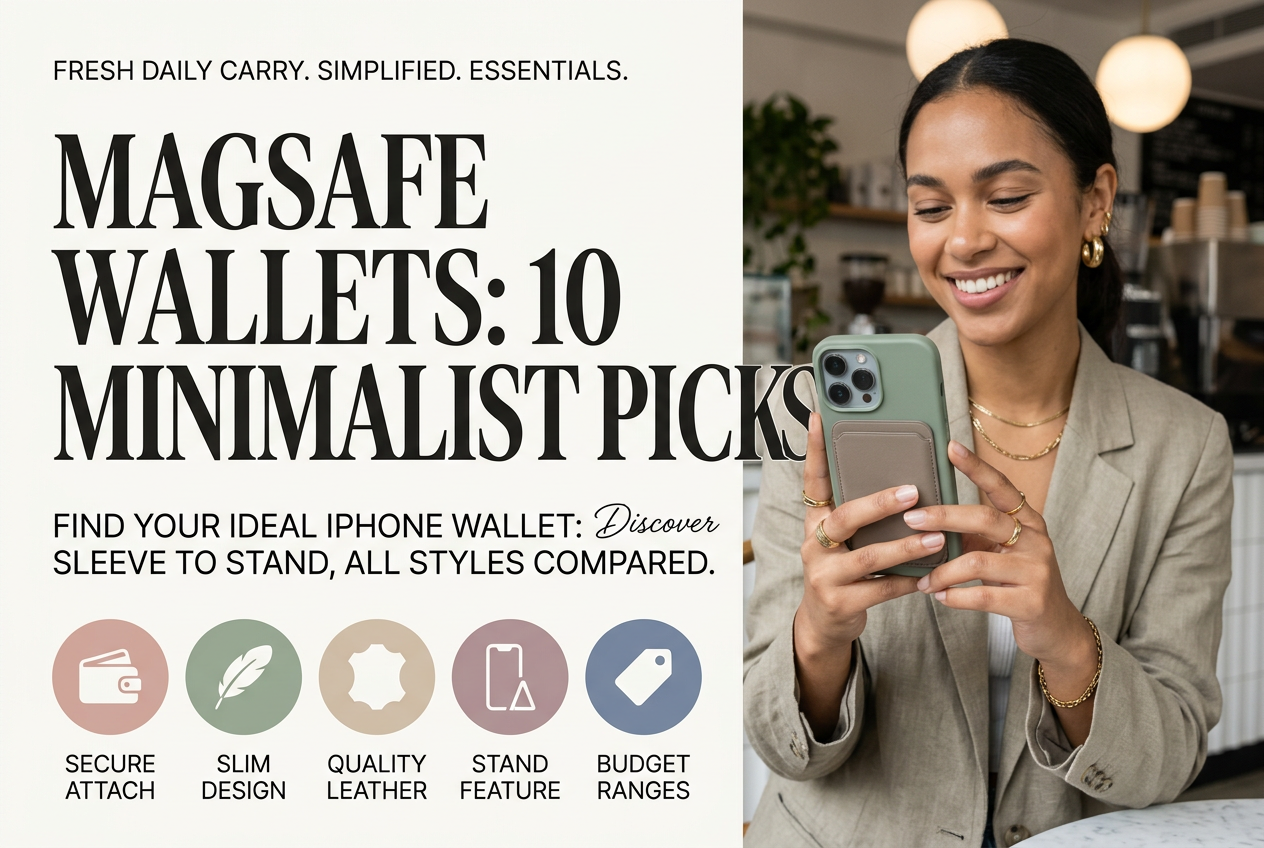
That was the nudge. A MagSafe wallet can make your daily carry feel lighter in about three seconds: snap it onto your iPhone, slide in the cards you really use, and leave the fat billfold at home.
Simple is a pretty good place to land
A good MagSafe wallet does not need to hold every card you own. It needs to make the essentials easy to reach, sit comfortably against your phone, and suit the way you actually get around. Before you choose, check how it attaches, compare materials, and be honest about how many cards you carry on an ordinary Tuesday. Start with the feature you will use most, then pick a shape you enjoy seeing in your hand.
The rest of this guide walks through ten styles, with rough price ranges so you can compare before you shop. Prices vary by retailer, materials, and design.
Why bother going minimalist?
A smaller wallet gives your essentials a smaller home. Less bulk in a front pocket. Less rummaging at checkout. Fewer dead loyalty cards hanging around for no reason. I like the reset: pull everything out, then add back only what you reach for in a normal week, which for me turned out to be three cards and nothing else.
MagSafe makes this easy on compatible iPhones and cases, because the wallet rides on the back of the phone you already keep close. Magnet strength varies, though, and a wallet can pop off if it catches on a bag lining or takes a knock. Read the product details first.
One more thing. Carrying payment cards right beside a phone may not suit every card or routine, so follow the maker’s guidance and keep anything you would rather separate in another pocket. A slim wallet should simplify your day, not hand you a new worry.
Five sleek, no-fuss styles
These first picks are compact, easy to get into, and do a little extra without turning your phone into a brick. Prices are typical ranges, not promises.
1. Slim leather MagSafe card sleeve, estimated $30 to $60. A smooth leather sleeve is the natural starting point if you want a classic look and room for a few cards. It stays low-profile, but leather can scuff and may soften or stretch with use. Pick a color you will not tire of.
2. Vegan leather magnetic wallet, estimated $20 to $45. You get a leather-like finish in plenty of colors, often for less than the real thing. It pairs easily with a coordinated case. Surface wear tends to show sooner, though.
3. Silicone MagSafe card holder, estimated $15 to $35. Soft and grippy, which helps when you are juggling groceries and a coffee. It can collect lint in a pocket and will never feel as tailored as leather. Good for a relaxed, low-fuss setup.
4. Woven fabric magnetic wallet, estimated $20 to $50. Texture without much visual noise, and it makes a plain phone feel a bit more personal. Check whether the fabric spot-cleans easily (pale shades pick up marks from denim and bag interiors fast). A softer look than a smooth sleeve.
5. Clear-back MagSafe wallet, estimated $20 to $50. A transparent panel lets you show off a favorite card or photo in a compact shell. Clear materials scratch and show fingerprints, so expect a quick wipe now and then. Fun when a plain wallet feels too anonymous.
When a wallet does more than hold cards
A stand helps on a flight or at your desk, and a finger loop gives you an extra anchor while you walk and check a map. Features add thickness, so think hard about what you will genuinely use. I would rather carry one useful detail than four that get in the way.
6. Magnetic wallet with a built-in stand, estimated $30 to $65. Flip it out for a recipe video or a hands-free call. The hinge adds bulk compared with a plain sleeve. Look for a design that sits steadily in portrait and landscape if you use both.
7. Magnetic wallet with a finger loop, estimated $20 to $45. The loop gives your fingers a secure place to rest, which feels reassuring when you are taking photos or crossing a crowded station. It is less comfortable in a tight pocket and the extra piece may catch on fabric. Best if you value grip over a flat profile.
8. Expandable magnetic card wallet, estimated $25 to $55. A flexible pocket or gusset forgives a day when two cards become four. It can also tempt you to keep adding, which defeats the point. Set a limit before you load it up.
9. Magnetic wallet with a removable card sleeve, estimated $30 to $70. Detach the sleeve and leave your phone behind, handy for a quick run downstairs or a phone-free workout. Connection points and extra layers make it thicker than a one-piece sleeve. If you often split your phone and wallet, it earns its place.
10. Recycled-material magnetic wallet, estimated $25 to $60. Recycled fabric or other reclaimed materials add a nice bit of texture to a simple accessory. Finishes differ a lot, so check care instructions and construction rather than trusting a sustainability label alone. It feels more casual than leather. That is part of the appeal.
What should you look for before buying?
Start with capacity. Most minimalist wallets work best when you carry only what you use regularly: a payment card, an ID, and perhaps a transit or work card. A tight slot feels secure but can make cards awkward to pull out, while a loose one lets them slide around, and since product photos rarely show this, look for clear notes on capacity and card access before you commit.
Next comes shape and material. A thin sleeve slips into a pocket easily, while a stand or grip adds function at the cost of a little bulk. Leather develops character, synthetics offer more color, fabric looks softer. None is automatically best. What matters is what feels right in your hand and survives your routine.
Compatibility matters too. Fit can depend on your case’s magnets and construction, and if you use a non-MagSafe case, check whether the wallet needs a compatible case or a magnetic adapter. If you charge wirelessly, you will generally need to take the wallet off first.
Finally, how do you actually use your phone?
If you tap to pay most of the time, you may need fewer cards than you think. If you prop up your screen often, a stand might be worth the thickness. Skip the extras if they will just become pocket clutter.
My pick, honestly: a plain sleeve for anyone who has never tried one, and a stand version only if you already catch yourself leaning your phone against a mug.
At Unwritten, our editors choose every product and story idea independently — we only recommend things we’d genuinely tell a friend about.
Frequently Asked Questions
Can a MagSafe wallet fall off my iPhone?
Yes. Magnet strength varies by wallet and case, and a wallet can come off if it snags on a bag lining or gets knocked. Check case compatibility before buying.
Can I charge wirelessly with a MagSafe wallet attached?
Generally you should remove the wallet first. Leaving it on can get in the way of charging.
How many cards should a minimalist MagSafe wallet hold?
Two to four is the sweet spot for most people: a payment card, an ID, and maybe a transit or work card.
Do MagSafe wallets work with non-MagSafe cases?
Often not on their own. You may need a MagSafe-compatible case or a magnetic adapter, so read the product details.