
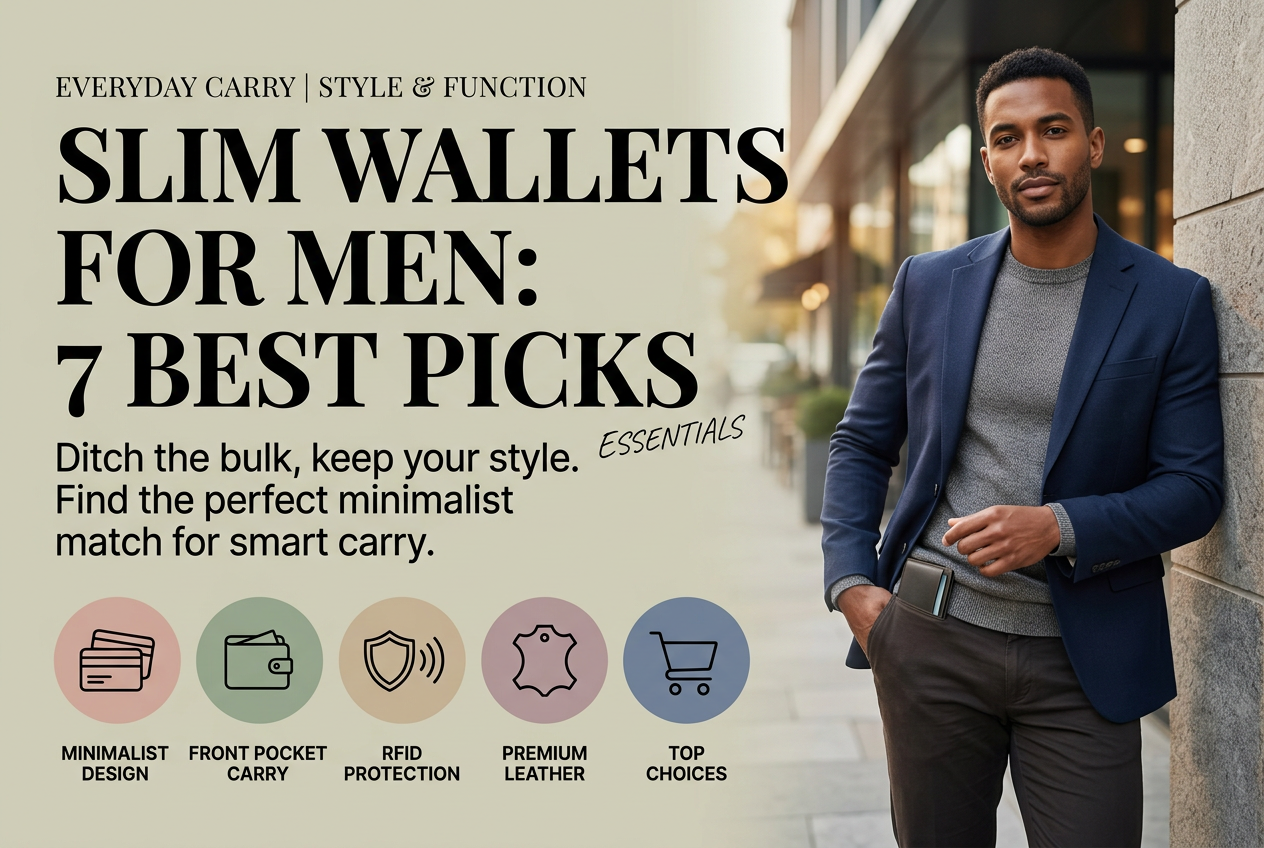
Here is the thing nobody mentions when they talk about switching to a slim wallet: after about two weeks, reaching into your old coat pocket and feeling that brick-shaped bifold starts to feel genuinely offensive. I switched three years ago after my chiropractor — unprompted — told me to stop sitting on a wallet the size of a paperback novel. I have not gone back.
Slim wallets for men have quietly become the default for anyone paying attention to how they carry. The shift from oversized to minimal is not really about aesthetics, though the cleaner silhouette is a real bonus. It is about carrying only what you actually use, nothing more.
Why Your Thick Wallet Is Already a Problem
A standard bifold can hold 20-plus cards, a stack of receipts, and whatever else has been accumulating in there since 2019. Most of us use about six cards on any given week. That gap between capacity and reality is where the bulk lives — expired gift cards, loyalty punch cards from coffee shops that closed, the business card you were definitely going to follow up on. Slim wallets solve this not by offering less, but by forcing you to be intentional. The result is better posture (sitting on a thinner wallet genuinely reduces spinal pressure over time), cleaner pockets, and a look that works with modern tailoring instead of fighting it. For travel especially, front-pocket carry makes you a harder target and saves you the awkward dig through your back pocket at every checkout.
The 7 Worth Buying
These seven wallets cover different price points and aesthetics — classic leather, fabric, metal, and one clever hybrid. Something here works for your life.
The Slim Leather Bifold. This is the foundation piece. Full-grain leather that will develop character over years — scuffs and creases that tell the story of where you have been. Most quality versions hold 4-6 cards and folded bills without straining. The leather should feel substantial on day one, not stiff. (Actually, that is not quite right — a little stiffness is fine early on. It breaks in fast.)
The Front-Pocket Flat Wallet. If you are committing to front-pocket carry, this is non-negotiable. Narrower and flatter than a bifold, these often use a single card slot or elastic construction to stay genuinely invisible under jeans. RFID blocking is standard on most, which adds nothing to the thickness.
The Metal Card Holder. Cult favorite. Sometimes under a quarter-inch thick. Aluminum or stainless steel holds 3-5 cards with mechanical precision and protects chips better than soft leather ever will. They feel cold in your pocket for the first few days, then you stop noticing entirely.
The Money Clip Hybrid. For anyone who still carries cash — and some of us do — a spring-loaded clip paired with one or two card slots is genuinely elegant. You feel it immediately in your pocket, which makes it nearly impossible to leave behind. Great for travel for exactly that reason.
The Italian Leather Investment Piece. Tuscan or Venetian leather develops a patina that gets better with every year of use. Hand-stitched edges, attention to grain direction, leather that feels alive. Yes, it costs more. If you keep the same wallet for five or six years — and with Italian leather you will — the price per year becomes embarrassing in the best way.
The Canvas or Cotton Option. Lightweight, durable, and the most sustainable choice if that matters to your buying decisions. Fabric wallets fade and soften in ways that feel personal rather than worn out. They are also usually the most affordable entry point, which makes them a low-risk way to test whether minimalist carry actually works for you.
The Accordion Wallet. This one is for the person who carries cards for work and refuses to compromise on organization. A folding system fits 8-12 cards while staying thinner than a traditional bifold — each card in its own slot, no stacking, no searching. The trade-off is that they do not fold as cleanly as a standard bifold and take a week or two to feel natural. Worth it if your card count is genuinely high.
What Actually Separates Good from Bad
Material is the obvious one. Full-grain leather is the standard — durable and ages beautifully. Top-grain is acceptable. Anything labeled just “genuine leather” is usually corrected leather, sanded and reprinted to hide flaws, and it will peel within a year. Canvas and synthetics can be excellent, but they are different products with different lifespans.
Check the stitching.
Hand-stitched wallets cost more and last longer. Machine stitching is fine when it is tight and even. Loose or uneven stitching is a red flag you can spot before you buy — that wallet falls apart within a year of daily use, almost without exception.
Card slot tension matters more than most reviews mention. Slots that are too tight will stress your card chips over time. Too loose and cards shift or fall. You want snug but not strangling. If you cannot test it in person, buy from somewhere with a real return policy and actually test it when it arrives. The bill pocket construction is worth a look too — some slim wallets force a half-fold on your bills, others have a proper flat pocket. Both are functional, but one is clearly more satisfying to use.
RFID and Tracking: What’s Worth It?
RFID blocking is standard on most slim wallets now, and that is fine. The risk is overstated, but the protection adds no thickness and almost no cost, so there is no argument against it. Some wallets now include a dedicated slot for an Apple AirTag or similar tracker. That feature saves you exactly once and you will remember it forever. Smart features beyond those two things? Gimmicks. A wallet that connects to your phone is a wallet solving a problem you do not have.
Slim Wallets Change How You Move
You reach for your front pocket instead of your back. You sit more comfortably on long drives. Your silhouette looks cleaner in slim-cut trousers. None of these are dramatic changes on their own, but together they add up to something that is hard to describe until you have experienced it — a version of your everyday carry that feels considered rather than accumulated.
The right slim wallet is the one you will actually stick with. Start with whatever appeals to you aesthetically, commit to it long enough to let it wear in, and let the habit form around it. That is when it stops feeling like a choice and starts feeling like just how things are.
At Unwritten, our editors choose every product and story idea independently — we only recommend things we’d genuinely tell a friend about.
Frequently Asked Questions
Are slim wallets actually durable enough for everyday use?
Yes — often more so than traditional bulky wallets. Fewer card slots mean manufacturers put more attention into materials and stitching rather than packing in features. Full-grain leather slim wallets in particular tend to outlast cheaper bifolds by years.
How many cards can a slim wallet realistically hold?
Most slim wallets hold between 3 and 6 cards comfortably. Accordion-style designs push that to 8-12 while staying thinner than a traditional bifold. The honest answer: most people only need 4-5 cards daily, so the constraint is less painful than it sounds.
Is RFID blocking worth it in a slim wallet?
It adds almost no thickness and costs very little extra, so there’s no real reason to skip it. The actual risk of card skimming is overstated, but the protection is essentially free, so why not have it?
Should I keep my wallet in my front or back pocket?
Front pocket. Sitting on a wallet — even a slim one — puts uneven pressure on your spine over time. Front-pocket wallets are also harder for pickpockets to access, and slim designs are built to sit flat in a front pocket without creating a bulge.
What is the difference between full-grain and genuine leather wallets?
Full-grain leather uses the outermost layer of the hide — the strongest part — and develops a patina over time. ‘Genuine leather’ is often corrected leather, meaning it has been sanded down and reprinted to hide flaws. It looks fine at first but tends to peel and crack within a year or two of regular use.