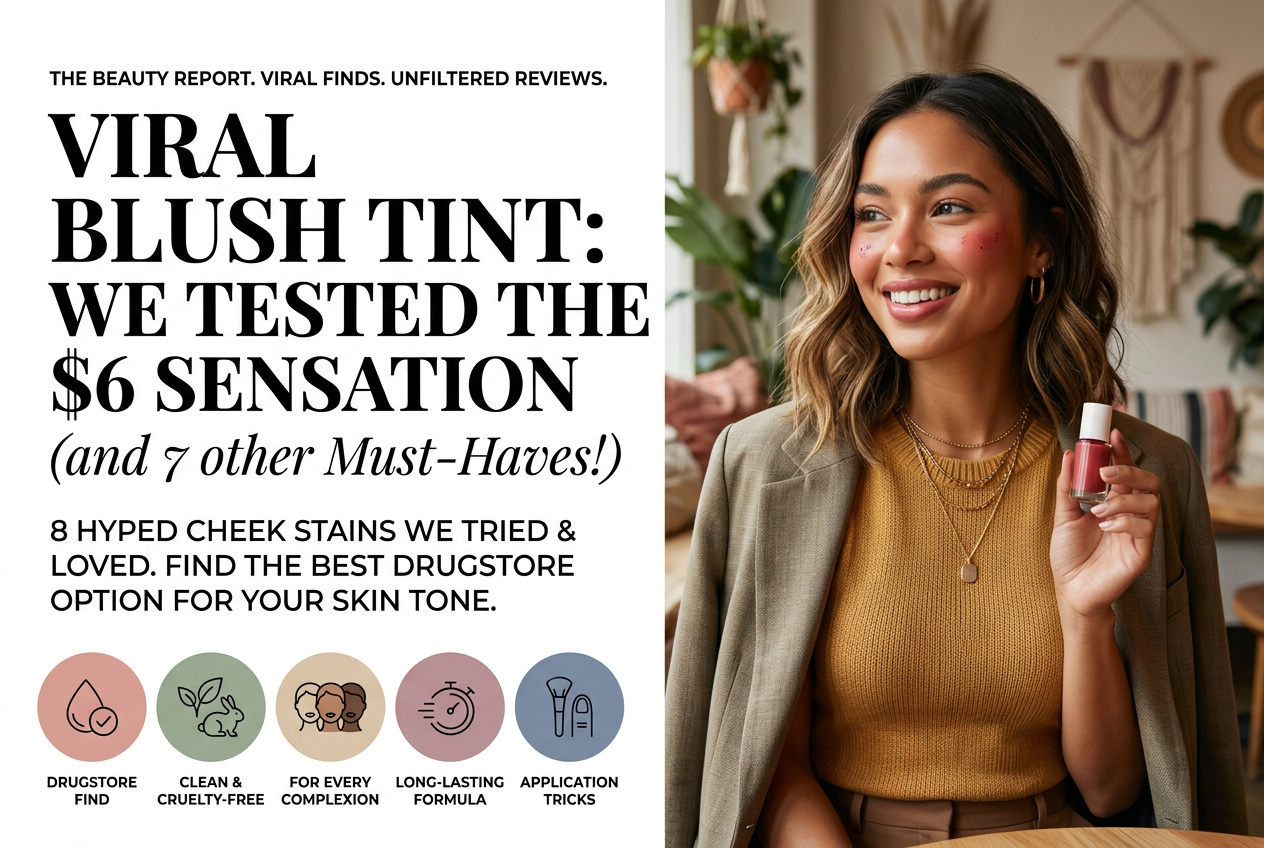
A $6 bottle changed how I think about blush entirely. I’d been loyal to the same powder palette for two years when a friend tapped what looked like a drop of juice onto her cheekbones and suddenly looked like she’d just come back from a long weekend somewhere with good weather. That was my introduction to blush tints, and I haven’t touched a powder blush since.
Here’s what matters most upfront: blush tints outlast, outperform, and outprice almost everything else in the drugstore beauty aisle right now. They blend seamlessly into skin without settling into fine lines, they don’t transfer onto your mask or your phone screen, and one tiny bottle will outlive three powder compacts at a fraction of the cost. After testing eight of the most talked-about options across five skin tones, we landed on the ones that genuinely deliver.
Why Is Everyone Suddenly Obsessed?
The TikTok-to-drugstore pipeline is real, but blush tints earned their moment. They sit somewhere between a stain and a liquid blush, which sounds like a minor distinction until you actually use one. A tint melts into your skin rather than sitting on top of it, so you get color that reads as yours rather than applied. Powder blush can go patchy if your technique is off, or chalky if the formula is mediocre, or orange if it oxidizes on your skin chemistry. Blush tints sidestep almost all of that.
The Formula Adapts. That’s the Whole Thing.
What really accelerated the viral blush tint moment is that these formulas work across skin tones in a way powder often doesn’t. A coral that photographs beautifully on fair skin doesn’t turn muddy or orange on deeper skin — it shifts to flatter the undertone it lands on. I tested the same shade on my own medium-warm skin and on a friend with deep cool-toned skin, and we both looked like we’d just gotten good news. The math also makes sense in a way beauty math rarely does: you use maybe two drops per application, which means a single $6 bottle lasts months. Compare that to a $15 powder you’re repurchasing every six weeks.
$6 and Worth Every Cent?
You’ve seen it. The lightweight liquid tint with the doe-foot applicator that’s been screenshot-shared across every corner of social media. We tested it on five different skin tones and three undertone categories, and the verdict is straightforward: it works. One swipe delivers a sheer wash of color. Two swipes give you a real flush. It doesn’t oxidize, it doesn’t transfer, and it held up through an eight-hour day that included lunch and a workout. Actually, that’s not quite right — it held up through the lunch, but the gym session required a touch-up afterward, which is fair for any blush formula. The shade range is the one real gap: the lightest options skew pink in a way that doesn’t always flatter fair cool-toned skin, and the deeper shades, while better than most drugstore options, still leave room for growth. For the price and the ease? The hype is earned.
Our Favorite Cheek Stains for a Natural Flush
Beyond the viral sensation, there are other blush tints worth knowing. Some lean stain-territory — thinner, more watery, closer to a tinted serum for your cheeks. Others are richer creams that sit between a tint and a traditional cream blush formula. We narrowed it down to the ones that consistently delivered a natural-looking flush without pilling, emphasizing texture, or fading within two hours.
Picking the Right Shade for Your Skin Tone
Fair or cool-toned skin does best with pinks that have blue undertones — berry, mauve, dusty rose. These read as intentional rather than accidental. Warm or golden undertones should reach for peach, coral, and warm pinks that harmonize with your natural coloring rather than fight it. Deeper skin tones have the most fun here: warm reds, burnt oranges, and rich berries actually show up and look stunning rather than disappearing into the skin. The easiest test before committing? Swipe a small amount on your inner arm and let it develop for a minute. Blush tints are transparent enough that you’ll see exactly how the shade reads on your actual skin before you put it anywhere near your face.
Application Is Simple. These Tips Make It Better.
Tap, don’t swipe. That’s the single most important thing. A tiny amount of product tapped onto the apples of your cheeks with your fingertip blends infinitely more naturally than dragging it across your face. Once it’s on, blend the edges outward with your finger or a fluffy brush — the center will already be set from tapping, so you’re just softening the border.
Start with less than you think you need. These formulas are concentrated and unforgiving in one direction: you can build color up, but you cannot take it back off without starting your base over completely.
Timing relative to your base changes the finish. Blush tint applied before foundation or concealer blends into your skin and looks like your own flush. Applied after, it sits on top and reads more as a deliberate stain — which can look striking if that’s what you’re going for, but is a different effect entirely. If you use setting spray, apply your blush first and let the spray lock it in. Doing it the other way around can dilute the color before it’s had time to stain.
Blush tints are here to stay.
Whether you start with the $6 viral option or work your way through a few of the pricier formulas, you’re getting a product that earns its spot in your routine fast. My honest take: the drugstore version is better than it has any right to be at that price, and the application learning curve takes about three days before it becomes completely automatic. That’s a very good deal.
At Unwritten, our editors choose every product and story idea independently — we only recommend things we’d genuinely tell a friend about.
Frequently Asked Questions
What is a blush tint and how is it different from powder blush?
A blush tint is a liquid or gel formula that stains the skin rather than sitting on top of it. Unlike powder blush, it blends into your complexion and doesn’t settle into fine lines or look patchy. Think of it as color from within rather than color on top.
How long does a viral blush tint actually last on the skin?
Most blush tints last 8 or more hours without fading. Because the formula stains the skin rather than coating it, it won’t transfer onto your phone, mask, or clothing the way traditional blush sometimes does.
Are blush tints good for dry skin?
They can be, but prep matters. If you have dry or textured skin, apply a good moisturizer first and let it absorb fully before tinting. Skipping this step can cause the formula to cling to dry patches and emphasize texture in a way powder blush doesn’t.
What shade of blush tint should I choose for my skin tone?
Fair and cool-toned skin looks great with berry, mauve, or dusty rose. Warm and golden undertones suit peach, coral, and warm pink. Deeper skin tones should reach for rich berries, warm reds, and burnt orange shades that actually show up rather than disappear into the skin.
Can I use a blush tint without any other makeup?
Absolutely. That’s honestly one of the best things about them. A single drop blended onto bare skin gives you a flushed, just-came-in-from-the-cold look with zero effort. No base required.