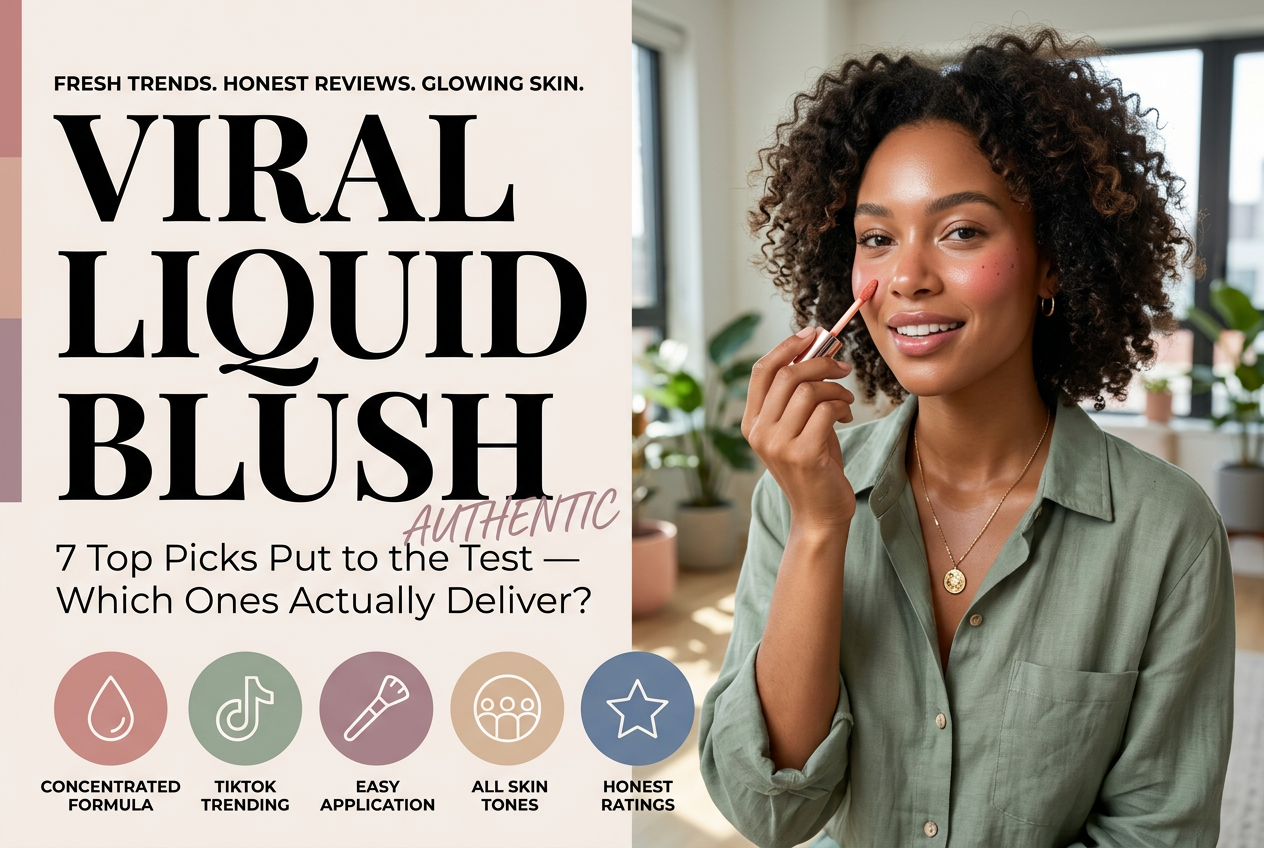
A single drop. That’s genuinely all it takes.
That’s the thing nobody tells you about viral liquid blush until you’ve already bought three bottles: the formula is so concentrated that most people are applying four times more than they need, then wondering why they look feverish by 10 a.m. I figured this out on day two of testing, which saved my face (and my dignity) for the remaining weeks. I tested seven of the most hyped liquid blushes on the market right now, and the results were not what I expected going in.
Why This Trend Actually Has Legs
Liquid blush isn’t new. What changed is that TikTok gave it a second life, and this time the format clicked with a generation that grew up watching skin-care routines and genuinely cares whether their makeup looks like skin. Powder blush can be gorgeous, but it sits on top of your face. Liquid blush disappears into it. The result is that flushed, just-came-in-from-the-cold look that’s almost impossible to fake with a brush and a compact. Add in the fact that one bottle lasts months because you use so little per application, and the value proposition makes sense even at $40 a bottle.
There’s also the layering factor, which nobody talks about enough. You can mix liquid blush into your foundation, press it under powder for a subtle stain, swipe it over a finished face for drama, or use it on your lips and eyelids to pull the whole look together with one product. That flexibility is genuinely useful, not just a marketing bullet point.
But obsession doesn’t equal quality. Some viral liquid blushes have real problems—oxidizing within an hour, separating into liquid and pigment in the bottle, or being so sheer that you end up using a third of it per application just to see any color. That’s what I wanted to find out.
How the Testing Actually Went
Over about five weeks, I wore each blush for at least five days straight, which meant I had some truly chaotic makeup weeks where my blush did not match my mood. I tracked performance across fair, medium, and deep skin tones—because a blush that only photographs beautifully on one skin tone isn’t a good blush, it’s a limited one. Each day I noted how it looked at application, at the four-hour mark, and at the end of a full day. I tested them under powder, over powder, mixed into foundation, applied with fingers, and applied with a damp beauty sponge. I also wore them to the gym twice, because a blush that can’t survive a workout is a blush I don’t trust.
The range in quality was genuinely surprising. A couple of formulas were so smooth and skin-like that I forgot I was wearing blush—which is either the best compliment or a bad sign depending on what you want from your makeup. Others were sticky, separated constantly, or turned a color on my skin that I can only describe as “brick at dusk.” And the price-to-performance ratio made almost no sense: some of the best performers were in the $28–$34 range, while a few $45+ bottles were genuinely disappointing.
The Shade Range Problem Is Still Real
Brands love to launch with three shades and call it a collection.
It’s frustrating, especially given that the creators who made liquid blush go viral in the first place included a lot of people with deep skin tones. The blushes I tested ranged from 6 to 18 shade options, and that gap matters more than any other single factor for whether a product is actually accessible. Deeper skin tones need blush that’s warm-toned and highly pigmented—not just a slightly darker version of a peachy nude that shows up as a vague smudge. Some brands clearly understood this. Others launched what appears to be a full shade range but included three versions of the same dusty rose and called it diversity. You can tell which is which by looking at whether the deeper shades are actually warm and pigmented or just technically darker.
I made a point to prioritize blushes that had at least one genuinely flattering option for deeper skin tones. If a brand couldn’t manage that, it didn’t make my final list regardless of how the formula performed on lighter skin. A product that only works for some people isn’t a great product.
What actually makes liquid blush work?
Technique matters almost as much as formula. I learned this the hard way during week one when a blush I’d nearly written off turned out to be excellent once I changed how I was applying it. The damp beauty sponge method is the most forgiving: drop a tiny amount onto the back of your hand, bounce a damp sponge through it, and press (not swipe) it onto the apples of your cheeks. Swiping creates lines. Pressing creates skin.
Fingers work well too, but warm them up first. Body heat helps the formula blend faster. If you’re layering blush over powder, cut your usual amount in half—powder grabs pigment and intensifies it more than you’d think. And shake the bottle before every single use, even if it looks fine. Separation happens gradually and you won’t always see it until the color comes out uneven.
Actually, that’s not quite right—you will sometimes see it, but only after it’s on your face, which is the worst possible moment to discover it.
The ones worth buying
After all of it—the gym sessions, the fluorescent office lighting, the five-day stretches with the same blush—here are the viral liquid blushes that earned a permanent spot in my routine:
Every blush that made this list did four things: blended without pilling or streaking, held its color through a full day without oxidizing, came in a shade range that works across skin tones, and cost enough to justify the quality without costing so much that it’s genuinely impractical. A few are on the higher end of the price range, and they earn it. A couple are under $30 and outperformed products at twice the price.
What didn’t make it? Anything that oxidized, anything that required constant shaking mid-application to stay consistent, and any brand whose shade range was clearly an afterthought. Life is too short for makeup that requires you to manage it.
My actual opinion, after all this testing: the liquid blush trend is one of the few TikTok beauty moments that genuinely deserves its hype. The format is better for most people than powder. The best versions of these products are legitimately excellent. But the market is crowded enough now that you can absolutely skip the overhyped ones and spend your money on the bottles that actually work—and based on five weeks of wearing these on my face, I feel pretty confident about which ones those are.
At Unwritten, our editors choose every product and story idea independently — we only recommend things we’d genuinely tell a friend about.
Frequently Asked Questions
Why does liquid blush look more natural than powder blush?
Liquid blush sinks into the skin instead of sitting on top of it, which creates that flushed-from-within effect. Powder blush can sometimes look chalky or patchy, especially on dry skin. The liquid formula moves with your skin rather than coating it.
How do I stop applying too much liquid blush?
Start with a single drop on the back of your hand—genuinely less than you think you need. Bounce a damp beauty sponge through it and press onto your cheeks. You can always build up, but sheering down an over-applied liquid blush is a nightmare.
Why does my liquid blush turn orange or muddy after an hour?
That’s oxidation—a real problem with certain formulas. It happens when the pigments in the blush react with your skin’s oils. If your blush consistently shifts color after application, the formula likely isn’t compatible with your skin type, and no technique will fully fix it.
Do liquid blushes work on deep skin tones?
Yes, but shade selection matters enormously. Many brands launch with four shades and only one even attempts to work on deeper skin. Look for brands with at least eight shades and specifically check that their deeper options are warm-toned and highly pigmented—not just a slightly darker nude.
Should I apply liquid blush before or after powder?
Either works, but the technique changes. Before powder gives a more natural, skin-like finish. After powder intensifies the color since the powder grabs the pigment—so use an even lighter hand. Both approaches look great; it really comes down to how much flush you want.