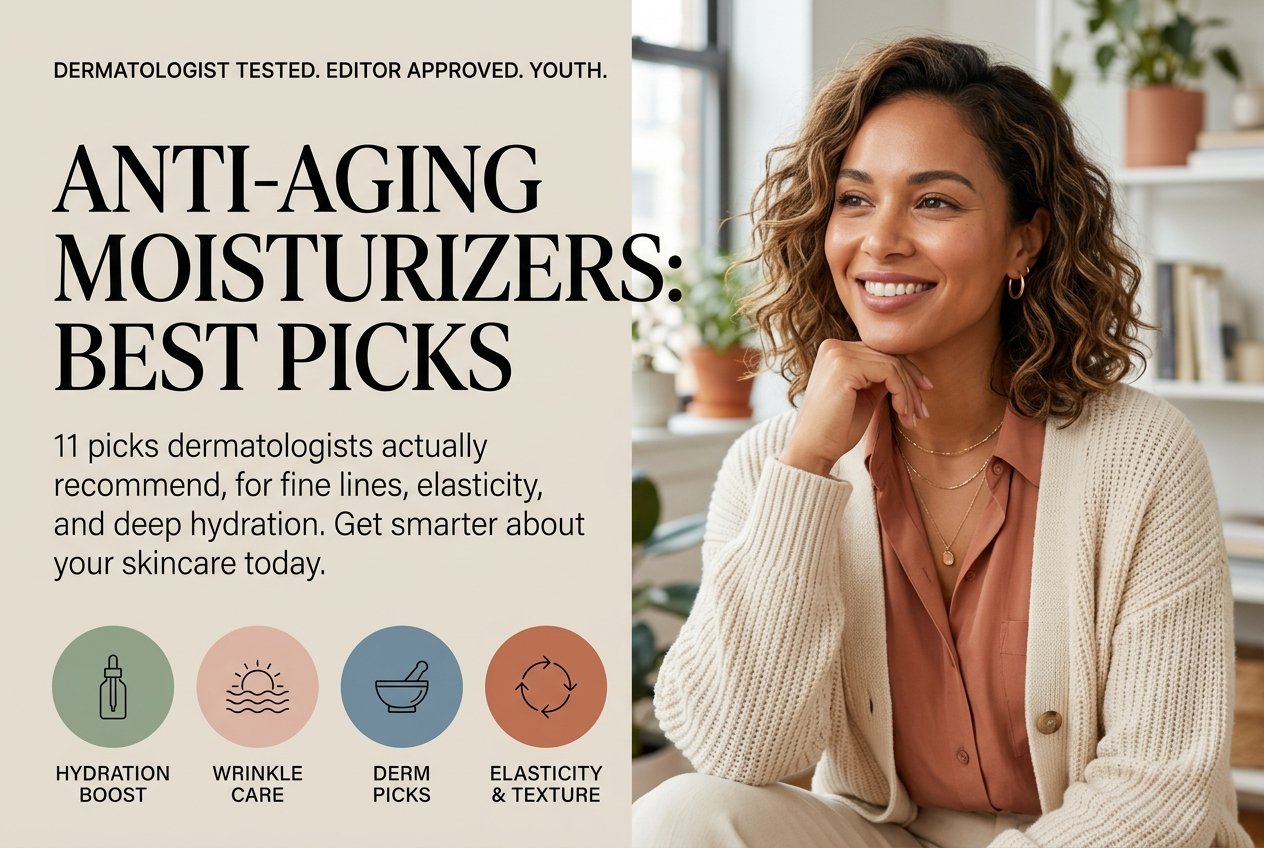
By your mid-30s, something shifts. Not dramatically — it’s more like your skin stops cooperating in small, annoying ways. The moisturizer you used for years starts feeling useless. Fine lines show up where you didn’t think skin could even crease. And if you had oily skin in your 20s, you might be surprised to find your face suddenly feels dry by noon.
Here’s the part worth knowing upfront: anti-aging moisturizers aren’t about reversing time. The best ones keep your skin healthy, hydrated, and as smooth as possible right now — which, honestly, is a more useful goal anyway.
Why Your Old Moisturizer Stopped Working
Around 30, sebum production naturally decreases — even for people who spent their teens blotting excess oil. At the same time, collagen production slows and cell turnover gets sluggish. What used to be a simple hydration problem becomes something more complicated: your skin needs moisture, yes, but it also needs active ingredients that address the structural changes happening underneath the surface. A basic moisturizer with glycerin and maybe some aloe? It’s doing the bare minimum. It’s not enough anymore.
This is where anti-aging moisturizers earn their place. Unlike general hydrators, they’re formulated with peptides, retinol derivatives, niacinamide, or hyaluronic acid — ingredients that actively work on skin texture, firmness, and the visibility of fine lines, not just surface-level softness. I switched to a peptide-based formula about three years ago after my derm pointed out that my skin barrier was genuinely compromised, and the difference in texture within two months was enough to make me feel a little embarrassed that I’d waited so long.
Drugstore Picks That Outperform Their Price Tags
Drugstore anti-aging has gotten good. Actually good.
You’re not sacrificing performance for price — you’re skipping the frosted glass jar and the celebrity face. The core actives in a $28 RoC or Olay formula are often the same as what you’d find in a $120 prestige version, sometimes at comparable concentrations. The difference usually comes down to texture, fragrance, and how the formula feels on your skin — not whether it works.
When Spending More Actually Makes Sense
Prestige brands do have some real advantages — higher concentrations of actives, more stable retinol formulations that degrade less over time, and proprietary ingredient complexes developed through years of clinical research. If your skin is dealing with deep wrinkles, significant loss of firmness, or severe dryness that drugstore options haven’t touched, a prestige moisturizer might genuinely move the needle in ways a $30 formula can’t.
That said, “prestige” is not a synonym for “better.” It means more concentrated actives, sometimes better stability, and definitely better packaging. You’re also paying for the brand name — that part is just true. Know which part you’re buying.
What’s Actually in These Things?
The ingredient list tells you everything. Here’s what dermatologists look for when recommending anti-aging moisturizers to patients:
Retinol or retinoids are the most well-researched actives for reducing fine lines and accelerating cell turnover. Retinol is gentler than prescription-strength tretinoin, but it still works. If you’re new to it, start at 0.25% or lower to avoid irritation.
Peptides are short chains of amino acids that signal your skin to produce more collagen. They don’t deliver overnight results — nothing does — but after six to eight weeks of consistent use, most people notice real improvements in firmness and texture.
Hyaluronic acid holds up to 1,000 times its weight in water, which makes it one of the most effective humectants available. It plumps skin and makes fine lines less visible almost immediately. One tip worth following: apply it while your face is still slightly damp from toner or essence. Dry skin absorbs it less efficiently. (Actually, that’s not quite right — it absorbs fine either way, but damp skin gives it more water to pull from, which amplifies the plumping effect.)
Niacinamide strengthens the skin barrier, calms redness, and helps regulate oil production. It also plays well with nearly every other active ingredient, so you can layer it without worrying about interactions or irritation.
Ceramides are lipids that repair the skin barrier and lock in hydration. Essential if your skin feels tight, reactive, or stripped after cleansing.
Look for formulas that combine at least two of these. A retinol and peptide pairing is solid. Hyaluronic acid with niacinamide is a no-brainer. The more thoughtfully the ingredients work together, the better your results will be — a single hero ingredient surrounded by filler isn’t doing the job a well-balanced formula can.
How to Actually Use These Without Wasting Them
Layering order matters more than most people realize.
On retinol nights, apply retinol first — to clean, completely dry skin — then wait 15 to 20 minutes before adding your anti-aging moisturizer on top. The moisturizer buffers the retinol and reduces the flaking and redness that often drives people to quit using it. On nights when you’re skipping retinol, apply your moisturizer directly to slightly damp skin for better absorption and deeper hydration.
Mornings call for something lighter. Your nighttime moisturizer is probably richer and heavier, which is great for overnight repair but will feel greasy under sunscreen or makeup. Keep a lighter formula — or one with built-in SPF — for your AM routine.
One thing I wish someone had mentioned earlier: a pea-sized amount is enough for your whole face. Press it in gently rather than rubbing. More product doesn’t mean better results — your skin can only absorb so much, and the rest just sits on the surface and feels heavy.
Be patient with it.
Four to eight weeks is the realistic timeline for seeing real changes in fine lines or texture. If you swap products every two weeks chasing faster results, you’ll never actually know what worked.
The Bottom Line
Your skin deserves a moisturizer that does something. Whether you go drugstore or prestige, the formula needs active ingredients matched to your actual concerns — and you need to stick with it long enough to find out whether it’s working. The best anti-aging moisturizer isn’t the most expensive one or the one with the most dramatic before-and-after photos. It’s the one you’ll actually use every night, consistently, for months. That consistency will outperform any ingredient list.
At Unwritten, our editors choose every product and story idea independently — we only recommend things we’d genuinely tell a friend about.
Frequently Asked Questions
When should I start using an anti-aging moisturizer?
Most dermatologists suggest starting in your late 20s to early 30s, when collagen production begins to slow and cell turnover gets sluggish. That said, it’s never too late to start — even beginning in your 40s or 50s will make a visible difference over time.
Do drugstore anti-aging moisturizers actually work?
Yes, genuinely. Drugstore formulas have improved dramatically over the past decade. Brands like CeraVe, Olay, and RoC use the same core actives — retinol, niacinamide, peptides, hyaluronic acid — as prestige lines. You’re skipping the packaging and brand markup, not the results.
Can I use an anti-aging moisturizer with retinol?
Absolutely, and it’s actually recommended. Apply retinol first to clean, dry skin, wait about 15 minutes, then layer your moisturizer on top. The moisturizer acts as a buffer that reduces irritation without blocking retinol’s effectiveness.
How long before I see results from an anti-aging moisturizer?
Realistically, four to eight weeks of consistent use before you notice changes in fine lines or texture. Hydration improvements happen faster — sometimes within days — but structural changes take longer. Don’t switch products after two weeks and expect to learn anything useful.
What ingredients should I prioritize in an anti-aging moisturizer?
Look for retinol or peptides to target fine lines and firmness, hyaluronic acid or glycerin for hydration, niacinamide to strengthen the skin barrier, and ceramides if your skin feels tight or reactive. A formula combining two or more of these will outperform a single-ingredient product.