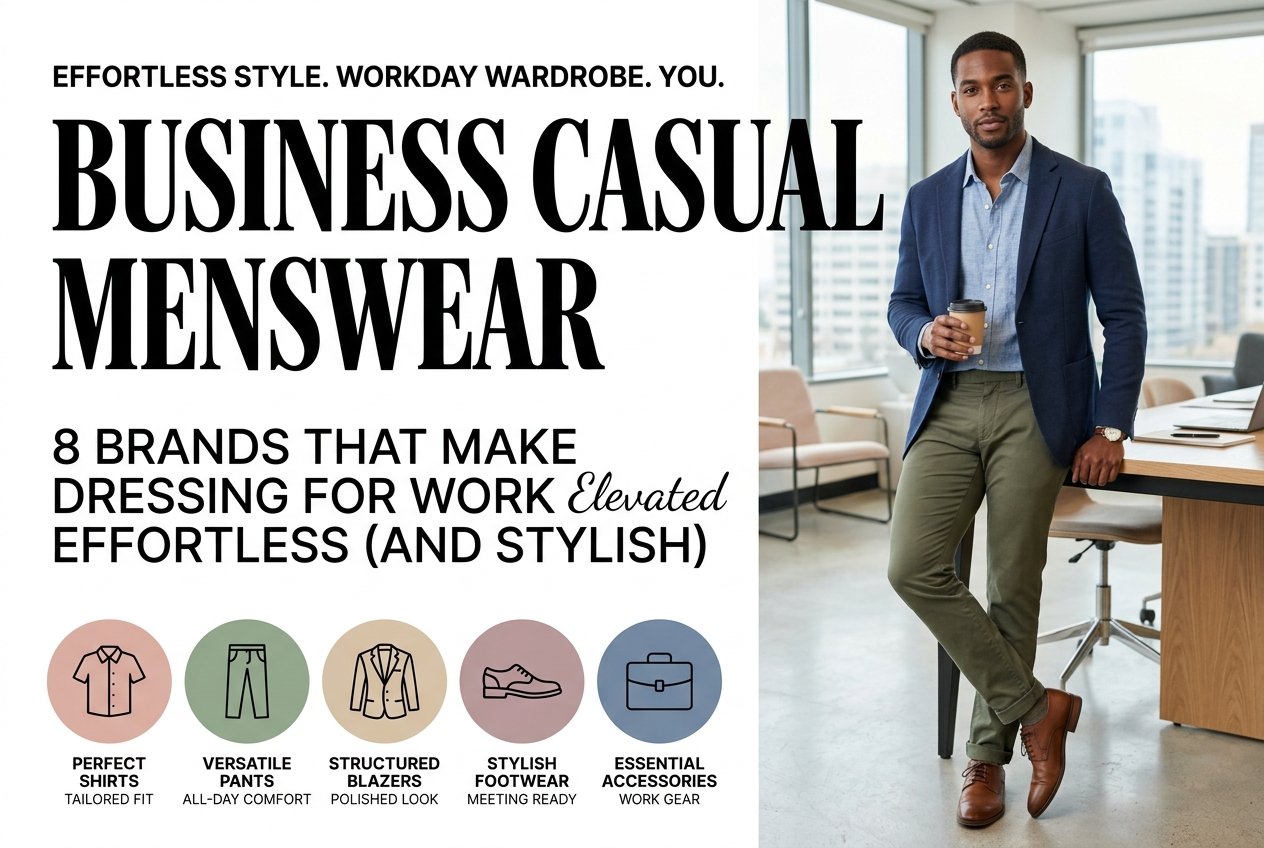
A Bonobos shirt, Everlane trousers, and Allen Edmonds oxfords. That combination—pulled together in under three minutes—is basically the whole argument for building a proper business casual wardrobe. When the pieces are right, you stop thinking about what you’re wearing and start thinking about everything else.
Most guys hit one of two walls: brands that prioritize comfort and end up looking like they wandered in from a weekend, or brands that go full formal and forget that you need to actually sit, bend, and survive a full Tuesday. The eight brands below have figured out the middle ground. They make business casual menswear for someone who has back-to-back meetings, occasional Zoom calls from a home office, and exactly zero patience for clothes that don’t hold up past Wednesday.
What “Business Casual” Even Means Now
It’s not your dad’s khakis-and-polo setup. Modern business casual menswear is about mixing structured cuts with relaxed fabrics—a linen-blend shirt that doesn’t need ironing, trousers with a little stretch built in, a blazer that sits on your shoulders without feeling like you borrowed it from someone larger. You’re dressing for a job where you might grab coffee, take a client call, and walk into a presentation before noon. The 1987 law firm aesthetic is not the target.
What does that look like in practice? The right building blocks: pieces that layer together, hold up through a week of real wear, and don’t require you to consult a style guide every morning before getting dressed.
Shirts First
Get the shirt right and the rest of the outfit practically assembles itself. These brands have solved for the two things that matter most in a work shirt: fabric that breathes and a cut that doesn’t force you to choose between comfort and proportion.
Bonobos built its whole reputation on fit—specifically on the observation that most dress shirts are patterned for bodies that don’t exist in nature. Their everyday shirt collection uses moisture-wicking, wrinkle-resistant weaves in cuts that account for actual human proportions. Prices land around $88–$128, which feels reasonable for a shirt you’ll reach for forty times a year. I’ll admit I bought two before I was convinced, half-expecting them to feel like performance gear dressed up as office wear. They don’t. They feel like a proper shirt that happens to not wrinkle when you sit in a car for two hours.
Banana Republic has done a quiet but real repositioning over the past few years—worth mentioning because the instinct to write them off is understandable but wrong. Their Luxe shirt collection uses stretch cotton blends in a neutral palette that genuinely works in an office: whites, soft grays, understated stripes. On sale, you’re looking at $60–$80. The fit skews slightly slim, which is fine if that’s your build and something to know if it isn’t.
J.Crew Factory makes smart casual office attire without requiring a significant financial commitment. Their Stretch Secret Wash shirts run $50–$70, come in seasonal colors that feel current without being risky, and wash well enough that they don’t start pilling or fading after a month of regular rotation. They’re not going to wow anyone. They will reliably do their job, which is actually the higher bar.
Do Trousers Actually Matter That Much?
Yes. More than most guys think. Trousers are where business casual outfits for men either come together or quietly fall apart—go too formal and you look like you lost the jacket half of a suit, go too casual and you’re basically wearing upgraded jeans. The brands worth paying attention to here are the ones that land in the middle: structured enough to look deliberate, relaxed enough that you’re not adjusting them every hour.
Everlane publishes their cost breakdowns, which is either a gimmick or genuinely useful transparency depending on your perspective. Set that aside and their Performance Trousers ($68–$98) stand on their own: cotton-poly blends with real stretch, cuts available in slim, straight, and relaxed so you’re not stuck in a silhouette that doesn’t match your body, and a price point that makes owning three pairs feel sensible rather than indulgent. They wash at home, they hold their shape, and they don’t require a trip to the dry cleaner after every wear.
Uniqlo keeps showing up in these conversations for a reason. Their EZY Ankle Pants and Rayon Stretch Pants ($30–$50) look essentially the same at 4 p.m. as they did at 8 a.m.—a small thing that matters more than it sounds when you’re in a late-afternoon meeting. They don’t attract attention. That’s the point.
Suitsupply costs more ($150–$250 for trousers), and the tailoring reflects it. Their Havana separates pair with sport coats or worn-down blazers, the wool blends breathe better than expected for the price tier, and the construction is actually considered rather than just technically functional. You might need alterations. That’s not a problem—that’s what separates trousers that fit from trousers that merely stay up.
On Blazers: One Good One Beats Three Mediocre Ones
A blazer is the fastest upgrade you can make to business casual menswear. You don’t need a collection—you need one or two that fit well, work across multiple outfits, and don’t feel like a costume when you put them on.
J.Crew’s Ludlow blazer (around $200–$300, frequently on sale) comes in both structured and unstructured cuts. The unstructured version is the one to consider if you value comfort without giving up shape entirely—it moves with you rather than holding a rigid form around you. The shoulders sit correctly, the sleeves run long enough that you’re not constantly pulling them down, and after a few wears it stops feeling new and starts feeling like yours. Fair warning: it takes those few wears to get there.
Banana Republic Factory offers blazers in the $100–$150 range that honestly outperform their price point. The cuts are modern without leaning aggressively slim or oversized. Navy and charcoal are the obvious anchors, but their seasonal offerings in camel and olive work well for menswear for professionals who want some personality without committing to anything too risky. Buy two and rotate them. You’ll wear both.
Reiss is a London brand that doesn’t make a lot of noise about itself, which is part of why it’s easy to overlook. Their blazers ($280–$400) use Italian fabrics, and the construction difference is visible in the way they hang—the kind of detail you feel when you’re wearing it but that other people just register as a general sense of being well put together. If you’re buying one blazer and planning to wear it twice a week for the next four years, the cost-per-wear math makes this a reasonable investment rather than an extravagant one.
Shoes: The Part People Notice Last and Judge First
For business casual menswear, footwear needs to read as intentional without crossing into full dress-shoe formality. Leather oxfords, loafers, chukkas. Not sneakers—regardless of how minimal or expensive they look, they tend to undercut an otherwise solid outfit in professional contexts.
Allen Edmonds is the benchmark. A pair of their oxfords or loafers ($395–$495) will last a decade with basic maintenance—cedar shoe trees, occasional conditioning, a resole when the time comes. The leather is genuinely good, the construction is solid, and they come in colors that work across a professional wardrobe: black, brown, burgundy, oxblood. The upfront cost stings. The cost-per-year once you’ve owned them for eight years does not.
Thursday Boot Company (often shortened to Thursday) makes shoes in the $200–$300 range that feel like a shorter path to that quality tier. The leather is decent, the construction holds up, and they come in colors that still read as professional despite being more interesting than your average brown oxford—cognac, forest green, navy. They won’t hit the decade mark like Allen Edmonds, but five solid years of regular wear is a reasonable return.
Cole Haan solves a specific problem: you’re on your feet most of the day and need actual comfort without resorting to dress sneakers. Their oxfords and loafers ($150–$250) use cushioning technology that doesn’t change the visual profile of the shoe—they look like dress shoes and happen to feel like something you could walk four miles in. The tradeoff is longevity; they don’t age as gracefully as premium leather, so you’re replacing them every three to four years rather than ten. For some people, that’s a fine deal.
How to Actually Build the Wardrobe
Here’s the honest version: business casual outfits for men work because they’re predictable. You’re not reinventing yourself each morning—you’re picking from a rotation of pieces you already know go together, which means getting dressed takes four minutes instead of twenty and you don’t arrive at work feeling like you made a mistake.
Start with two pairs of trousers in different neutrals, four shirts (three neutral, one with some pattern or color), one blazer, and a pair of shoes that actually fit your feet rather than just looking right in photos. That’s the foundation. From there you’re mixing and matching rather than building from scratch every day—a Bonobos shirt with Everlane trousers is a complete outfit; add the J.Crew blazer and it’s ready for anything on the calendar. The brands here work together because they occupy the same aesthetic space, which means there’s no visible seam where one brand ends and another begins.
Stop overthinking the system.
Pick one or two brands that fit your body and your budget, buy the basics in the right colors, and wear them. Business casual menswear only feels effortless once you’ve stopped treating every purchase like a permanent commitment and started treating it like what it is: clothes that help you do your job without your outfit becoming a distraction. The guys who look consistently well put together aren’t spending more time on it than you are—they just made their decisions earlier and stopped second-guessing them.
At Unwritten, our editors choose every product and story idea independently — we only recommend things we’d genuinely tell a friend about.
Frequently Asked Questions
What counts as business casual menswear in 2025?
Business casual in 2025 means structured pieces in relaxed fabrics—think stretch trousers, linen-blend shirts, and unstructured blazers. It’s not a suit, but it’s not jeans either. The goal is looking intentional without looking like you tried too hard.
How many pieces do I actually need for a business casual wardrobe?
You can get by with two or three pairs of trousers, four to five shirts, one versatile blazer, and one pair of quality shoes. That gives you enough combinations to cover a full work week without repeating the exact same look twice.
Are sneakers ever acceptable for business casual?
Rarely. Even clean, minimal sneakers tend to undercut an otherwise polished outfit in professional settings. Leather loafers and chukka boots give you the comfort you want without sacrificing the look.
Which brands offer the best value for business casual clothing?
Uniqlo and Everlane sit at the accessible end without sacrificing quality. Bonobos and J.Crew hit a solid mid-range sweet spot. If you’re investing in one long-term piece—shoes especially—Allen Edmonds is worth the higher price.
Can I mix brands in the same outfit?
Absolutely. A Bonobos shirt with Everlane trousers and Allen Edmonds oxfords looks completely intentional. These brands all operate in the same aesthetic range, so they play well together without any visible clash.