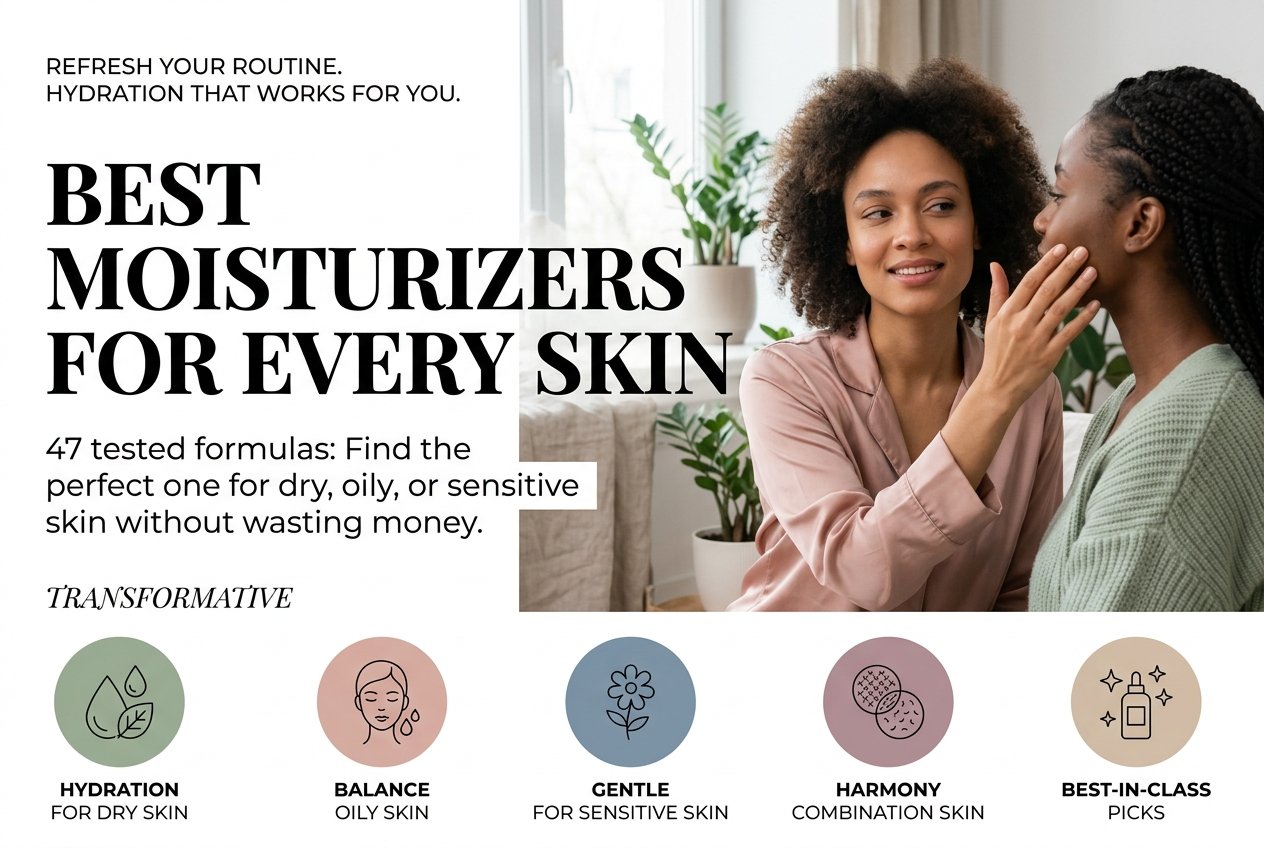
Forty-seven jars, tubes, and pumps. That’s what three months of testing looks like when you’re determined to figure out which moisturizers actually earn a place in your bathroom and which ones are just well-designed packaging with nothing interesting inside.
Here’s what I learned faster than I expected: the best moisturizer isn’t the most expensive one. It’s the one that matches what your skin is actually doing. And here’s the part most buying guides skip over—a moisturizer that genuinely transforms dry skin can make oily skin look like a disco ball by noon. These picks are organized by skin type because that’s the only framework that actually helps.
Before You Buy Anything, Read This
Skin type isn’t just a label you picked from a quiz in 2015. It’s the single most useful piece of information you have when choosing a moisturizer, and ignoring it is how people end up with a drawer full of products that didn’t work. Dry skin feels tight after cleansing—sometimes itchy, sometimes flaky—and needs richer formulas with oils or heavy occlusives that physically seal water into the surface. Oily skin produces excess sebum, especially through the T-zone, and needs hydration without added weight, which means gel-based or water-based textures that absorb fast. Combination skin is oily in some zones and dry or normal in others, which honestly might mean using two different products, or finding one formula balanced enough to handle both. Sensitive skin reacts to fragrance, essential oils, alcohol, and sometimes even common actives—if that’s you, minimal ingredient lists and fragrance-free formulas are non-negotiable.
One more thing that most guides don’t mention: your skin type changes. Hormones, seasons, stress, diet—all of it shifts what your skin needs. The formula that felt perfect in February might feel completely wrong in August. That’s not the product failing. That’s just skin being skin.
The Dry Skin Picks
Dry skin needs two things: moisture pulled in and a barrier to keep it from leaving. These are the formulas that actually delivered both.
This one surprised me. It’s thick enough that you’d assume it would sit on top of skin like a film, but it absorbs into dry skin and stays there. After two weeks, my editor’s chronically tight cheeks felt genuinely comfortable for the first time in months. Glycerin and ceramides together is exactly the combination dry skin responds to—one draws water in, the other keeps it from escaping. The texture lands somewhere between a lotion and a balm, which sounds weird but feels exactly right.
Hyaluronic acid is polarizing. I’ve heard people call it a miracle and heard just as many say it did absolutely nothing for them. The difference is almost always application—this ingredient needs water to actually grab onto, so using it on damp skin changes everything. Layer it under your richer moisturizer and you get both hydration and occlusion working at the same time. It’s light enough that even dry-skin people who hate heavy textures won’t feel buried.
This is the prestige option, and yes, the price is real. But a small amount goes a long way—I mean that literally, not as a consolation. It’s oil-based and somehow doesn’t leave any shine, which I genuinely did not believe until I tried it myself. One editor with severely dry skin used it for a month and dropped from a three-product layering routine down to just this. That kind of consolidation is the real test.
What Works for Oily and Combination Skin?
Oily skin still gets dehydrated. That’s the part people miss. It just needs hydration delivered in a formula that won’t compound the shine problem or sit in pores.
A gel that feels like almost nothing. It absorbs in seconds, leaves zero residue, and one of my editors with reliably oily skin said it was the first moisturizer she didn’t skip on hot days—which, coming from someone who normally just goes straight to sunscreen, is about as strong an endorsement as I’ve heard. No shine. No heaviness. Just hydration that disappears into skin.
Niacinamide actually helps regulate sebum production, not just mask it, which makes it genuinely useful for oily skin rather than just cosmetically appealing. This lotion is a step heavier than a gel but still far lighter than anything in the dry-skin section. It has a slight matte finish—rare in moisturizers—and combination-skin people can apply it everywhere without worrying about which zone they’re in.
Water-based, so it doesn’t feel oily at all. But it has enough humectants that it actually hydrates rather than just feeling like nothing. You can use it across oily zones and dry zones without adjusting. (Actually, that’s not quite right—if your dry zones are genuinely parched, you might still want something richer on top. But for most combination skin, this handles everything.)
For Skin That Reacts to Everything
Sensitive skin doesn’t need more ingredients. It needs fewer, better ones.
Five ingredients. That’s the whole formula: water, glycerin, ceramides, centella asiatica, and a preservative. It’s boring in exactly the way sensitive skin needs a moisturizer to be boring. My editor with rosacea used it for six weeks and logged noticeably fewer flare-ups than her average. She also said—and this matters—it was the first moisturizer that didn’t sting after her actives. No fragrance, no essential oils, nothing that announces itself on reactive skin. Just quiet, effective barrier support.
Centella asiatica is anti-inflammatory and genuinely helps repair a compromised barrier, not just sit on top of it. This cream is richer than the five-ingredient pick above, but still gentle enough for reactive skin. One editor applied it after a chemical peel and said it made the irritation phase noticeably shorter and easier to get through.
Drugstore price. Genuinely good formula. It has ceramides and cholesterol together, which is the combination that actually rebuilds barrier function rather than just moisturizing the surface. I tested it on my most reactive editor—the one who breaks out from switching pillowcases—and got zero complaints over four weeks. That’s the cleanest result I got from anyone in this whole process.
The All-Rounders
These aren’t perfect for every single skin type. But they’re good enough for most, which is why they ended up in personal rotations.
This one has been in my bathroom for four months. I’ve tried to replace it twice and kept coming back. It’s light enough that oily-skin people tolerate it fine, but substantive enough that dry-skin people feel like something is actually happening. Hyaluronic acid and glycerin do the hydrating work. It’s not the fanciest formula in this roundup—there’s no marketing story about rare ingredients or proprietary technology—but it does the job every single day without drama, and I’ve come to value that more than I expected to.
This is what I reach for when I want hydration plus a little something extra. Peptides and antioxidants alongside the standard humectants means it’s not just maintaining skin—it’s doing mild repair work at the same time. It won’t erase wrinkles. I want to be clear about that so nobody feels misled. But it makes skin look plump and feel genuinely firm, and my editor in her late 40s has used it daily for three months and calls it the only moisturizer that actually delivers on that promise.
Four weeks minimum before you decide something isn’t working. Skin takes time, and most people quit too early. The right moisturizer for you is the one you’ll actually use every day—which means it needs to feel good, absorb the way you like, and not cost so much that you ration it. Price is not quality here. Some of the $12 options outperformed the $120 ones. Match the formula to your skin type, use it consistently, and stop switching every two weeks. That’s the whole strategy.
At Unwritten, our editors choose every product and story idea independently — we only recommend things we’d genuinely tell a friend about.
Frequently Asked Questions
How do I know which moisturizer is right for my skin type?
Start by identifying whether your skin feels tight and flaky (dry), shiny by midday (oily), reactive to new products (sensitive), or some combination. Once you know that, you can match formula weight and ingredients accordingly—gel textures for oily skin, richer creams for dry, fragrance-free minimalist formulas for sensitive.
Do oily skin types actually need moisturizer?
Yes. Skipping moisturizer can actually trigger more oil production because your skin overcompensates for dehydration. The key is using a lightweight, water-based or gel formula that hydrates without adding shine or blocking pores.
How long should I use a moisturizer before deciding if it works?
Give it at least four weeks of consistent daily use. Skin cell turnover takes roughly that long, so anything shorter doesn’t give you a fair picture of what a product can do.
Why does my moisturizer work in winter but not summer?
Humidity, temperature, and your skin’s sebum production all shift with the seasons. A rich cream that felt perfect in January might feel suffocating in July. It’s completely normal to rotate between formulas throughout the year.
Does a higher price mean a better moisturizer?
Not reliably. Some of the most effective moisturizers in this roundup cost under $15. What matters is whether the formula matches your skin type and whether it contains ingredients that actually address your concerns—ceramides, glycerin, niacinamide, or hyaluronic acid.