
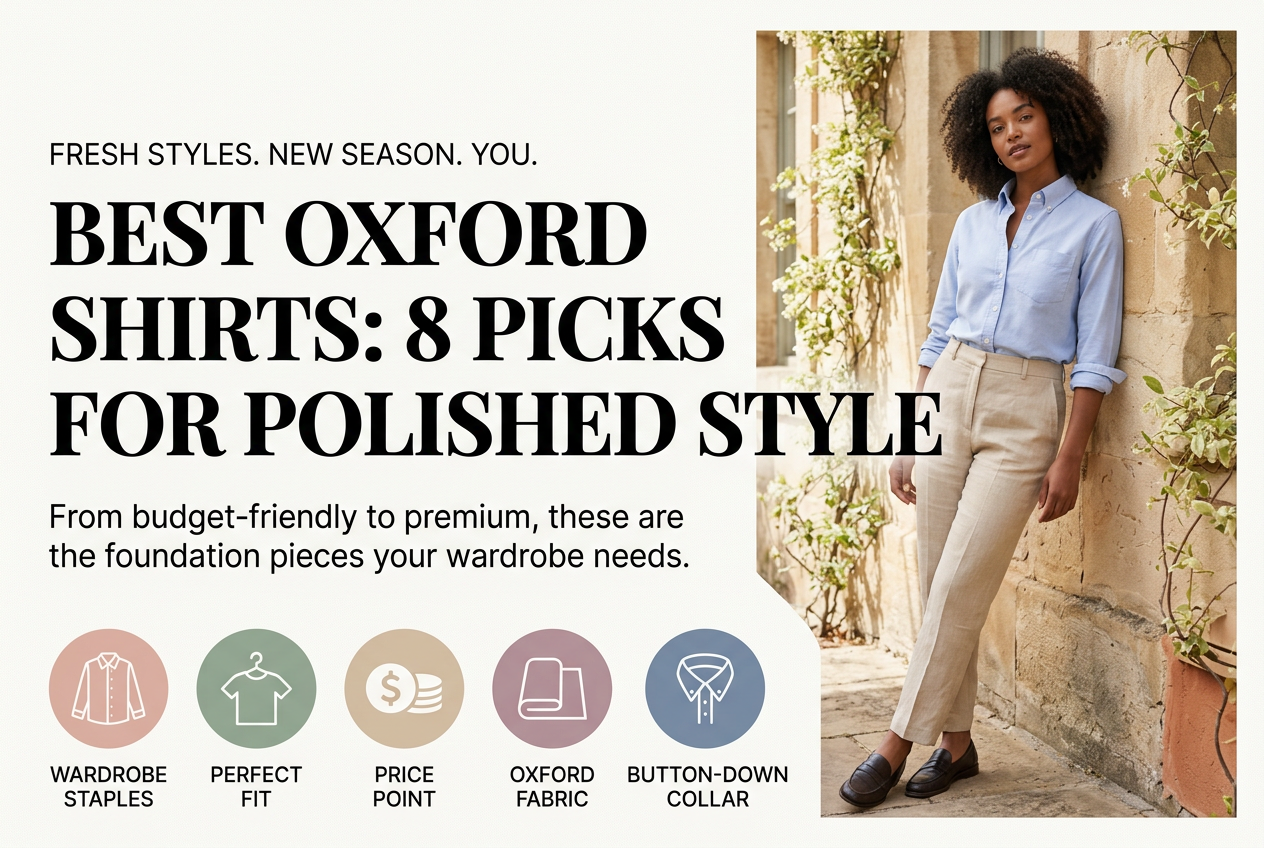
Start with white and light blue. That’s the whole foundation, really — two oxford shirts in those colors will handle more of your wardrobe than almost any other two pieces you could buy, and everything else is just building from there. I’ve been wearing oxfords for years and still reach for the same pale blue one on maybe three mornings out of five, which tells you something about how these shirts actually work in practice.
There’s a reason the oxford cloth button-down has been around since the early 1900s and shows no signs of going anywhere. The fabric — that slightly textured basket weave — handles real, repeated wear without looking beat up. It wrinkles, yes, but in a way that reads as lived-in rather than careless. The button-down collar keeps the whole thing grounded, which is probably why it became the unofficial shorthand for “put-together without trying too hard.” What changed over the decades isn’t the shirt itself — it’s where we wear it. The oxford used to belong exclusively to the preppy uniform: boat shoes, khakis, club ties. At some point it escaped all that and became genuinely useful to everyone.
Why This Shirt Just Works
Throw it on over a t-shirt with tailored trousers. Wear it loose and open over a tee for a layered Saturday look. Tuck it into relaxed jeans. The oxford doesn’t have strong opinions about any of this — it just adapts. That flexibility is rarer than it sounds in menswear, where most pieces are pretty specific about what they want to be paired with and how formally they want to be treated. A good oxford shirt asks almost nothing of you. You don’t need the right shoes or the right trousers or the right season. You just need to put it on.
That said, not all oxfords are the same shirt.
Classic Cut or Modern — Does It Actually Matter?
The traditional oxford — the one your dad probably still owns — runs roomy and straight through the body, with fuller sleeves and enough extra fabric that you can layer a crewneck sweater underneath without looking stuffed into it. The modern cut has tightened up: sleeves taper slightly, the body follows your shape a bit more closely, and the overall effect feels more deliberate. Neither is better. They’re just useful for different things, and if you wear oxfords regularly, you’ll probably want at least one of each. A roomier fit works beautifully under a wool sweater in January; a slimmer cut under a linen jacket in July is a completely different look that also works. (Actually, that’s not quite right — the slimmer cut works fine under a linen jacket in late spring or early fall too. Summer is pushing it depending on the jacket weight.) The point is, buy for how you dress, not how you think you should dress.
The Budget End Is Better Than You Think
You don’t need to spend a lot to get a real oxford shirt. Options in the $60–$80 range use genuine oxford cloth — not thin cotton pretending to be something else — and the fabric has actual weight to it. It’ll soften with washing and hold up to a regular rotation without falling apart. Yes, you might get a button that feels slightly cheap, and the collar might lack the crispness of something pricier. Most people will never notice either of those things.
These are the shirts you buy in multiples without guilt: white, light blue, a thin stripe. The workhorses. The ones you actually grab on a Tuesday morning because they’re comfortable and they fit and they just work without requiring any decisions from you at all.
What You Actually Get at the Premium End
Spend $120–$200 and the experience is noticeably different from the first time you wear it. The fabric is softer straight out of the bag — not the kind of softness that comes from washing it twelve times, but genuine quality that’s there from day one. Buttons don’t crack. Seams sit flatter. Colors are richer and hold through washing in a way that cheaper dyes don’t. There’s usually some small detail — proper mother-of-pearl buttons, a carefully finished placket, a collar that keeps its shape without stays — that you notice when you’re putting it on and never quite stop noticing. I picked up a Ralph Lauren oxford a couple of years ago that cost more than I wanted to spend and I have genuinely worn it more than any other single shirt I own. The math on cost-per-wear becomes pretty reasonable pretty quickly when a shirt becomes that default.
The other thing about a good oxford: it doesn’t age out. You’re not going to look at it in three years and wonder what you were thinking. It’ll just look like a good shirt, the same way it did when you bought it.
Four Ways to Actually Wear It
Weekend, no effort required: Untucked over a white tee, relaxed jeans, sneakers. Sleeves rolled up. Maybe a linen jacket if it’s cool out. This is the “not trying but looks fine” uniform and it is basically impossible to get wrong.
Smart casual: Tucked in, chinos or tailored trousers, leather belt, simple shoes. Leave the collar button undone if you want it relaxed, button it all the way for something a touch more formal. A cardigan or unstructured blazer over top takes it up another level without tipping into overdressed territory.
Layering under sweaters: The oxford is genuinely one of the best shirts for this because the collar sits cleanly outside a crewneck and the fabric has enough structure that it doesn’t bunch underneath. A classic, roomier fit works better here than a slim one — you want the extra room so nothing pulls across the shoulders when you move.
With a suit or sport coat: The oxford’s built-in casualness keeps a blazer from reading as stiff or try-hard, which is exactly why it became the default shirt for business-casual environments everywhere. Tailored trousers, a watch, done. You don’t need a tie. You don’t need pocket square. The shirt does the work.
Building the Rotation Over Time
The goal isn’t one perfect oxford. It’s three or four good ones in different colors and cuts so that whatever you’re reaching for on a given morning, something fits the situation without any deliberate planning on your part. Start with white and light blue — those two colors will cover the vast majority of what you need across casual, smart-casual, and everything in between. Add a stripe once you’re comfortable. Add a heavier, more textured oxford chambray for winter layering. Buy one at the budget end and one at the premium end and figure out which price point makes sense for how you actually live and how much wear any single shirt is going to see. A $150 shirt you wear twice a week for three years costs you almost nothing per wear. A $65 shirt you reach for just as often costs even less. Both are good choices. Neither is wrong.
The oxford shirt has lasted this long because it’s useful, not because it’s fashionable.
At Unwritten, our editors choose every product and story idea independently — we only recommend things we’d genuinely tell a friend about.
Frequently Asked Questions
What makes oxford cloth different from regular cotton?
Oxford cloth uses a basket weave that creates a slightly textured surface, making it more durable and breathable than plain cotton poplin. It also wrinkles in a way that looks deliberate rather than just slept-in, which is part of why the fabric has stuck around so long.
Should an oxford shirt be tucked in or untucked?
Both work, but it depends on the cut and the occasion. A classic, roomier fit untucked over jeans reads as weekend-casual. A slimmer modern cut tucked into chinos with a belt looks smart-casual without being overdressed. When in doubt, untucked with rolled sleeves is almost always fine.
How much should I spend on a good oxford shirt?
Budget options in the $60–$80 range offer genuine oxford cloth and solid construction — good for building out a rotation without overthinking it. Premium shirts in the $120–$200 range use better-sourced fabric, stronger buttons, and more refined fits. Both price points are worth owning for different purposes.
What colors should I buy first?
White and light blue. Those two will cover the vast majority of what you actually need — they pair with almost everything and work across casual, smart-casual, and business-casual contexts. Once you have those, a stripe or a chambray blue adds variety without complicating things.
How do I keep an oxford shirt looking good over time?
Wash it in cold water, skip the dryer when you can, and hang it while it’s still slightly damp to reduce wrinkles. Oxford cloth actually improves with washing — it softens up without losing its structure. Avoid ironing on high heat, which can flatten the texture that makes the fabric distinctive.