Olive, sand, navy. Those three colors keep showing up on my hooks every March.
That is how I know a jacket is working: I reach for it without thinking. Spring weather is moody, with a chilly morning, a sunny afternoon and a calendar that still expects you to look put together. The right transitional jackets handle all of that. Start with the shape you will wear most, then add one trend that feels like you.
Why does a jacket matter more than the outfit under it?
Because it is part of the outfit, not an afterthought grabbed at the door. A good one makes a plain T-shirt and trousers look finished, or gives a floaty dress enough structure for a windy walk.
Bombers, minus the gym-class vibe
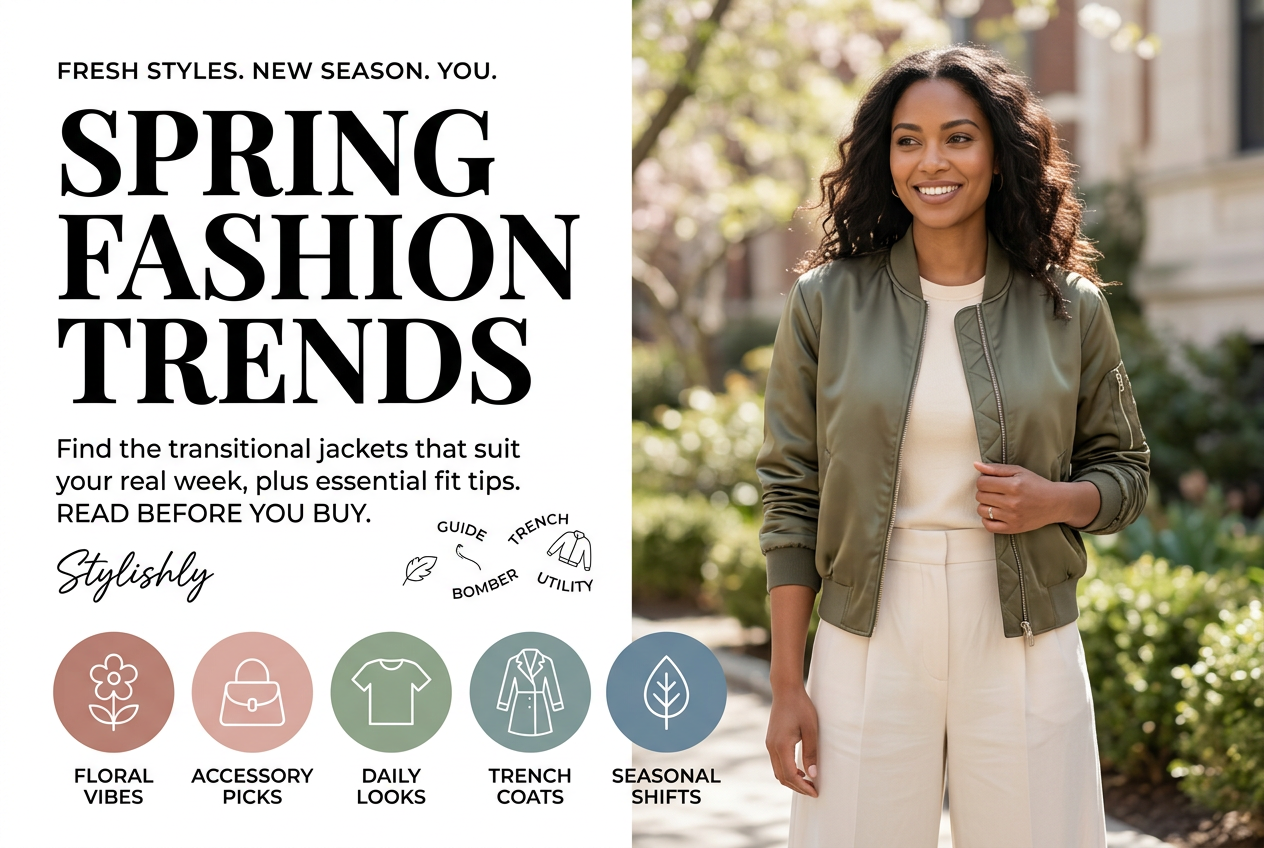
The bomber has outgrown its nostalgia. For spring, look for a relaxed fit, a neat collar and a hem that sits at your hip. Satin or a softly textured fabric dresses it up, while classic nylon still works with denim. One catch: some cropped styles ride up when you reach for your coffee, so check the length before buying. I learned that the annoying way, standing in a cafe line with my back exposed.
Try a neutral bomber over a ribbed tank and wide-leg trousers for errands that might turn into lunch. Or wear it with a midi skirt and simple sneakers, because the contrast keeps things easy instead of overly sweet. On a rainy Tuesday commute, when a bulky coat feels like too much, these light jackets earn their place.
1. The polished satin bomber brings a subtle sheen to everyday basics. Keep the rest of your look matte so the jacket gets its moment.
2. The classic lightweight bomber is the grab-and-go option for jeans, tees and weekend plans. A simple shape can feel plain, so look for a bold color or contrast trim.
Utility jackets do the heavy lifting
Workwear flavor, no head-to-toe cargo required. Softer cotton twill and slightly roomy cuts layer easily over a sweatshirt or thin sweater. Pockets are handy, but too many bulky ones add visual weight, so a cleaner front keeps the shape versatile.
Wear one with straight-leg jeans and a striped top, or throw it over a floral dress when you want a little edge. Olive is the familiar choice, yet sand, navy and faded black all work. If you like a defined waist, use the drawcord or add a belt (sizing down until the shoulders pull is the wrong fix).
3. The relaxed field jacket gives an everyday outfit an easy, outdoorsy finish. Choose a hip-length cut with room for a light layer underneath.
4. The cropped utility jacket suits high-rise jeans and fuller skirts, balancing volume without feeling stiff. Its short hem is less useful over long tunics, so think about what goes underneath.
The trench, again
It keeps coming back because it solves the awkward in-between forecast with almost no fuss. A classic double-breasted shape looks sharp over work clothes, but newer versions play with softer shoulders, shorter hems or gently oversized proportions. You do not need a dramatic statement piece. One interesting detail is plenty.
Belt it over a dress, or leave it open above a T-shirt and jeans. A lighter trench also makes a great travel layer when the weather cannot decide. Be realistic about fabric, though: a very thin version looks lovely but does little in a steady downpour.
5. The modern belted trench keeps the polished shape while letting you adjust the waist. Tie the belt loosely at the back for a less formal feel.
6. The cropped trench jacket is a fresh take for anyone who finds full-length coats cumbersome. It is easy with trousers, but it will not cover a long dress on a windy day.
Denim beyond basic blue
Denim still belongs in the rotation, and the styling is looser now. Roomy cuts, clean dark washes and softer colors make it feel less like a uniform. Pick a shape that works with your clothes: a boxy jacket looks great over a slim dress, while a longer cut pairs easily with leggings.
Going denim on denim? Vary the washes instead of matching them. A pale jacket with dark jeans looks intentional, not like a set. With a fuller skirt, a jacket ending near the waist keeps proportions balanced.
7. The relaxed light-wash jacket is an easy partner for spring dresses and everyday denim. The paler wash shows marks more readily, so it needs a little extra care.
8. The dark denim jacket brings a cleaner, more polished feel to casual outfits. Try it with cream trousers or a printed skirt.
Blazers that do not feel stiff
A blazer is one of the quickest ways to make a spring outfit feel finished. Softer tailoring and roomier sleeves are replacing anything rigid. Look for enough drape to sit comfortably over a tee, and check that the shoulders still feel good when you move your arms. Nobody should spend a day tugging at seams.
For the office, pair a single-button blazer with straight trousers and loafers. After work, swap in a tank and jeans, or toss it over a slip dress. I like a slightly oversized blazer, but there is a point where it looks borrowed rather than relaxed. Try it on with the shoes you will actually wear.
9. The relaxed single-button blazer is a reliable desk-to-dinner layer. A neutral shade is easy to repeat with different outfits.
10. The textured spring blazer adds interest without a full outfit rethink. A subtle weave or linen blend feels seasonal, though linen can crease over a long day.
Which one first?
You do not need five new coats. Pick the jacket that matches your real routine: a bomber for casual days, a utility layer for running around, a trench for unpredictable weather, denim for easy weekends, or a blazer for plans needing polish. Then think about what goes underneath, because a jacket that fits over a thin knit and still closes over a tee gets worn far more.
Color can do some of the styling for you. If your closet is mostly black, denim and cream, a muted green or soft blue jacket adds change without making everything else harder to wear. Any of these shapes works at any size, and the fit you like matters more than a trend’s supposed rules.
My pick is the trench. Buy one that feels good on your shoulders, and the weather can argue all it wants.
At Unwritten, our editors choose every product and story idea independently — we only recommend things we’d genuinely tell a friend about.
Frequently Asked Questions
What are transitional jackets?
They are lightweight layers for days when the weather swings between cold and mild. Bombers, trenches, utility jackets, denim jackets and blazers all count.
Which transitional jacket is the most versatile?
A neutral trench or a relaxed blazer goes with the widest range of outfits, from work clothes to jeans and a tee.
How do I check the fit of a spring jacket?
Wear it over the thickest top you plan to layer with, then reach forward and raise your arms. If the shoulders pull or the hem rides up, try another size or cut.
Can I wear a denim jacket with denim jeans?
Yes. Vary the washes instead of matching them, such as a pale jacket with dark jeans, so it looks intentional.