
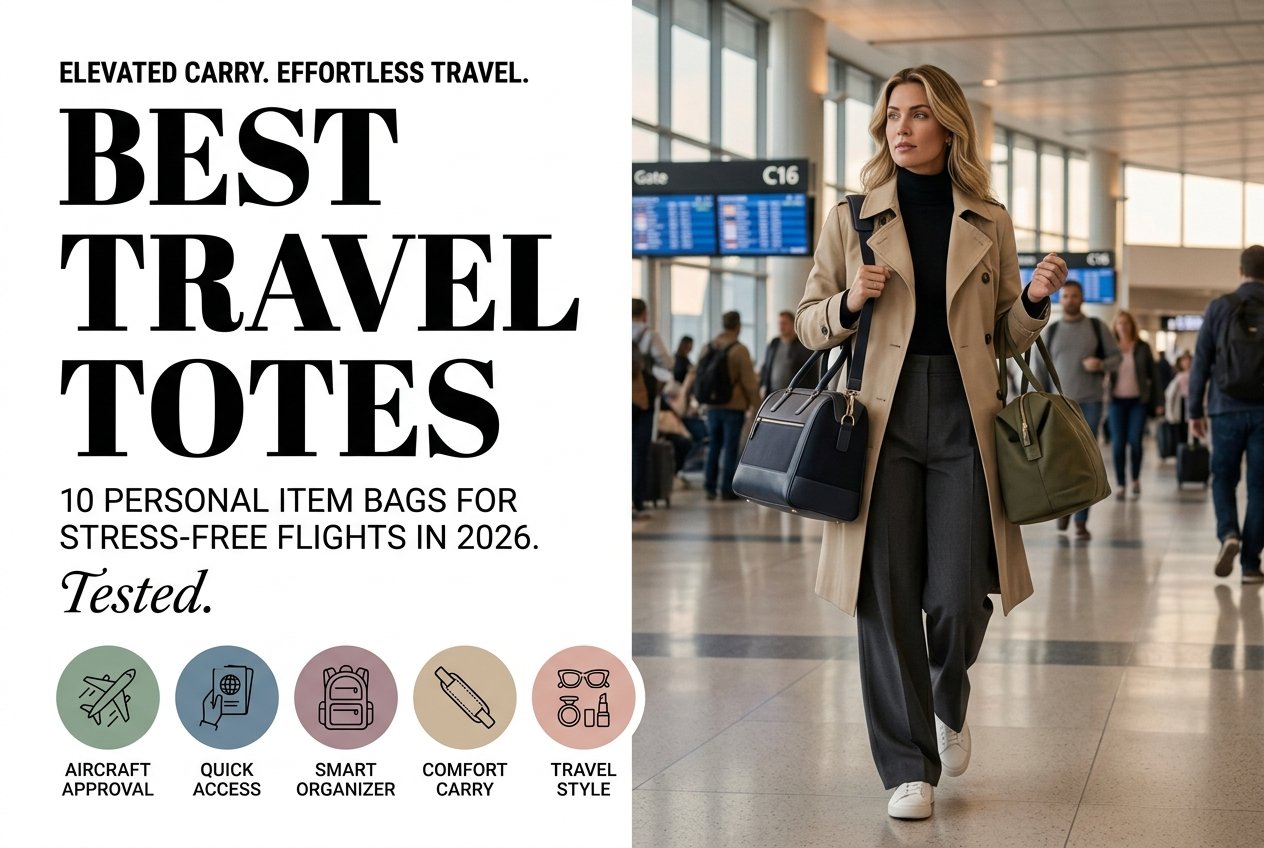
Last month I spent four hours in an airport not going anywhere — just watching. Gate C14, a Tuesday afternoon, the kind of mid-season travel day where nobody looks happy. What I noticed wasn’t which bags were expensive. It was which bags were working. The travelers who moved through security without breaking stride all had one thing in common: a tote that seemed to anticipate what they needed before they did. That observation is basically the entire argument for spending real money on a travel tote.
Here’s the thing most packing guides won’t tell you upfront: the best travel totes aren’t luggage accessories. They’re the actual center of your travel system. Your carry-on holds clothes. Your tote holds your life for the duration of the flight — phone, passport, headphones, that novel you keep meaning to finish, the charger you’d be devastated to lose, maybe a snack you’re pretending is healthy. It needs to do a lot, and it needs to do it without making your shoulder hate you by baggage claim.
Why Most Travel Bags Fail You at the Worst Moment
Bigger is not better. I know that sounds obvious but watch anyone dig through an oversized tote at a boarding gate and you’ll see exactly how wrong that instinct is — things sink, straps tangle, the passport ends up under the portable charger, which is under the scarf, which is under the book. A well-designed travel tote uses vertical organization and dedicated compartments to make the bag’s actual volume feel smaller than it is. The compression pockets that look like a minor feature in product descriptions? They’re the difference between a bag that fits under the seat and one that gets gate-checked while you watch helplessly. And when your bag has a real slot for your boarding pass instead of just a general fabric void, you stop doing that frantic pat-down routine three feet from the scanner. Calmer travel isn’t about flying less or paying for upgrades — a lot of it just comes down to whether your stuff has a place to live.
What Actually Separates Good Totes from Great Ones?
Five features. Not three.
Padded laptop compartment — not a fabric sleeve, not a divider, an actual padded compartment. Your laptop costs more than the bag. Protect it accordingly. Flat-open TSA design means the laptop section unzips completely so you don’t have to pull anything out at the scanner. I’ve seen people miss flights because they were wrestling with a bag that didn’t have this. Exterior phone pocket — reachable with one hand while the bag is on your shoulder. This is non-negotiable. Quality zippers that don’t jam. Cheap zippers always jam. They jam in security lines and they jam at 11pm when you’re exhausted and just want to get to the hotel. The zipper is load-bearing infrastructure; treat it that way. Handles that don’t hurt — you’re going to carry this through three terminals, possibly at a jog. Rolled leather or padded nylon handles are worth every cent of the upcharge.
Actually, that’s not quite right — there’s a sixth thing worth mentioning that rarely shows up on spec sheets: the bag’s ability to stand upright on its own. A tote that flops over every time you set it down becomes genuinely maddening by hour three.
Leather, Nylon, or Something In Between?
The structured leather tote is for people who walk into an airport like they own it. Looks right in a meeting, looks right at the gate, ages into something better than what you bought. The trade-off is weight — leather adds ounces before you’ve packed a single thing, and if you’re the type who monitors your personal item like a hawk, that matters. Lightweight nylon is the pragmatist’s choice. Wipes clean, weighs almost nothing, and honestly the good nylon totes these days look far better than their utilitarian reputation suggests. The convertible hybrid — tote straps plus a hidden backpack option — sounds gimmicky until you’ve carried a heavy bag on one shoulder for six hours straight.
I tried four convertible styles before finding one where the backpack straps actually tucked away cleanly instead of hanging out like an afterthought. The difference was a zippered panel on the back. Small thing. Changed the whole bag.
Your Tote Is Part of Your Outfit (Whether You Think About It or Not)
You will be photographed with this bag. You’ll see it in every airport mirror. You’ll carry it to the first dinner of the trip before your checked luggage has even left the carousel. A camel or black tote disappears into almost any wardrobe. A jewel tone at a gray Tuesday morning gate is a legitimate mood-lifter — I’m not being precious about this, it genuinely helps. The bags that make people feel most capable aren’t the most expensive ones or the most organized ones. They’re the ones people actually want to reach for.
Pick a tote that fits your real travel habits, not your aspirational ones.
Your shoulders will notice immediately.
At Unwritten, our editors choose every product and story idea independently — we only recommend things we’d genuinely tell a friend about.
Frequently Asked Questions
What size tote counts as a personal item on most airlines?
Most airlines allow personal items up to 18 x 14 x 8 inches, though this varies by carrier. The safest bet is to check your specific airline’s policy before you fly — Spirit and Frontier are stricter than Delta or United.
Can a tote bag really replace a carry-on?
For trips under three days, yes — if the tote is well-organized and you pack intentionally. Most travelers find that a structured tote with compression pockets holds more than it appears to from the outside.
What features matter most in a travel tote?
Padded laptop compartment, exterior phone pocket, and a flat-open design for TSA screening are the three things that separate genuinely useful travel totes from ones that look the part but frustrate you at the gate.
Is leather or nylon better for a travel tote?
Depends on your priorities. Leather looks polished and ages well but adds weight. Nylon is lighter and easier to wipe clean after a coffee spill. For frequent flyers who count every ounce, nylon usually wins.
How do I keep my travel tote organized mid-flight?
Before boarding, move everything you’ll need during the flight — headphones, snacks, lip balm, your book — into the exterior or top pocket. Keep the main compartment closed. You’ll stop excavating your bag over the Atlantic.