
By noon on my third day wearing a new pair of supposedly great work trousers, I had one thumb hooked into the waistband trying to relieve pressure while nodding through a budget review. That was the moment I decided to actually pay attention to what I was buying.
Here is the thing most workwear guides skip: the best work pants for women are not about a single silhouette or a magic fabric. When your pants fit right, you stop thinking about them entirely — and that absence of distraction is worth more than any design detail. Everything else in your day gets easier.
Why Most Work Pants Fail You by Afternoon
The fitting room is a lie. Pants that look crisp under fluorescent lights while you do a quick squat and declare them comfortable have a way of revealing their true character around hour four of a back-to-back meeting day. The waistband that felt fine starts to dig. The fabric that seemed breathable turns out to be quietly suffocating. The thighs, which had exactly enough room standing up, become a negotiation every time you sit down. I went through probably eight pairs over three years before I stopped blaming my body and started being more deliberate about construction — specifically, waistband depth, fabric stretch percentage, and inseam length relative to heel height. Those three things alone changed what I bought.
Modern professional trousers have genuinely improved. Brands are engineering stretch into structured fabrics, building waistbands that account for the fact that human bodies expand and contract throughout the day, and cutting thighs with actual movement in mind rather than designing around a static mannequin. None of that requires spending a fortune. It requires knowing what to look for.
What Actually Makes a Work Pant Worth Buying
Thoughtful construction. Full stop.
A waistband that does not roll or dig after two hours of sitting. An inseam length with options beyond one-size-destroys-all. Fabric that has enough structure to look polished but enough give to survive the moment you realize you’ve been sitting cross-legged on a conference call for ninety minutes. (We have all been there.) These are not luxury features — they are the baseline, and plenty of pants at every price point deliver them if you know what to check before buying.
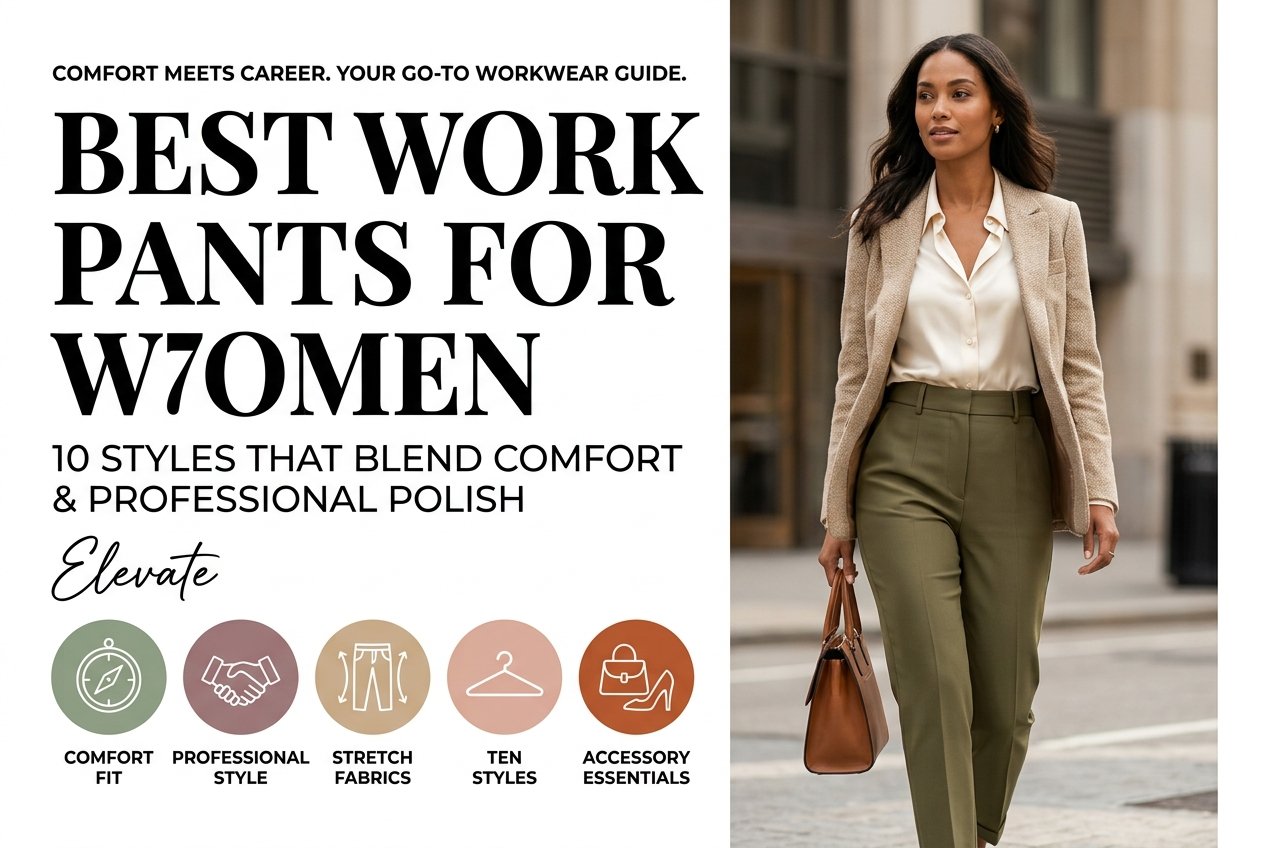
Color matters too, though maybe not the way you think. Black is the obvious foundation, but a mid-weight trouser in charcoal, navy, or warm camel does considerably more work in a wardrobe because it reads as deliberate rather than default. Pair any of those with a white shirt and structured blazer for something serious, then swap the blazer for a chunky knit and trade the heels for loafers and the same pants feel completely different. The pants stay the same. Your styling does the shifting.
Does the price tag actually matter?
A $65 pair that fits perfectly and holds up for two years beats a $190 pair that gaps at the waist and pills by spring. Every time. The difference between price points mostly comes down to fabric sourcing and brand markup — not whether the pants will actually function on your body. Start with fit as the non-negotiable, set a budget after that, and you might be surprised what shows up at both ends of the range.
Actually, that is not quite right — fabric quality does shift at higher price points, particularly in how a pant holds its shape after repeated wearing and cleaning. A well-constructed wool blend at $150 will likely outlast a synthetic at $70 by a significant margin. The honest answer is that value depends on how often you wear them. For your most-reached-for rotation pairs, spending more makes sense. For a trend-driven cut you might tire of in a season, it does not.
Our 10 Picks
These are the pants that survived the full test: early meetings, afternoon slumps, the commute home, and the occasional after-work drink where you need to look like you meant to be there. They earn their place in a rotation by being genuinely wearable five days a week without complaint.
Finding the Right Silhouette for Your Body
Need more room through the thigh? Straight-leg and relaxed cuts are your starting point, not a consolation. Want something that follows your shape without clinging? A mid or high-rise with two to four percent elastane in the weave does that without sacrificing structure. Prefer a cleaner, more streamlined line? Tapered ankle styles work — but only if the taper starts below the knee, otherwise you lose the proportion. And if you sit at a desk most of the day, a slight stretch in the fabric is not optional. It is just practical.
The ‘perfect fit’ is not a universal thing. It is specific to you, your proportions, and what you’re doing in the pants between 8am and 6pm. Anyone telling you otherwise is selling a silhouette, not a solution.
At Unwritten, our editors choose every product and story idea independently — we only recommend things we’d genuinely tell a friend about.
Frequently Asked Questions
What fabric is best for work pants that don’t wrinkle?
A blend with at least 2-5% elastane or spandex tends to resist wrinkles far better than pure cotton or linen. Ponte knit and stretch woven fabrics are both solid choices for long days when you don’t have time to steam anything mid-afternoon.
How do I find work pants that fit both my waist and hips?
If you carry more volume in your hips than your waist, look for pants with a mid or high rise and a straight or slightly relaxed leg. Some brands also offer curvy fits with extra room built into the seat and thigh. Tailoring the waist is usually cheap and completely worth it.
Are wide-leg pants appropriate for corporate offices?
Yes, in most cases. A wide-leg trouser in a structured fabric like wool crepe or a ponte blend reads as polished and professional. The key is fit through the waist and hip — if those are clean and tailored, the wide leg looks intentional rather than sloppy.
How many pairs of work pants do I actually need?
Honestly, two to three pairs in rotation is enough for most people. Start with one pair you love completely, then add a second in a different color or cut. A third gives you flexibility when something is at the dry cleaner or you just want variety.
Can I wear the same work pants to casual events after the office?
Absolutely. That is actually the point. A mid-weight trouser in navy, charcoal, or camel transitions easily — swap the blazer for a relaxed knit or denim jacket and change your shoes, and the pants carry the whole look somewhere different without any effort.