
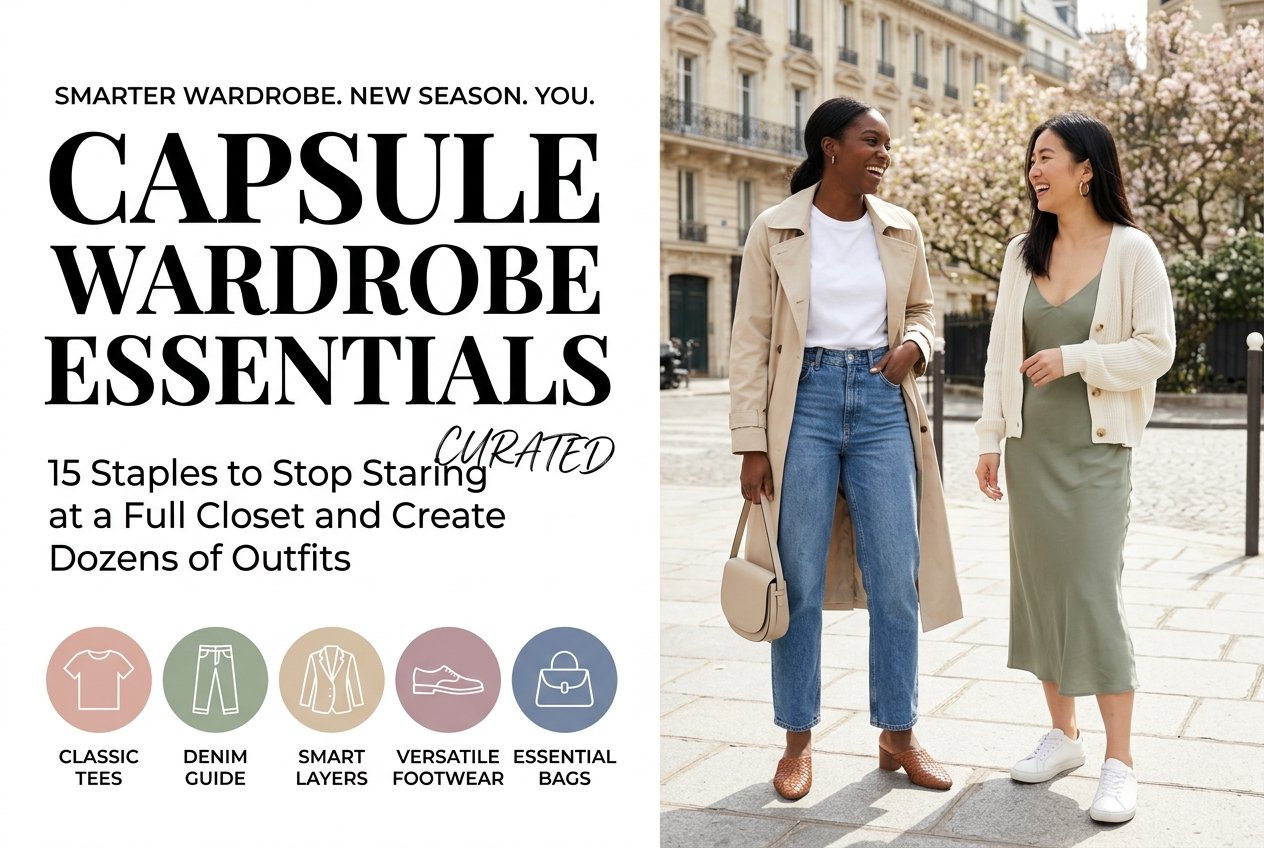
Here is the thing nobody says out loud: a closet full of clothes and nothing to wear is not a storage problem. It is a compatibility problem. I realized this after standing in front of my own wardrobe for the fourth morning in a row, genuinely unable to leave the house, surrounded by roughly 60 items that somehow produced zero complete outfits. That was the moment I stopped buying clothes randomly and started building something intentional.
Capsule wardrobe essentials solve the compatibility problem. They are the pieces that work with nearly everything else you own — chosen deliberately, in colors that talk to each other, in silhouettes that layer cleanly. Get these 15 right and you will have more functional outfits than most people assemble from twice as many clothes.
What Even Is a Capsule Wardrobe?
A capsule wardrobe is a small, curated collection of versatile pieces that work together. That is it. No mysticism, no extreme minimalism required. Most people land somewhere between 25 and 50 total items — including shoes and outerwear — though the exact count matters far less than whether every single item actually earns its place. The whole system runs on a single idea: when you can grab almost any two pieces and they work together, getting dressed stops being a decision and starts being automatic. Decision fatigue is real, and if you have ever been late to something because you could not figure out what to wear, you already know the cost of ignoring it.
A spring capsule wardrobe and a fall capsule wardrobe are not two separate wardrobes. They are the same foundation with different layers on top.
The Tops and Bottoms You’ll Reach For Every Single Day
1. White Crew Neck Tee
Not just any white tee — one with enough weight that it doesn’t go transparent under fluorescent lighting, and a fit that actually suits your body. This is probably the single most-worn piece in any capsule wardrobe. It works tucked into trousers, layered under sheer tops, thrown over a swimsuit, or paired with dark jeans and ankle boots. The version you want costs more than $15. Buy it anyway.
2. Black Crew Neck Tee
Same principle as the white, but black is more forgiving day-to-day — stains disappear, undergarments stay hidden, and it photographs better in a pinch. These two tees together are your neutral foundation for everything else.
3. Striped Long-Sleeve Tee
Navy and white stripes, ideally. This adds visual interest while staying completely neutral, which is a harder trick than it sounds. It layers under blazers, works alone in mild weather, and reads as slightly more intentional than a plain solid without veering anywhere near trendy.
4. Dark Wash Jeans
Dark wash reads as slightly dressier than light wash, holds up better across seasons, and hides wear more gracefully. Skinny, straight, or relaxed — wear whatever fit makes you feel good. This is genuinely personal and no one else’s business.
5. Black Trousers
Not jeans. Real trousers, in a fabric with a little stretch, cut to hit at the ankle. They elevate an outfit faster than almost any other single item. Casual Friday, dinner out, a job interview you forgot about until Tuesday morning — black trousers handle all of it.
6. Neutral Midi Skirt
Linen or cotton blend in black, cream, or tan. A midi skirt is one of the few pieces that bridges truly casual (tee and sneakers on a Saturday) and genuinely dressed-up (blouse and heels on a weeknight) without looking like it’s trying. That range is rare and worth paying for.
Outerwear That Actually Earns Its Closet Space
The right jacket does not just keep you warm. It finishes an outfit.
7. White Button-Up Shirt
Wear it as a standalone top, layered open over a tee, tied at the waist over a dress, or tucked fully into trousers for something that reads as polished without trying hard. Fit at the shoulders is everything here — if the seam is sliding down your arm, no amount of tailoring elsewhere fixes it.
8. Neutral Blazer
Camel, navy, or black. A well-fitting blazer is the fastest outfit upgrade in existence, which sounds like an overstatement until you put one on over a tee and jeans and immediately look like you planned your morning. The shoulder seam must sit exactly at your shoulder point. Non-negotiable. (Actually, that is not quite right — you can get shoulders tailored, but it costs more than just finding the right fit to begin with.)
9. Denim Jacket
Light or medium wash, classic cut. More casual than a blazer, but equally essential. It layers over dresses, tees, and even other lightweight jackets in early spring. I have worn the same denim jacket in March, June, September, and December — just with different things underneath.
10. Lightweight Cardigan
Cotton or linen blend in a neutral. This is the piece that makes an air-conditioned office survivable in July and a cool evening walkable in September. It goes over tees, under blazers, and alone on days when a full layer feels like too much.
Shoes: The Part Where Most Capsule Wardrobes Fall Apart
People buy too many shoe styles that do not talk to each other, then wonder why nothing works. Four pairs, chosen well, cover almost every situation.
11. White Sneakers
Leather or canvas, classic silhouette. White sneakers work with dresses, jeans, trousers, and skirts without looking like an afterthought. They are probably your most-worn shoe, which means the $120 version justifies itself faster than you’d expect.
12. Neutral Flats
Ballet flats, loafers, or slip-ons in black, nude, or tan. For days when you want to look put-together without sacrificing your feet. The key is finding a neutral that either matches your skin tone or matches your most-worn bottoms — that visual continuity makes legs look longer and outfits look more considered.
13. Ankle Boots
Black or brown leather or suede. Ankle boots work year-round, which almost no other shoe can claim. They go with jeans, dresses, midi skirts, and trousers. They bridge casual and dressed-up without requiring any thought.
14. Neutral Sandals
Leather or quality faux leather in a tan, black, or cognac tone. Essential for warm months, and the pair you will reach for constantly between May and September. Comfort matters more than anything else here — a sandal you can wear all day is worth twice what a beautiful one you can only wear for two hours costs.
The Bag and the Pieces That Finish Everything
15. Structured Neutral Bag
Black, tan, or camel in leather or quality faux leather, sized to fit a laptop, a wallet, and your actual daily life. This is your everyday bag — the one you grab without thinking. A structured silhouette works for both work and weekends, which is exactly the kind of range a capsule wardrobe demands from every piece in it.
Beyond the 15, a few additions make the whole system feel complete: a simple gold or silver necklace, a neutral scarf that doubles as a blanket on planes, a basic watch, and a leather belt. Four things. Not three, not a whole accessories drawer — four deliberate additions that pull everything together without adding chaos.
Now Build the Thing
Start with a color palette before you buy a single item. Neutrals — black, white, gray, navy, camel — form the base. If you want a secondary color, pick one: olive, burgundy, blush. Every piece you add should work with this palette. This is what creates the magic of a capsule wardrobe, the part where you can reach for almost any combination and it functions, because the colors were designed to work together from the start rather than accumulated by accident over seven years of impulse shopping.
Do not buy everything at once.
Start with the tees, jeans, and trousers. Wear them for a few weeks. See what you actually reach for and what sits untouched. Then add outerwear. Then shoes. This gradual approach sounds slow, but it is how you avoid spending money on pieces that make perfect sense in theory and get ignored in practice. The goal is not a perfect 15-piece wardrobe that looks good in a flat lay. The goal is a wardrobe you actually use, in colors that work together, in fits that suit your real body doing your real life — so that you never stand in front of a full closet and feel like you have nothing to wear.
At Unwritten, our editors choose every product and story idea independently — we only recommend things we’d genuinely tell a friend about.
Frequently Asked Questions
How many pieces should a capsule wardrobe have?
Most people land between 25 and 50 total pieces, including shoes and outerwear. But the number matters less than whether every item actually gets worn. Start with 15 core pieces and add only what your real life demands.
What colors work best for a capsule wardrobe?
Neutrals are the foundation: black, white, navy, camel, and gray. If you want something beyond neutrals, pick one secondary color like olive, burgundy, or blush — and make sure it works with everything else you already own before buying.
Can a capsule wardrobe work across all four seasons?
Yes. The core pieces stay constant year-round. You swap in heavier layers for winter and lighter fabrics for summer, but your dark jeans, white tee, and neutral blazer don’t change. Think of seasonal pieces as additions, not replacements.
Is a capsule wardrobe expensive to build?
It can cost less than you’d expect, especially if you’re replacing impulse buys with deliberate purchases. You’re buying fewer items, so spending more per piece on quality actually saves money over time. A $90 tee you wear 200 times beats a $20 one you wear twice.
Do I have to get rid of everything I own to start a capsule wardrobe?
No. A full closet purge sounds satisfying but often leads to panic-buying replacements. Instead, start by identifying which pieces you already own that qualify as capsule staples, then fill the gaps gradually over a few months.