
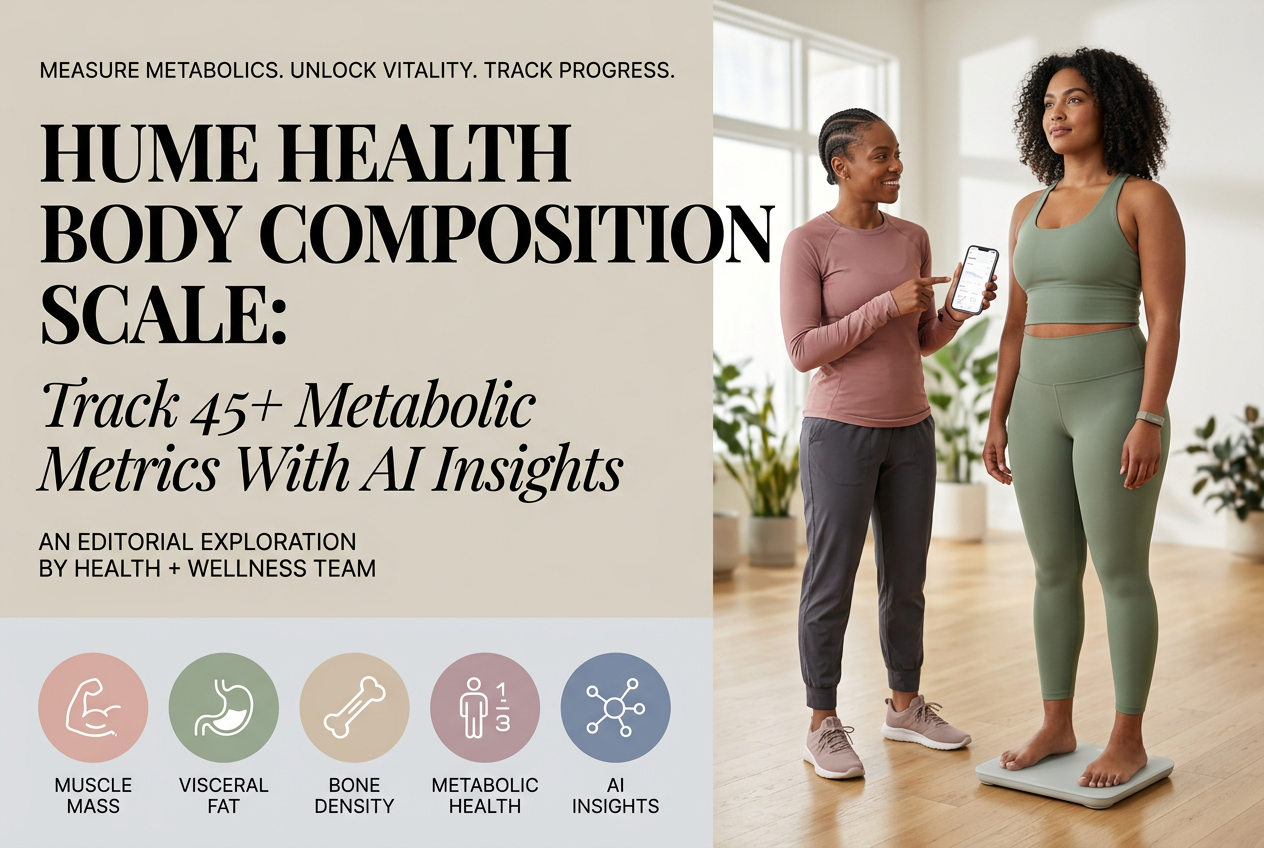
Muscle mass was the number that got me.
Not weight, not even body fat. Watching lean mass over weeks tells you whether the gym time is paying off, and a regular scale simply cannot answer that. This is the core argument for the Hume Health Body Pod, a smart scale that reads 45+ metrics, including body fat, muscle mass, visceral fat and bone density, then hands them to an AI-driven app that tries to explain what they mean.
Why your weight tells you almost nothing
Two people can stand on a scale and read the same number. One is mostly muscle. The other carries far more fat. The scale cannot tell them apart, and it says nothing about metabolic health or muscle quality.
Visceral fat is the one your doctor cares about, because it sits around your organs and drives inflammation, metabolic dysfunction and disease risk. You can’t pinch it. You can’t see it in a mirror. The Body Pod measures it directly, so you can watch whether it is creeping up or shrinking, which is a far better sign of progress than a single figure on a display (and honestly, a more motivating one too).
Muscle matters in the same way. It declines naturally with age, which slows metabolism and raises injury risk, and the Body Pod lets you check whether your strength training is building muscle or just burning calories. A basic scale gives you nothing here.
What the Body Pod actually does
It is a bioimpedance scale. A tiny electrical signal travels through your body, you feel nothing, and it is over in seconds. You get body fat percentage, lean muscle mass, water, bone density and metabolic rate, all synced wirelessly to the Hume Health app.
Where it pulls ahead of other smart scales is depth. Beyond weight you also get visceral fat, muscle quality scores and a metabolic age comparison. The app turns these into trends and patterns instead of a pile of raw digits.
The Band: a wearable that explains the why
The scale is a snapshot. The optional Band is the video.
It tracks heart rate variability, sleep quality, activity and metabolic stress through the day and night, the things that shape how your body behaves. Pair it with the scale and the picture fills in: the Body Pod says what your composition is, and the Band hints at what is pushing it around. Say your muscle mass is sliding. Maybe your sleep is a mess, maybe you barely move, maybe stress is off the charts. Without the wearable, you are guessing.
Does the AI actually help?
Most trackers hand over data and walk away. Hume’s app tries to do more. It analyzes all 45+ metrics and produces recommendations based on your own composition and trends rather than generic wellness filler.
Visceral fat rising? It flags it. Muscle dropping faster than expected? You will know. If your metabolic rate points toward more protein or more movement, it says so. Think of a coach in your pocket that learns your patterns over time, though I would treat it as a guide and not a doctor.
Goal tracking is built in too. Whether you want more muscle, less body fat or better metabolic markers, you can see week-to-week progress.
Setup and daily use
Easy. The Body Pod joins your WiFi, you install the app, done. A weigh-in takes about 30 seconds and returns a full snapshot, and the app keeps your history so you can zoom out over weeks and months.
The Band pairs over Bluetooth and sits on your wrist like any other fitness tracker. Battery lasts several days, which is realistic for something running heart rate and sleep monitoring around the clock. Both devices sync on their own, and the app stitches everything into one view.
One caveat. Bioimpedance readings drift with hydration and timing, so weigh in at the same hour each day, ideally in the morning, and not straight after a brutal workout or a huge dinner. The numbers stay accurate, but consistency is what makes the trend lines worth reading.
So, should you buy it?
If you care about metabolic health and not just the number on the scale, yes, it is genuinely useful. The 45+ metrics go well beyond a regular scale, and the app helps you work out what to do next.
It isn’t cheap, and it asks more of you than stepping on and glancing down. But if you have ever wondered whether your routine is working, or whether you are gaining muscle or losing it, this system answers with real data. It feels like a tool built by people who understand the subject, not a gimmick.
My view: buy it if you are ready to look past weight. Skip it if a single number is all you want.
At Unwritten, our editors choose every product and story idea independently — we only recommend things we’d genuinely tell a friend about.
Frequently Asked Questions
How does the Hume Health Body Pod measure body composition?
It uses bioimpedance, sending a tiny electrical signal through your body when you step on. You will not feel it, and the reading takes seconds.
Do I need the Band wearable to use the Body Pod?
No. The Band is optional. The scale works on its own, but the Band adds heart rate variability, sleep and activity data that help explain changes in your numbers.
When should I weigh myself for the most reliable readings?
Same time every day, ideally in the morning. Skip it right after hard exercise or a big meal, since hydration shifts can muddy the trends.
Why does visceral fat matter more than weight?
Visceral fat wraps around your organs and is linked to inflammation and metabolic problems. You cannot see or pinch it, and a regular scale cannot measure it.