
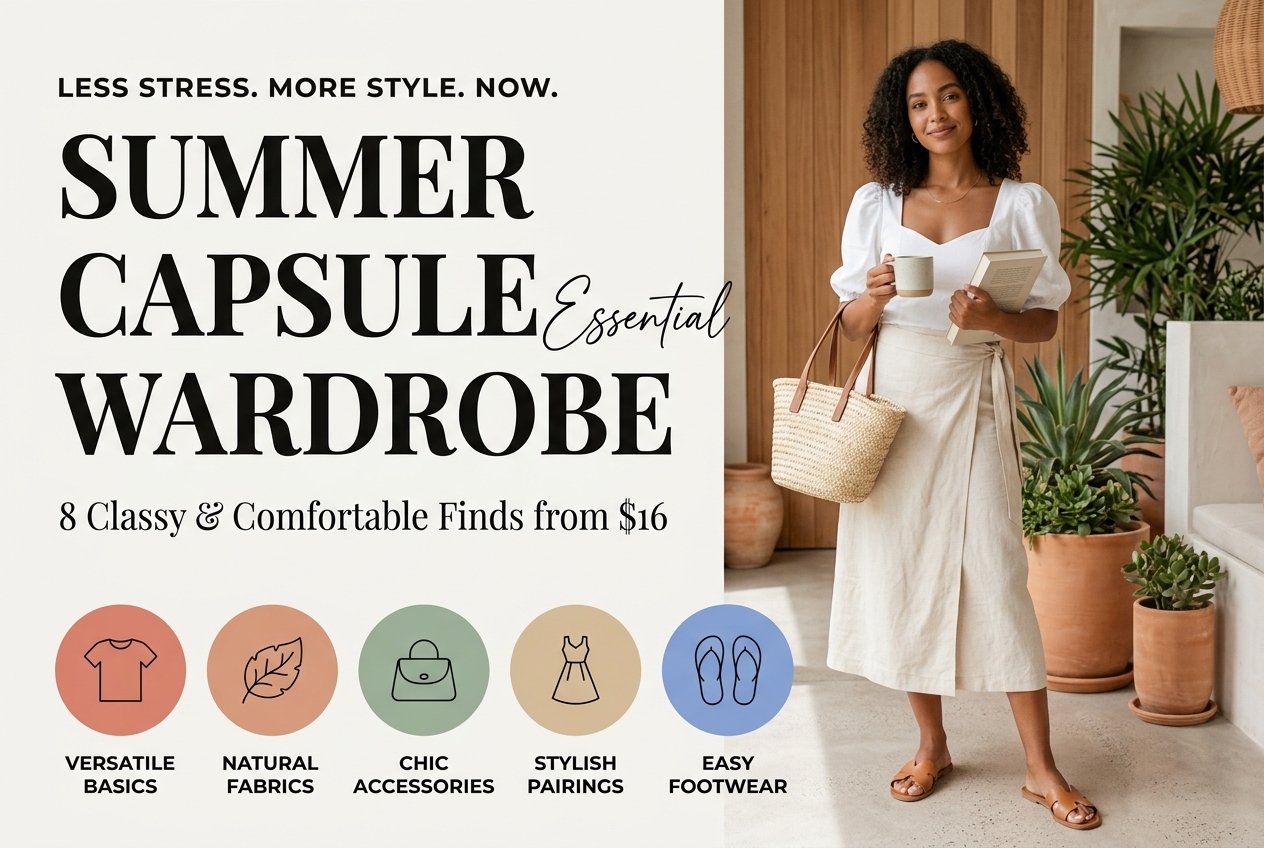
I used to own 47 summer tops. Not an exaggeration—they lived in a permanent pile on my bedroom chair, and I wore the same five anyway. Every single week. The rest just sat there radiating guilt.
That’s the thing about a summer capsule wardrobe that nobody leads with: it isn’t about deprivation or some minimalist aesthetic you saw on Instagram. It’s about getting dressed without the low-grade dread of standing in front of a stuffed closet that somehow contains nothing to wear. When I finally cleared the pile and kept only what I actually reached for, getting dressed in the morning went from a minor ordeal to something that took about forty-five seconds.
Why Your Closet Is Making You Tired
More options create more decisions, and more decisions create fatigue—this is just how brains work, and your wardrobe is no exception. A summer capsule wardrobe solves this by starting from a different premise entirely: instead of accumulating pieces and hoping they work together, you choose pieces specifically because they do. That linen shirt goes with those shorts, which pair with those sandals, which also work with the dress. No internal negotiation required.
You also start actually wearing what you own. This sounds obvious, but most of us have bought something because it was cute, then watched it hang unworn for two seasons while we reached for the same rotation. In a capsule, every piece earns its spot by working with at least three other items and fitting your real life—your climate, your job, the things you actually do on weekends. If it can’t clear that bar, it doesn’t make the cut. And because you’re being selective rather than accumulative, you stop impulse-buying things that look great on a hanger and go nowhere in your actual wardrobe. That’s the financial case for capsule dressing, and it’s a stronger one than most people expect when they first hear the concept.
What the Foundation Actually Looks Like
Anchor pieces first.
These are the items everything else hangs on—neutral basics in white, cream, beige, navy, or black that can repeat throughout the week without feeling like repetition. The foundation layer is also where you save the most money, because basic tees, simple shorts, and neutral pants genuinely do not need a designer label. They need good construction and fabric that breathes in summer heat. That’s the entire list of requirements.
When you’re evaluating a potential capsule piece, skip straight past the price tag and check the seams first. Are they finished? Does the hem look like it’ll survive a summer’s worth of washing? Is the fabric weight substantial enough that it won’t go sheer or pill after five wears? A $16 cotton tee from a brand that actually cares about basics can outlast a $60 version from somewhere that treats basics as an afterthought—I’ve tested this theory enough times to say it with some confidence. Actually, I should be more precise: I’ve tested it and been burned by the expensive version often enough to stop assuming price means quality.
Natural fibers are worth seeking out specifically. Cotton and linen breathe in a way most synthetics don’t, and in genuine summer heat, that distinction stops being aesthetic and becomes practical very quickly.
The Math of Mixing
Eight pieces. Potentially twenty-plus outfit combinations. This is where the capsule concept stops sounding like a lifestyle blog abstraction and starts feeling like it actually works.
If each piece works with at least three others, the combinations multiply fast—the white tee goes with the shorts, the skirt, and the pants; the linen shirt layers over the tank or replaces the tee entirely; the neutral trousers work for the office Tuesday and a dinner Saturday. The whole system runs on color coordination, which is less complicated than it sounds: pick a palette and stay in it. Whites, creams, and navy play together automatically. Throw in one piece that doesn’t coordinate and suddenly half your wardrobe stops talking to the other half. Stick to your colors and the mixing takes care of itself.
Does a Capsule Have to Look Boring?
No. And this is where people get the concept wrong.
The basics are a canvas, not the finished painting. Your accessories, shoes, and jewelry are where your actual personality shows up—and because they’re easy to store and don’t take up real closet space, you can have genuine range there without undoing the whole point of keeping your clothing edited. The same white tee reads as completely different outfits depending on whether you’re pairing it with sneakers and a backpack, sandals and a crossbody, or flat sandals and a small clutch. Same piece, three distinct contexts, zero additional closet chaos. Scarves and belts do similar work—small footprint, high impact, endlessly rearrangeable.
Start Here, Not There
You don’t need a shopping spree to build a summer capsule wardrobe. You probably need to remove things more than you need to add them. Start by pulling out what you actually wear—be honest, not aspirational—and look at what’s already working together. Then identify the gaps. One neutral tee. A pair of shorts that goes with more than one thing. Maybe a lightweight layer. Fill those specifically, with intention, and let the rest of it go.
A summer capsule wardrobe is not a finished project. It shifts as your life shifts, and that’s fine. The point isn’t a perfect curated set of twelve items. The point is getting dressed in the morning without the pile on the chair. I can confirm from experience: that’s worth more than the forty-two tops you’re not wearing anyway.
At Unwritten, our editors choose every product and story idea independently — we only recommend things we’d genuinely tell a friend about.
Frequently Asked Questions
How many pieces does a summer capsule wardrobe actually need?
Most people do well with 8 to 12 pieces. The goal isn’t a magic number—it’s making sure every single item works with at least three others. Eight pieces that genuinely mix and match beat thirty that don’t talk to each other.
Do I have to stick to neutral colors?
No, but neutrals make the mixing effortless. If you build around white, cream, navy, and black, nearly everything coordinates automatically. You can absolutely add one or two colors you love—just make sure they work with the rest of the palette before buying.
Can I really build a summer capsule wardrobe on a tight budget?
Yes. Expensive does not equal better, especially for basics. A well-constructed $16 cotton tee in a good fabric weight will outlast a $60 version from a brand that treats basics as an afterthought. Spend on fit and fabric. Save on logos and trends.
What fabrics should I look for in summer pieces?
Natural fibers are your best bet—cotton, linen, and cotton-linen blends breathe in heat in a way synthetics simply don’t. Check that seams are finished and hems look sturdy. A piece that survives twenty washes and still looks good is worth far more than one that pills after five.
How do I keep a capsule wardrobe from feeling boring?
Accessories. A white tee with sneakers and a backpack reads completely differently than the same tee with sandals and a crossbody. Scarves, belts, and jewelry are easy to store and do more outfit work per square inch of closet space than any clothing item. The basics are your canvas—accessories are where your personality shows up.