
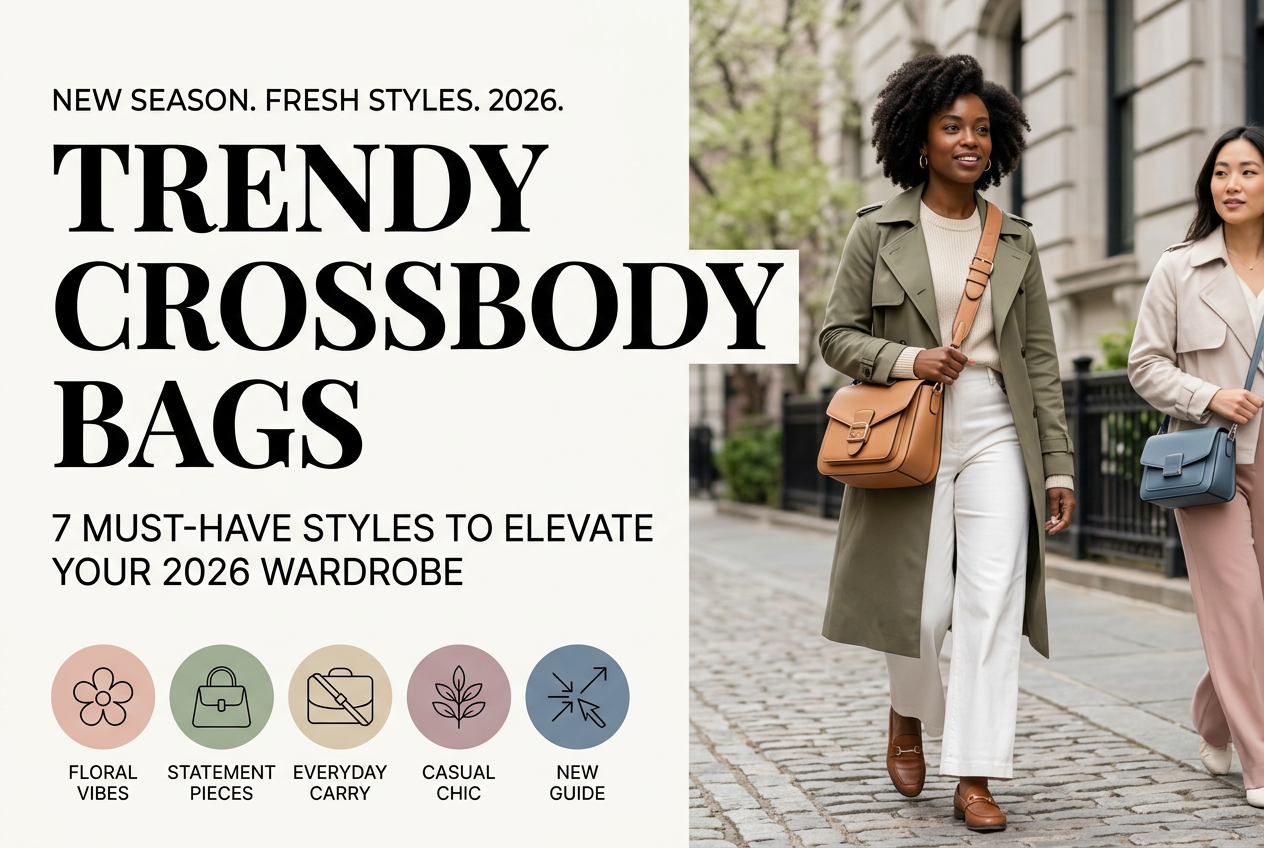
Start with the strap. That’s the thing nobody tells you when you’re shopping for a crossbody bag, but after carrying one with a too-thin, too-slippery strap for six months straight, I’m convinced it’s the single detail that separates a bag you love from one you quietly stop reaching for. Get the strap right, and almost everything else follows.
Here’s what that actually means for 2026: crossbody bags have fully crossed over from purely practical into genuinely considered fashion objects. Designers are treating them less like utility carriers and more like the focal point of an outfit — interesting hardware, unexpected materials, strap details that do real visual work. The best ones right now don’t just hold your stuff. They make the whole look.
Why Crossbody Bags Just Work
They keep your hands free. They sit at your hip or chest and distribute weight evenly, which matters more than people admit after a long day of errands or commuting. And they occupy this useful middle ground between a backpack (too casual, too much) and a clutch (too precious, too little). I’ve worn the same good leather crossbody to a Saturday farmers market and a Wednesday evening dinner without once feeling like I’d gotten it wrong — that kind of flexibility is genuinely rare in an accessory.
What’s shifted is the design language. Crossbody bags used to signal a certain kind of practicality-first thinking: pockets everywhere, neutral colors, nothing that would make anyone look twice. Now? The bags that are getting attention have architectural hardware, leather that develops character rather than just wearing out, and strap treatments that feel like actual design decisions. The crossbody bag has had its fashion moment, and it doesn’t look like it’s stepping back from it anytime soon.
So What’s Actually Trending?
Two directions are pulling hard against each other right now, which makes this an interesting moment to shop.
Oversized crossbodies are having a real run — bags that sit lower, carry more, and have this relaxed, slightly slouchy quality that works with tailored trousers just as easily as weekend denim. On the complete opposite end, tiny crossbodies that fit your phone, one card, and almost nothing else are everywhere. They’re pure statement. The whole point is that you chose to carry almost nothing, and you’re fine with that. Honestly, there’s something kind of freeing about it.
Color-wise, burgundy is the clear frontrunner this year, followed closely by sage green and a really warm caramel brown. The thing that separates these from trend colors of five years ago is material quality — a good burgundy on cheap leather looks costumey, but that same color on full-grain leather with some weight to it looks like an actual investment. Black is still doing its thing, obviously. It always is.
The Strap Question (It Matters More Than You Think)
Adjustable is non-negotiable if you want one bag to work across different outfit contexts. Wearing the bag higher reads dressier; dropping it lower feels more casual. That single adjustment changes the whole energy of a look without you having to swap bags entirely. Wider straps are more comfortable over longer stretches of time, and they photograph better — there’s a reason the bags that go viral tend to have straps with some visual presence to them, whether that’s a woven texture, a chain-and-leather combo, or just a strap with enough width to register as a design choice rather than an afterthought. Thin straps can work, but they need to be quality. Flimsy nylon digs in and stretches, and no amount of good bag design rescues a bad strap experience.
Materials Worth Knowing About
Full-grain leather is having a genuine moment because it rewards use rather than just tolerating it. Scratches and marks become part of the surface character over time, which means a three-year-old full-grain leather crossbody can actually look better than it did when you bought it. Vegetable-tanned leather is showing up more in heritage-leaning brands — it ages beautifully and tends to come from more traceable supply chains, which matters to a growing number of buyers.
Non-leather options have gotten genuinely interesting. Canvas blends, suede, and some recycled materials are being used in ways that aren’t trying to fake leather — they’re doing their own thing, and some of them do it really well.
Embellishments are restrained but present. Quilting is back, though structured and flat rather than the puffy versions that felt dated. Chain straps are still around but mixed with leather so they don’t skew too evening-wear. Interesting stitching and hardware that catches light without being flashy — that’s the general direction things are moving.
How to Actually Style One
A structured crossbody with jeans and a plain t-shirt is an immediate upgrade. That’s just true. The bag adds the polish that makes the rest of the outfit feel intentional rather than accidental. Going the other direction, a slightly slouchy crossbody with something dressier — a midi skirt, a blazer — keeps the whole look from tipping into overdressed territory. The color doesn’t have to match anything else you’re wearing. Burgundy against navy, caramel against black, sage against cream — contrast often reads more interesting than coordination, as long as you’re not fighting against yourself with four competing focal points.
The real test is simpler than all of that: do you want to reach for it?
If you genuinely like the bag, you’ll wear it, and wearing it is when you figure out everything it works with. That’s when it stops being a thing you bought and starts being part of how you dress. Pick the one that makes you feel something when you look at it — the rest sorts itself out from there.
At Unwritten, our editors choose every product and story idea independently — we only recommend things we’d genuinely tell a friend about.
Frequently Asked Questions
What size crossbody bag is most versatile?
A medium-sized crossbody that fits your phone, wallet, keys, and a few small extras tends to work for the widest range of situations. Big enough to be functional, small enough to not feel like you’re hauling luggage.
Is leather really worth the higher price for a crossbody bag?
For a bag you’ll reach for daily, yes. Full-grain leather scratches and ages in ways that actually look better over time, and the strap won’t dig into your shoulder the way cheaper materials do after a few hours of wear.
What crossbody bag colors are trending in 2026?
Burgundy is everywhere right now, and so is sage green and caramel brown. Rich jewel tones and warm neutrals are coexisting pretty happily this year. That said, a really good black leather crossbody never stops working.
Can a crossbody bag work for both casual and dressed-up outfits?
Absolutely. The key is picking one with a detail that elevates it slightly — a woven strap, interesting hardware, or textured leather — so it reads intentional with dressier looks while still being relaxed enough for everyday wear.
How do I know if a crossbody strap will be comfortable?
Width matters more than most people realize. Thicker straps distribute weight better and won’t cut into your shoulder after a few hours. Adjustable straps are worth seeking out too — being able to change the drop height makes the same bag work for completely different outfits.