Here’s the thing nobody tells you when you’re standing in the skincare aisle at 9pm, overwhelmed and breaking out: the expensive stuff usually isn’t why it works. The active ingredients are. And most of those ingredients — salicylic acid, benzoyl peroxide, niacinamide — cost the same whether they come in a $7 bottle or a $70 one.
I know because I wasted a solid two years chasing high-end recommendations before I figured that out. My dermatologist would suggest something clinical and pricey, I’d use it until the bottle ran out, then quietly switch to whatever drugstore dupe seemed close enough. And honestly? My skin didn’t know the difference. What it did notice was consistency — showing up with the same routine, day after day, without the guilt of burning through a $90 serum. That changed everything.
What Kind of Acne Are You Actually Dealing With?
Acne isn’t one thing. Before you start layering products onto your face, it’s worth spending a week just observing your skin — where breakouts cluster, when they appear, and what seems to precede them. Whiteheads and blackheads are both clogged pores, but they behave differently and respond to different ingredients. Cystic bumps, the painful underground kind that never come to a head, are a different beast entirely and often have a hormonal component. If your breakouts live mostly on your chin and jawline and arrive like clockwork before your period, that’s a pattern worth flagging to a doctor rather than trying to scrub away with a BHA exfoliant.
Oily skin gets the most attention in acne conversations because excess sebum genuinely does clog pores, but dry and dehydrated skin breaks out too — sometimes more aggressively, because a compromised skin barrier is an open invitation for bacteria. The people who have it hardest are those navigating sensitive, acne-prone skin, where you need actives strong enough to do something but gentle enough that you’re not torching your barrier every other night. (This is also why “just use benzoyl peroxide” is not universal advice. It’s great until it isn’t.)
Where are your breakouts concentrated? That single question will shape everything else.
The Six Steps — And Why Each One Earns Its Place
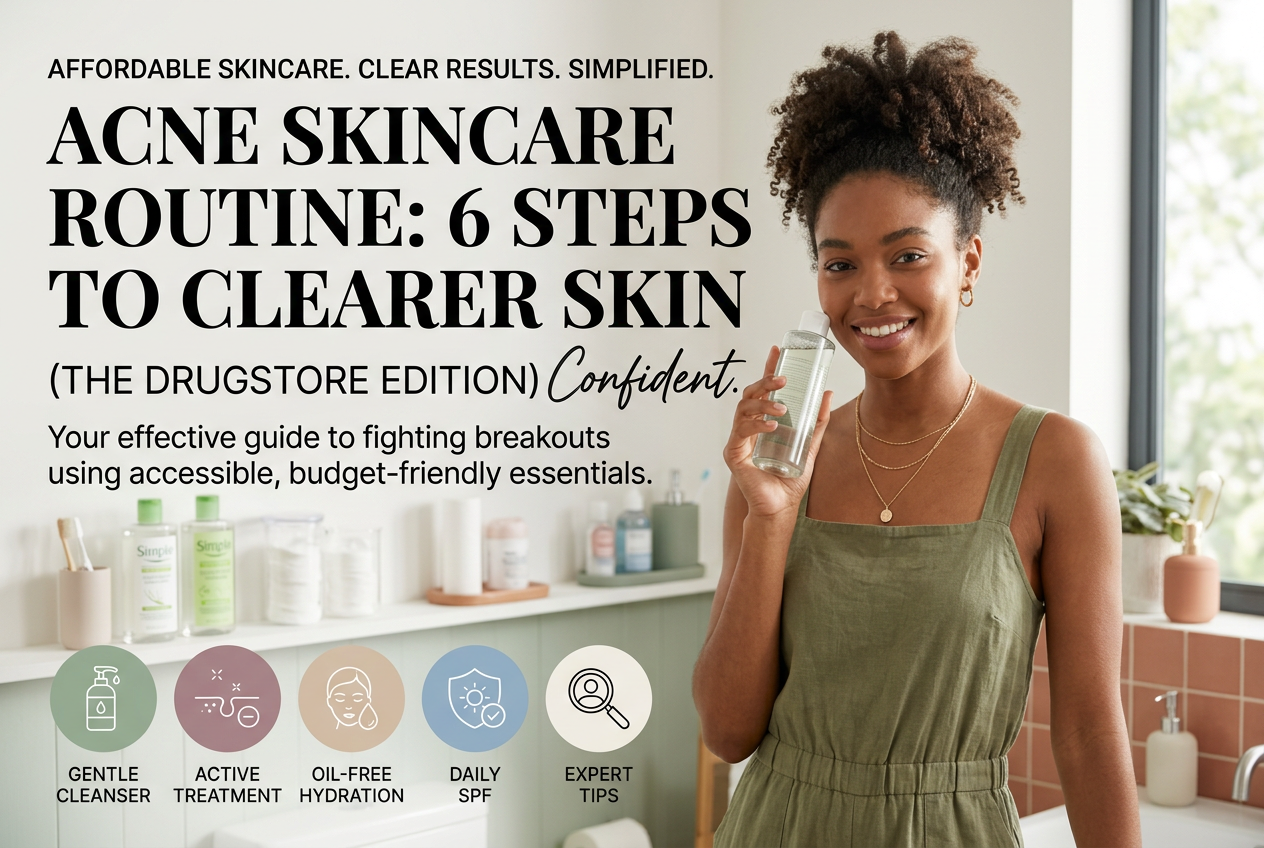
A working acne skincare routine has four non-negotiables: cleanse, treat, hydrate, protect. The other two steps — exfoliation and spot treatment — are situational but worth understanding so you can deploy them correctly. Some steps happen twice a day. Others are once, or a few times a week. The goal throughout is clearing breakouts without dismantling the skin barrier that’s actually protecting you.
Step 1: Cleanser (Morning & Night)
Start here. A gentle cleanser removes oil, bacteria, and whatever the day (or night) deposited on your face without stripping your skin’s natural pH. For oily and acne-prone skin, a salicylic acid cleanser does double duty — it cleans and exfoliates simultaneously. If your skin leans sensitive, a non-foaming, fragrance-free formula is safer. The instinct to use a harsh, squeaky-clean wash is understandable but counterproductive; over-stripping triggers more oil production, which feeds more breakouts.
Step 2: Exfoliant (2-3x per week)
Skip the physical scrubs. Chemical exfoliants — salicylic acid (BHA) for oily and congested skin, glycolic or lactic acid (AHA) for texture and brightening — dissolve the buildup inside your pores rather than abrading the surface. If you’re new to exfoliating or have sensitive skin, start once a week and only increase frequency once your skin has clearly adjusted without redness or flaking.
Step 3: Acne Treatment (Night, or Both if Your Skin Tolerates It)
This is where your main active lives. Benzoyl peroxide kills acne-causing bacteria directly; salicylic acid unclogs pores by dissolving sebum and dead skin. Pick one to start. Many people eventually alternate — benzoyl peroxide in the morning, salicylic acid at night — but doing that from day one is a reliable way to end up with an irritated, peeling face that’s somehow still breaking out. Give your skin a few weeks to adjust before adding the second active.
Step 4: Moisturizer (Morning & Night)
Non-negotiable. Full stop. Oily skin still needs hydration, and if you’re using active ingredients that dry out your skin, you need it even more. For an acne routine built around oily or combination skin, look for gel-based or oil-free formulas labeled non-comedogenic. Dehydrated skin overproduces oil to compensate, and that oil clogs your pores. The moisturizer isn’t the enemy of your acne routine — skipping it is.
Step 5: SPF (Morning Only)
Actives like benzoyl peroxide, retinol, and AHAs increase your skin’s sun sensitivity. Without daily SPF 30 or higher, you’re not just risking sun damage — you’re actively making post-acne dark spots worse. Use a lightweight, non-comedogenic sunscreen so you’re not undoing your routine’s work by blocking pores with a heavy formula. This step is quick and it matters more than most people realize.
Step 6: Spot Treatment (As Needed)
For areas that flare consistently, a targeted treatment with a higher concentration of active ingredient can shorten the lifespan of a breakout. Apply it after moisturizer in the morning (before SPF) or as your last step at night. Spot treatments work best as precision tools, not as something you slather across your whole face.
The Best Drugstore Picks for Each Step
Building an affordable acne skincare routine means knowing which drugstore products actually deliver on their ingredients, not just their packaging. Here are the standouts:
What Happens Off Your Face Matters Too
Your pillowcase is probably dirtier than you think. Oil, sweat, hair products, and bacteria accumulate on fabric overnight, and then your face spends eight hours pressed against all of it. Changing your pillowcase every two to three days is one of those low-effort adjustments that makes a disproportionate difference — as does pulling long hair back before bed so it’s not dragging residue across your skin while you sleep.
Diet is more complicated than the old “chocolate causes acne” myth (which is mostly overblown, for the record). That said, high-glycemic foods and dairy do seem to trigger breakouts in some people. Actually, that’s not quite right to say so categorically — the research is inconsistent and individual responses vary widely. What’s more useful than following generic advice is keeping a simple log for a couple of weeks: what you ate, when a breakout appeared. If a pattern shows up, you have real information to act on rather than a list of foods to fear.
Don’t touch your face.
I know that sounds obvious. It isn’t easy. Your hands carry bacteria from every surface you’ve touched all day, and every time you pick at a pimple or rest your chin in your palm while you’re thinking, you’re introducing that bacteria and creating inflammation. Breaking the habit is harder than any skincare step, but it’s also free and genuinely effective. If you catch yourself doing it constantly, try keeping your hands busier — fidget toys exist for a reason.
Stress and sleep don’t get enough credit in acne conversations. Cortisol spikes from chronic stress trigger oil production directly, and sleep deprivation prevents your skin from doing the repair work it’s supposed to do at night. When you’re running on five hours and a deadline, even a perfect routine will struggle to keep up.
When Drugstore Products Aren’t Enough
If you’ve been genuinely consistent — same routine, every day, not skipping steps — for six to eight weeks and you’re not seeing improvement, that’s meaningful data. It’s not a failure; it’s a sign that your skin needs something a drugstore shelf can’t provide. Dermatologists have access to prescription-strength retinoids, topical antibiotics, and hormonal treatments that work on mechanisms over-the-counter products simply can’t touch, and for moderate-to-severe acne, those tools make a real difference.
See a dermatologist sooner rather than later if your acne is causing scarring, if breakouts track clearly with your hormonal cycle, or if your skin is so reactive that even gentle products cause irritation. Scarring in particular is worth addressing quickly — it’s much harder to treat after the fact than to prevent with the right intervention early on. A professional visit isn’t admitting defeat. It’s just getting better information.
Start Simple. Stay Consistent.
The most effective acne skincare routine is the one you’ll actually do every day without resentment, and that almost always means accessible products at a price point that doesn’t make you hesitate to use them generously. Start with a gentle cleanser, one active ingredient, a non-comedogenic moisturizer, and SPF. Four steps. Give it two months before you decide it isn’t working, because skin turnover is slow and actives need time to do their job at a cellular level — results that seem invisible for five weeks can become obvious in week seven.
Skincare marketing wants you to believe complexity equals effectiveness. It doesn’t. The basics, done consistently, beat an elaborate routine done sporadically every single time. Pick your products, commit to the routine, and stop chasing the next thing before the current thing has had a real chance to work.
At Unwritten, our editors choose every product and story idea independently — we only recommend things we’d genuinely tell a friend about.
Frequently Asked Questions
How long does an acne skincare routine take to show results?
Most people see noticeable improvement after 6 to 8 weeks of consistent use. Skin cell turnover takes time, and active ingredients like salicylic acid and benzoyl peroxide need repeated exposure to work. If you see zero change after two full months, that’s your cue to visit a dermatologist.
Can I use both salicylic acid and benzoyl peroxide in the same routine?
You can, but not at the same time and not right away. Start with one, let your skin adjust for a few weeks, then consider alternating — one in the morning, one at night. Layering both simultaneously tends to cause dryness and irritation, especially if you’re new to actives.
Do I really need to moisturize if my skin is oily and acne-prone?
Yes, absolutely. Skipping moisturizer is one of the most common mistakes oily skin types make. When skin gets dehydrated, it compensates by producing even more oil, which clogs pores and worsens breakouts. A lightweight, oil-free gel moisturizer gives your skin what it needs without adding congestion.
What ingredients should I avoid if I have acne-prone skin?
Steer clear of heavy oils like coconut oil and cocoa butter, which are highly comedogenic. Alcohol-heavy toners can strip your barrier and backfire badly. Fragrances and certain silicones can also trigger breakouts in sensitive skin. Always check labels for ‘non-comedogenic’ when possible.
Is drugstore acne skincare actually as effective as prescription treatments?
For mild to moderate acne, yes — drugstore products with proven actives like salicylic acid, benzoyl peroxide, and adapalene (now available over the counter) can work extremely well. Severe cystic acne, hormonal acne, or acne that’s causing scarring usually requires prescription-strength retinoids or antibiotics that only a dermatologist can provide.