
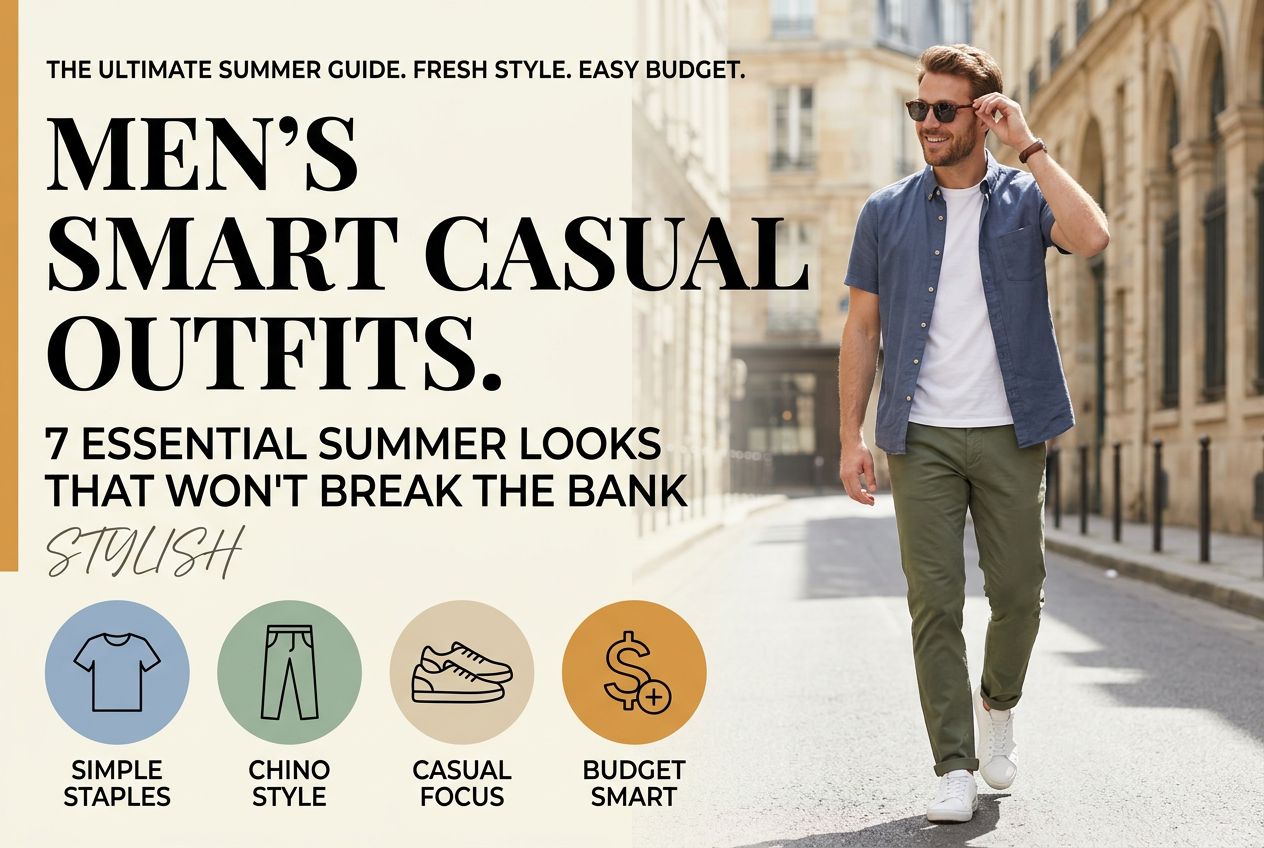
A white tee, navy chinos, white sneakers. That’s it. That combination — boring on paper, reliable in practice — is basically the thesis statement of men’s smart casual dressing, and everything else builds out from there.
The sweet spot here isn’t about looking like you tried hard. It’s about looking like you didn’t have to. Smart casual outfits work for coffee meetings, weekend dinners, casual Fridays, and that vague social event where the invite says absolutely nothing useful about what to wear. And the best part — you don’t need a massive budget or a full closet to pull it off consistently.
Why 10 Pieces Beat 40
Most guys approach getting dressed the wrong way. They buy things they like individually without asking whether those things talk to each other, and then they stand in front of a packed closet feeling like they have nothing to wear. I did this for years. I had maybe 35 shirts and somehow only wore six of them. The problem wasn’t quantity — it was that nothing connected. Smart casual dressing is actually a practical system: own fewer things, but own things that multiply. A pair of chinos that works with t-shirts, button-ups, and a bomber jacket isn’t one outfit. It’s twelve.
Start With the Bottoms
Chinos are non-negotiable. Navy, khaki, olive, grey — pick two neutrals to start. They’re dressier than jeans without tipping into formal territory, they work year-round, and a good pair at $30–$50 gets worn constantly. The cost-per-wear math is almost embarrassingly good.
Denim still has a place, just not every fit. Straight or tapered cuts in dark indigo or black work harder than you’d expect — pair them with a casual button-up and you’re dressed for dinner; swap in a tee and you’re grabbing lunch. Skip the skinny fits and the overly distressed stuff if you want pieces that stay useful across different contexts.
For tops, plain crew-neck and v-neck tees in white, grey, navy, and black are the backbone. Quality matters more than variety here — a well-constructed tee that holds its shape after 50 washes is worth $20; a cheap one that goes thin and misshapen after three months is worth nothing. Then two or three lightweight button-ups: a white oxford, a light blue, and one in a subtle pattern or earth tone. These layer, dress up, and work on their own.
Layers That Earn Their Space
A lightweight bomber in tan or navy is the single piece that most reliably makes a t-shirt-and-chinos combination look intentional rather than accidental. It adds structure without bulk, costs $40–$70 at most mid-range retailers, and transitions across seasons if you choose the right weight fabric. Linen or cotton-blend overshirts are worth considering too — wear them open over a tee or buttoned up solo. They wrinkle, which is actually fine. Wrinkled linen reads as relaxed confidence rather than neglect, which is a tone worth hitting. A denim jacket in light or medium wash rounds things out: pair it with chinos instead of jeans to avoid the head-to-toe denim situation, though honestly that’s become acceptable enough that it barely registers anymore.
If you want to push slightly dressier without going full formal, an unstructured linen blazer is worth trying. No shoulder padding, breathable fabric, looks summery rather than stuffy.
Shoes Make or Break This
Gym shoes kill smart casual outfits. Full stop.
What you want instead: clean leather or canvas sneakers in white, grey, or navy with minimal branding and good construction. These go with chinos and a button-up without raising any questions. Suede or canvas slip-ons work for a more weekend-appropriate version of the same vibe. Chelsea boots add presence and pair with nearly everything in the capsule — they feel intentional without tipping into formal. Loafers, leather or suede, have had a genuine resurgence and for good reason: they’re versatile, they look considered, and a decent pair at $50–$100 lasts years with basic care. The cost-per-wear math on a good loafer is genuinely excellent once you factor in how often they get reached for.
Does Accessorizing Actually Matter?
More than most people admit. A simple watch — doesn’t need to be expensive, just clean-looking and not enormous — changes the entire register of an outfit. It signals that you’re paying attention to the details, which is most of what smart casual is actually communicating. A leather belt in brown or black is essential at around $20–$30; it anchors the outfit and most people notice when it’s missing even if they can’t articulate why. Sunglasses in a classic shape complete the picture without requiring any thought. And socks — genuinely underrated. Solid colors or subtle patterns in merino wool keep things comfortable and read as deliberate rather than default. Cheap to buy, higher impact than their price suggests.
The 13-Piece Starting Point
Two pairs of chinos. One pair of dark jeans. Four tees. Two button-up shirts. One lightweight jacket. One pair of clean sneakers. One pair of loafers. A belt. A watch. That’s 13 pieces and roughly $300–$500 depending on where you shop — less if you wait for sales, which is always worth doing on basics.
From those 13 pieces, you get at least 20 distinct outfits, maybe closer to 30 if you’re working the layering options. Average cost-per-outfit lands around $15–$25 before you’ve worn anything more than once. Over a year of regular rotation, each outfit costs you almost nothing per wear.
The real discipline is in what you add after that foundation is set. Every new piece should work with at least three things already in the closet — a new chino color needs to pair with existing tops and shoes, a new shirt should layer with the jacket you already own. That’s not a rigid rule so much as a practical filter. It stops you from buying things that seem good in the store and then sit unworn because they only go with one specific combination you never actually put together. Actually, that’s not quite right — it doesn’t stop you entirely, but it at least makes you ask the question before you buy.
Smart casual outfits work because they’re consistent, not because they’re complicated. The combinations repeat — light blue shirt with khaki chinos and loafers, bomber jacket over a grey tee with dark jeans, white oxford tucked into navy chinos with clean white sneakers — because they’re reliable. Reliable is underrated when you want to look put-together without spending mental energy on it every morning.
At Unwritten, our editors choose every product and story idea independently — we only recommend things we’d genuinely tell a friend about.
Frequently Asked Questions
What exactly counts as smart casual for men?
Smart casual sits between dressed-up and dressed-down — think chinos or dark jeans, a clean button-up or quality tee, and shoes that aren’t gym trainers. It works for coffee meetings, casual Fridays, and dinners where the dress code says nothing useful.
How many pieces do I actually need for a smart casual wardrobe?
Around 13 well-chosen pieces can generate 20 to 30 distinct outfits. Two pairs of chinos, one pair of dark jeans, four tees, two button-ups, one lightweight jacket, two pairs of shoes, a belt, and a watch. That’s the core.
Can I wear sneakers with smart casual outfits?
Yes, but they need to be the right kind. Clean leather or canvas sneakers in white, grey, or navy with minimal branding read as intentional. Running shoes or anything with chunky athletic soles pull the whole look down.
What’s the best color palette for a smart casual capsule wardrobe?
Stick to neutrals for bottoms — navy, khaki, olive, grey, black. For tops, white, grey, navy, and light blue do the most work. Once those are covered, you can add one or two pieces with subtle patterns or earth tones without breaking the system.
How do I make a basic outfit look more put-together without buying new clothes?
Three things help immediately: swap in a clean pair of shoes, add a simple watch, and make sure everything fits properly. A well-fitting plain white tee looks more deliberate than an expensive shirt that’s slightly too big.