
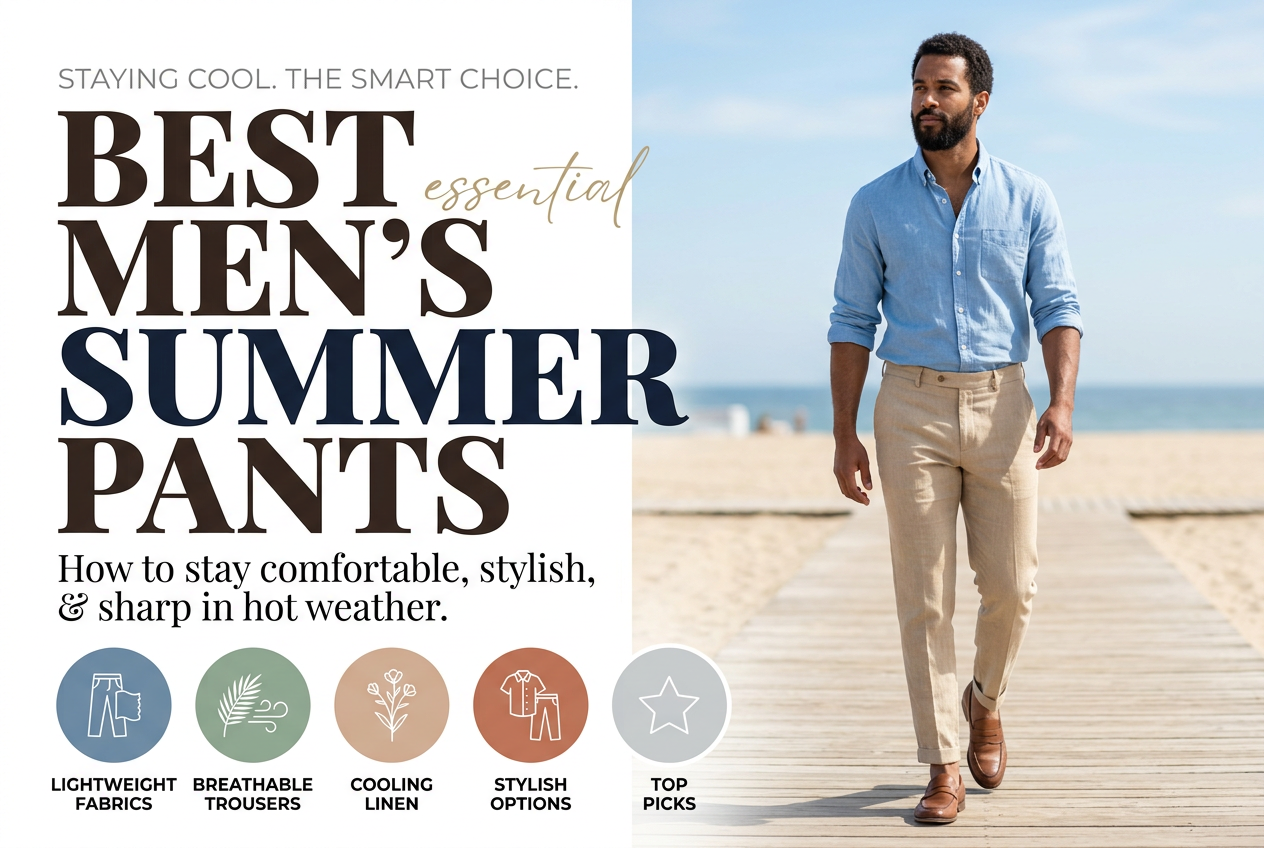
By mid-afternoon on a hot day, regular pants feel like a punishment. The fabric is damp, it clings, and you’d trade almost anything for a breeze. Here’s the thing most guys figure out eventually: a genuinely good pair of men’s summer pants doesn’t feel like a compromise at all. The right ones feel like almost nothing—which is the entire point.
That realization is what separates a miserable July from a bearable one. And it comes down almost entirely to fabric and cut, not price.
Why Not Just Wear Shorts?
Shorts are fine. Nobody’s taking them away from you. But there are whole categories of your summer life where you need more coverage—client meetings, dinner reservations, any event where someone put a dress code on the invitation. Lightweight pants give you that range without making you sweat through your afternoon. I’ve also found that a fitted pant just photographs better, which matters more than it should but does matter. You can wear the same pair with canvas sneakers on Saturday and leather loafers on Thursday evening and they’ll read completely differently both times. That flexibility is hard to replicate with shorts.
There’s a practical case too. Summer pants block sun and insects—two things that ruin outdoor time faster than almost anything else.
What the Fabric Actually Does
Cotton is the starting point, but weight is what separates a summer pant from a winter one. Heavy cotton twill in July is a mistake. What you want is something in the 4–6 ounce range, a weight where the fabric almost floats when you hold it up. Lightweight cotton blends—often mixed with linen or a small percentage of synthetic fiber—perform noticeably better than straight heavy cotton. Linen is the classic answer for serious heat: it pulls warmth away from your skin, softens with every wash, and has a texture that looks expensive without trying. The wrinkles are real (more on that in a second). Performance synthetics have genuinely improved over the past few years and are worth considering if you commute by bike or run hot in general—modern versions look like regular pants and no longer have that plasticky feel that made earlier versions unbearable. For most people, though, the sweet spot is a cotton-linen blend, which gives you linen’s breathability alongside cotton’s structure and wrinkle resistance, at a price that doesn’t sting.
The Wrinkle Question
Pure linen will wrinkle. That’s not a defect—it’s the material doing exactly what it does.
Some guys embrace it as part of the look, a kind of studied casualness that reads as intentional. Others find it too rumpled for their taste, especially in professional settings. If you’re in the second camp, go for a cotton-linen blend with at least 50% linen content—you still get the temperature-regulating benefits, but the cotton keeps the creases from getting out of hand. Iron them in the morning and they’ll hold their shape through most of a workday. Actually, that’s not quite right for everyone: if your commute involves sitting on a train for 45 minutes, expect some wrinkling regardless of blend.
Our Top 5 Picks for Hot Weather
Five pairs worth knowing about, each built for a slightly different version of your summer.
The lightweight chino is the workhorse. Stone, khaki, or navy—any of those three will pair with nearly everything in your closet. A good one comes in a cotton-poly blend that resists wrinkles, survives repeated washing, and sits close enough to the body to look deliberate without squeezing your thighs. This is your first buy if you own nothing else in this category.
Pure linen or a high-linen blend is the heat specialist. When temperatures are genuinely oppressive, nothing else comes close. The trade-off is the wrinkle situation described above, but if you’re comfortable with a slightly lived-in look—or you’re going somewhere the dress code is relaxed—linen pants are worth every cent. They feel luxurious in a way that’s hard to explain until you’ve worn a good pair in August.
Performance fabric pants exist for people who sweat through other things. They wick moisture away from your skin and dry fast enough that you’re never left feeling clammy after a walk or a bike commute. They’re also wrinkle-resistant and durable. The knock on them has always been that they feel synthetic—but the current generation is genuinely soft, and from ten feet away they look like regular trousers.
A cotton-linen blend is the compromise that actually works. You get linen’s airflow and that lightweight feel alongside cotton’s shape retention and slightly lower price point. These pants sit in the smart-casual zone, which means they cover more occasions than pure linen would. Look for at least 50% linen in the blend or you’re mostly just buying cotton with a label.
For travel, remote work days, or any summer that’s heavier on casual moments than formal ones, a quality lightweight jogger or relaxed-fit pant in a structured breathable fabric is worth having. Not sweatpants—something with enough construction that it reads as intentional when you’re out in the world. These are the most forgiving fit-wise and the easiest to live in.
One Styling Note That Actually Matters
Hem length. Get it right and everything looks sharper; ignore it and even expensive pants look sloppy. Your summer pants should hit right at the top of your shoe—no bunching at the ankle, no excessive break. Too long and the fabric drags and heats up; too short and you’re suddenly in cropped territory, which is a different and specific aesthetic choice. When in doubt, have a tailor take them up half an inch. It costs almost nothing and changes how the whole outfit reads.
Fit Doesn’t Change Just Because It’s Summer
Don’t size way up thinking it’ll feel cooler. A slightly relaxed fit helps airflow around the thigh, yes, but oversized pants bunch, trap heat in pockets of fabric, and look like you grabbed the wrong size. What you want is room in the thigh without bagginess, a waistband that sits without a belt, and a taper toward the ankle that looks like a decision rather than an accident. Try multiple sizes if you can—what fits right in cotton might run differently in linen, and lightweight fabrics sometimes shrink slightly in the first few washes, so if you’re between sizes lean toward the roomier option.
Start with one solid chino and one linen or linen-blend pair. That covers most of what summer will throw at you. Build from there based on how you actually spend your time—not how you imagine you might spend it.
At Unwritten, our editors choose every product and story idea independently — we only recommend things we’d genuinely tell a friend about.
Frequently Asked Questions
What fabric is best for men’s pants in hot weather?
Linen and cotton-linen blends are the top choices for genuine heat relief. Linen pulls heat away from your skin and gets softer with each wash. If you need something more wrinkle-resistant, a cotton-linen blend (at least 50% linen) gives you most of the same cooling effect with a bit more structure.
Are performance fabric pants worth it for summer?
Yes, if your day involves commuting by bike, a lot of walking, or any situation where sweat is a real concern. Modern performance pants look almost identical to regular trousers but dry fast and resist clinging. The trade-off is they feel slightly less luxurious than natural fibers.
Can men’s summer pants work in a professional setting?
Absolutely. A lightweight chino in navy or stone, or a well-pressed linen-blend trouser, reads as office-appropriate in most workplaces—especially during summer months when dress codes tend to relax. The key is fit: a clean, tapered cut makes any summer fabric look intentional rather than casual.
How should summer pants fit differently from regular trousers?
You want a little more room in the thigh to allow airflow, but not so much that the fabric bunches when you walk. The waistband should sit comfortably without a belt, and the hem should hit just at the top of your shoe. Avoid sizing way up—loose fits can actually trap heat and look sloppy.
Do linen pants wrinkle too much to wear to work?
They will wrinkle. That’s just linen being linen. In casual and smart-casual offices, a slightly rumpled linen trouser reads as intentional and relaxed. For more formal settings, a cotton-linen blend wrinkles far less while still keeping you cool. If you iron them in the morning, they’ll look sharp for at least the first half of the day.