My third $68 foundation was the one that broke me. Not literally — it actually applied fine — but standing in my bathroom staring at a product I’d bought twice before, I realized I’d spent over $200 on essentially the same beige liquid. That same week, I picked up a $14 drugstore foundation on a whim. It lasted longer, oxidized less, and matched my neck without a blending brush intervention.
That changed everything.
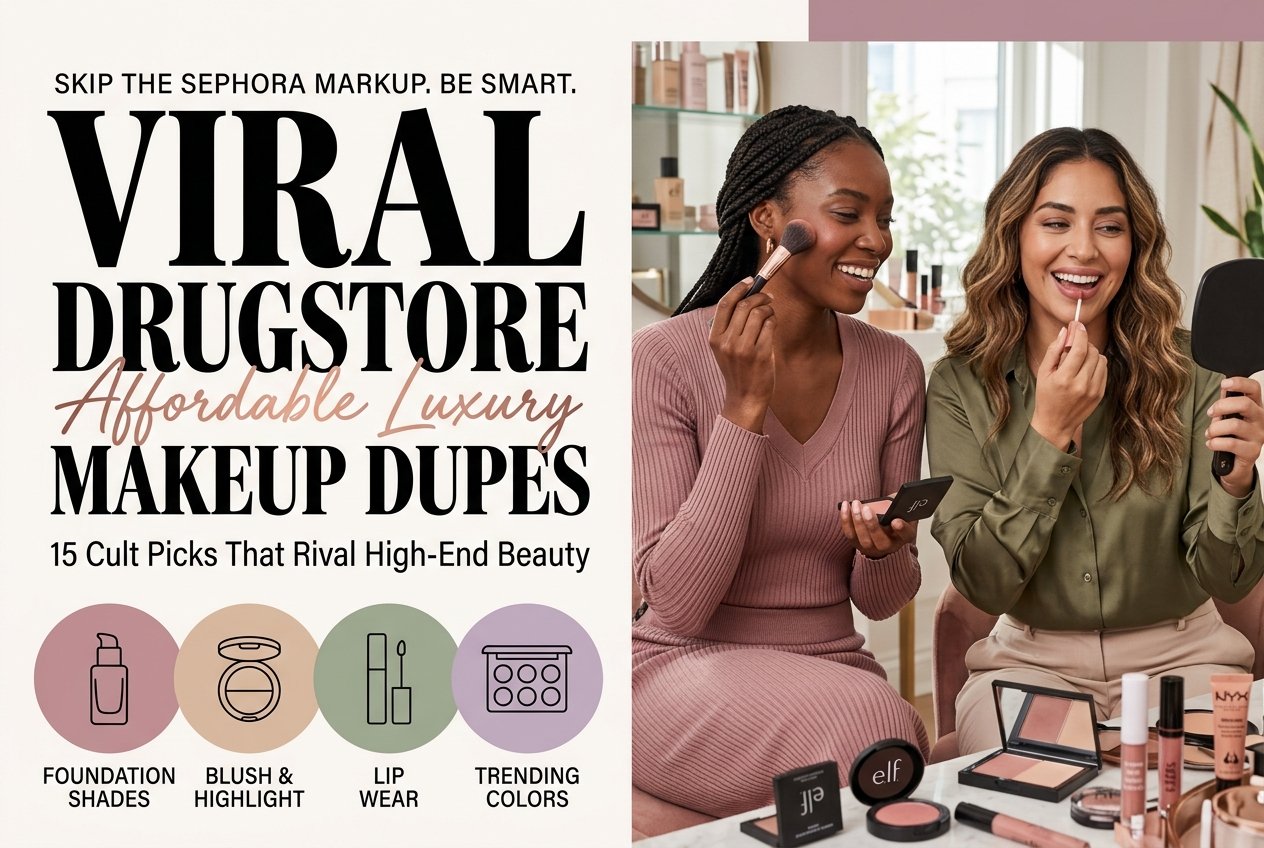
The gap between drugstore and luxury makeup has quietly collapsed. Not narrowed — collapsed. Brands like e.l.f., NYX, Maybelline, and Wet n Wild have spent years overhauling their formulas, and the results are formulas with better pigment binders, more inclusive undertone ranges, and textures that don’t scream “budget.” Meanwhile, you’re still paying for a Sephora bag and a sleek black compact when you go luxury. The product inside? Often not proportionally better.
Why does this even matter?
Because a full face of drugstore makeup — foundation, concealer, mascara, liner, blush, lip color, setting spray — can cost less than a single luxury foundation. That math should feel offensive to anyone who’s ever spent $65 on a mascara. (I have. It was fine. A $7 one does the same thing.) Going drugstore means you can actually experiment: try a bold lip color you’re not sure about, test three different concealers to find your match, refresh your routine every season without a budget crisis. Makeup is supposed to be fun, and it’s genuinely hard to have fun when you’re terrified of wasting $58 on a product that might not work for your skin type. The freedom to just try things without a financial consequence is underrated, and it’s exactly what drugstore pricing gives you.
Foundation and Concealer
Foundation is where drugstore formulas have made the most dramatic improvements. The shade ranges are wider than they used to be, finishes run the full spectrum from skin-like satin to full matte to glass-skin dewy, and the staying power on most options beats what I expected from the price point. Makeup artists started quietly using drugstore foundations on set years ago — not as a budget workaround, but because the formulas were genuinely good.
Concealer deserves its own moment. Drugstore concealers blend out easily, don’t crease by noon, and actually brighten the under-eye area instead of just covering it in a flat, chalky layer. The pigment concentration tends to be high enough that you need less product, which makes a $9 tube last surprisingly long.
Mascara, Liner, and Shadow — The Real Wins
Mascara might be the single strongest argument for going drugstore. Some of the most consistently praised mascaras in beauty communities cost under $10. They hold a curl through humidity. They don’t flake onto your cheekbones by 3 p.m. They build volume without clumping into something that looks like a craft project gone wrong. I’ve gone back to drugstore mascara after expensive experiments and felt genuinely relieved.
Eyeliner and eyeshadow round out the case. Gel liners, liquid liners, and pencils from drugstore brands stay put — they don’t migrate to your waterline or disappear before lunch. And eyeshadow palettes are where the value becomes almost absurd: you can build a full palette collection across multiple color stories for what a single luxury quad costs, and the pigmentation, blendability, and finish variety are all there.
Lip Products Are Almost Too Easy
Honestly? Lip color might be the easiest swap of all.
Lipsticks, glosses, tints, liners — drugstore versions perform on par with luxury across every format. Matte formulas that don’t feel cement-dry. Glosses with actual staying power and shine that doesn’t feel sticky two hours in. Lip liners at $3 to $5 that do exactly what a $28 liner does: hold color in place, add definition, and blend without tugging. The color payoff is there, the wear time is there, and frankly the shade ranges at some drugstore brands now rival what you’d find at a specialty retailer.
Setting Sprays, Blush, and the Rest
Setting sprays are where people still sometimes hesitate to go drugstore, which is a mistake. The whole job of a setting spray is to lock down your makeup and add a bit of humidity resistance. Drugstore versions do that. Some of them outperform luxury options in longevity tests, and at $8 to $12 a bottle, you can actually use them freely instead of rationing sprays like it’s a luxury resource.
Blush and highlighter are worth calling out specifically because the color technology has gotten genuinely good. Powder blushes blend softly without looking powdery, cream formulas melt into skin, and the pigmentation is strong enough that a light hand goes a long way. Highlighters give a real glow — not chunky glitter, actual light reflection — without emphasizing texture or sitting on top of skin like a separate layer.
The beauty industry spent decades convincing people that price was a reliable proxy for quality. For makeup, it mostly isn’t. Buy the $12 foundation. Try the $7 mascara. Your face won’t know the difference, and your bank account definitely will.
At Unwritten, our editors choose every product and story idea independently — we only recommend things we’d genuinely tell a friend about.
Frequently Asked Questions
Are drugstore makeup dupes really as good as luxury brands?
For most categories, yes. Foundations, mascaras, and lip products from brands like e.l.f., NYX, and Maybelline now use comparable pigments and binders to their high-end counterparts. The main differences are packaging and marketing spend, not formula quality.
Which drugstore brand makes the best foundation dupe?
It depends on your skin type, but Maybelline and L’Oréal consistently top the list for coverage and longevity. e.l.f. Halo Glow is a fan favorite for dewy finishes, while Revlon ColorStay holds its own against $60+ matte foundations.
Do drugstore mascaras hold a curl as well as luxury ones?
Many do. Drugstore mascaras like Maybelline Lash Sensational and L’Oréal Voluminous have cult followings specifically because they hold a curl without flaking — something even expensive mascaras struggle with.
What drugstore makeup dupes do professional makeup artists actually use?
NYX, e.l.f., and Wet n Wild show up regularly in professional kits. Artists often reach for drugstore setting sprays, concealers, and eyeshadow palettes because the formulas perform reliably under lights and cameras.
How do I find a good drugstore dupe for a specific luxury product?
Start by matching the finish (matte, dewy, satin) and coverage level you want, then cross-reference reviews on Reddit’s r/MakeupAddiction or beauty YouTube channels that do direct comparison swatches. Shade range and undertone matter more than brand name.